[Adobe Stock]
Novo Nordisk’s Wegovy pill, the first oral GLP-1 approved for weight loss, hit U.S. pharmacies Monday at $149/month for the starting dose.
Yet despite Novo’s head start, Goldman Sachs projects Eli Lilly will eventually dominate the oral segment. The bank forecasts oral GLP-1s will capture about $22 billion, or 24% of the global weight-loss market, by 2030. Of that, Lilly’s orforglipron is expected to take 60% ($13.6B) versus just 21% ($4B) for Novo’s pill.
The difference? Convenience. Lilly’s pill can be taken anytime, with or without food. Wegovy’s pill requires an empty stomach and a 30-minute fast before eating or drinking, the same limitation that held back Rybelsus adoption for diabetes.
Rybelsus: A cautionary tale
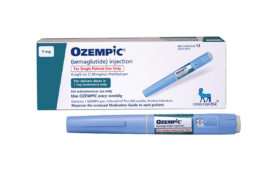
Rybelsus demonstrated the commercial cost of those constraints. Despite launching in 2019 as the first oral GLP-1 for diabetes, Rybelsus brought in about $2.7 billion in sales for Novo last year, compared to almost $14 billion for Ozempic. That’s roughly a 5:1 gap for drugs with the same active ingredient. Rybelsus accounted for just 14% of GLP-1 market share by the end of 2023, despite clinical data showing comparable efficacy.
The pill form requires a special compound called SNAC to help absorption through the stomach, and even with this technology, only about 0.4–1% of the oral dose actually gets into the bloodstream. As a result, the drug requires strict fasting requirements that many patients and clinicians cite as a deterrent for daily, long-term use.
Lilly bets on convenience
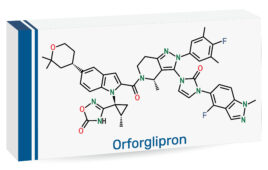
Eli Lilly is betting that convenience will determine the oral obesity market’s eventual winner. Its oral candidate, orforglipron, is a small-molecule GLP-1 receptor agonist rather than a peptide. According to Lilly, orforglipron can be taken any time of day without restrictions on food and water intake. From a patient behavior standpoint, that difference is substantial: no morning fasting ritual, no 30-minute wait before coffee.
Goldman Sachs projects that oral GLP-1s will generate roughly $22 billion in annual sales by 2030, capturing about 24% of the global weight-loss drug market, which they expect to be worth $95 billion. Within that segment, the bank expects Eli Lilly’s pill to have a 60% share, or roughly $13.6 billion, of the daily oral segment. Novo Nordisk’s oral semaglutide is projected to capture about 21%, or around $4 billion.
Efficacy vs. convenience
The projections reflect more than dosing convenience. In the Phase 3 ATTAIN-1 trial, orforglipron 36 mg reduced weight by an average of 12.4% (27.3 lbs) compared to 0.9% with placebo at 72 weeks. Some 59.6% of participants taking the highest dose lost at least 10% of their body weight, while 39.6% lost at least 15%.
That’s below Wegovy pill’s 16.6% in OASIS 4, but orforglipron also demonstrated significant improvements across key cardiometabolic risk factors, and the convenience advantage may outweigh the efficacy gap for many patients and payers.
First-mover advantage isn’t nothing
None of this diminishes Novo’s achievement. Being first confers real advantages: physician familiarity, payer relationships and manufacturing scale already in place. Oral obesity therapy also lowers the threshold for primary care prescribing, potentially accelerating diagnosis and treatment earlier in the disease course.
And Visible Alpha consensus estimates project Rybelsus reaching $7.4 billion by 2030, suggesting the diabetes market still values oral options despite the constraints.
The adherence problem
Still, the obesity market is unusually sensitive to everyday usability. Persistence varies by dataset and cohort; one analysis found 63% of commercially insured patients who started in early 2024 stayed on Wegovy or Zepbound after a year, though older cohorts showed lower retention. Cost is the reason most often cited for discontinuing use, but adherence friction compounds that problem.
These drugs are not taken in acute settings but folded into daily routines alongside meals, work schedules and other medications. Small frictions compound over time, affecting adherence, persistence and ultimately outcomes.
The road ahead
If injectables proved that GLP-1s work, oral therapies will determine how widely they are used. Goldman analysts expect the remaining 19% of the oral market to go to emerging pills from Viking Therapeutics, Structure Therapeutics, AstraZeneca, Roche and Pfizer, all developing their own oral candidates.
In that crowded race, the difference between “take anytime” and “take on an empty stomach and wait” may be the difference between market leadership and also-ran status.
Filed Under: Metabolic disease/endicrinology