







Today on Drug Discovery & Development
The FDA plans its third rare disease policy change in just over a year
On Oct. 14, the FDA announced a plan called the “Rare Disease Framework Initiative,” described in a new white paper, to build a “fit-for-purpose” approach to reviewing drugs and biologics for rare diseases. The FDA says the initiative aims to give developers of rare disease treatments clearer, more consistent guidance on the evidence needed for…
AAPS names Patrick Sinko chief science officer
The American Association of Pharmaceutical Scientists (AAPS) has named Patrick J. Sinko, Ph.D., R.Ph., as chief science officer. Sinko will set the organization’s scientific strategy, guide scientific programming across in-person and digital platforms, and guide the direction of AAPS’s portfolio of peer-reviewed journals. Sinko, a pharmacist and pharmaceutical scientist, retains his academic appointment at Rutgers,…
Drug Discovery and Development See More >

2026 PharmSci 360 adds tracks on research credibility and post-animal drug development
The Arlington, Virginia–based nonprofit American Association of Pharmaceutical Scientists (AAPS) will launch two Innovator-Curated tracks at its 2026 PharmSci 360 conference, scheduled for October 25–28, 2026, at the Ernest N. Morial Convention Center in New Orleans, Louisiana. The organization announced that the tracks will explore the current state of scientific research integrity in an AI…

FDA logs more than 1,700 adverse event reports involving compounded semaglutide and tirzepatide

As 59% fewer pharma companies cut staff in Q2 in 2026, job postings rise 15%

Sai Life Sciences’ bet on information-dense scale-up and how it is responding to pharma clients who want acceleration
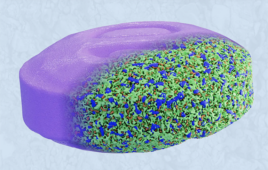
Ahead of PharmSci 360, DigiM CEO on turning hidden microstructures into drug-release predictions
Sponsored Content See More >
 AAPS PharmSci 360 Offers Fresh Insights for Industry Scientists
AAPS PharmSci 360 delivers research spanning the pharmaceutical product lifecycle. Thousands of scientists and leaders, representing large and small pharma…
 Top Automated Dispensing Cabinets for Pharmacies: Leading Brands Compared
Simplifying workflows is essential. Individuals in the pharmacy industry may accomplish more work with fewer errors by automating medication distribution.…
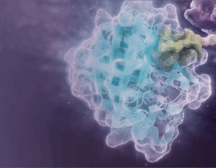 How Endogenous Tagging is Reshaping Protein Analysis
Understanding how proteins behave inside living cells is essential for modern drug discovery. Yet many widely used approaches, particularly plasmid…
 What sets oncology biosimilars apart: Anticipating key challenges in the development landscape
By Kimberly Salgado, ICON plc Advancements in biologic therapies have greatly improved our ability to treat cancer over the last…
 Advancing Pressure Protection in Biopharma: How Integrated Bypass Technology Elevates Single-Use Pump Design
by Michael Irving, Xylem In pharmaceutical and biopharmaceutical manufacturing, there is zero margin for error when it comes to process…
 Complexity’s counterpoint: Understanding protocol optimization
 In recent years, the clinical research landscape has been marked by a steady rise in protocol complexity with more endpoints…
 Optimizing Data Pipelines in Life Sciences with AI-Driven Integration and FHIR
Sponsored by Infor. Data management in life sciences is inherently complex. Data is fragmented across multiple systems — such…
 Accelerating life sciences with AI
 This case study is sponsored by Infor. Artificial intelligence can revolutionize clinical interoperability by building bridges across data silos. Machine…
 Advancing Clinical Trials and Research
This case study is sponsored by Infor. In the complex landscape of clinical trials and medical research, data fragmentation remains…
 Multidisciplinary approaches optimize contract drug discovery
 5 Key Questions in Conducting Global Usability Studies
By Dr Bryce G Rutter, Head Noble Consulting Services Evaluating device usability throughout the product development process is crucial. A…
 Leveraging HF/UX/ID Services to Optimize the Design of Combination Devices for Arthritic Hands
By Dr. Bryce G Rutter, Head of Consulting Services Arthritis changes how people grasp and manipulate an object, reducing the…
Genomics/Proteomics See More >
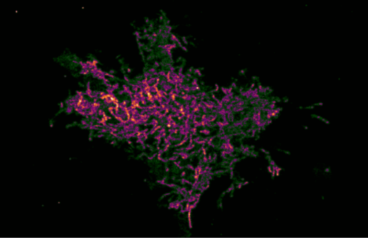
New cell imaging method reveals hidden enzyme activity
Negative biosensors have often been unusable because, as the sensors lose signal when activity is detected, regions of high enzyme activity can look identical to regions with no activity. Researchers at the University of Illinois Chicago have solved this problem with a new cell imaging method that allows scientists to see previously hidden enzyme activities by flipping the optical readout of…
Beyond the silver bullet: Why precision medicine is the next frontier for the $1 trillion obesity market
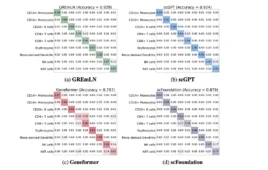
Columbia-CZ team develops 10.3M parameter model that outperforms 100M parameter rivals on cell type classification
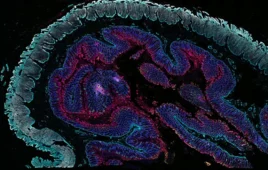
Spatial biology: Transforming our understanding of cellular environments

Biotech in 2025: Precision medicine, smarter investments, and more emphasis on RWD in clinical trials
Infectious Disease See More >
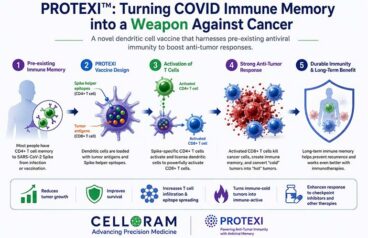
Cancer vaccine borrows COVID immune memory to activate T cells against tumors in mice
The COVID-19 pandemic left most of the world’s population with an immune memory for COVID. A Cleveland-based biotech wants to use that memory to fight cancer. Celloram, a preclinical stage company focusing on therapies for cancer, autoimmune diseases and chronic inflammatory and metabolic disorders, in partnership with Case Western Reserve University and University Hospitals Cleveland Medical Center, published preclinical results for a…
AbbVie’s Maviret cured 96% of HCV trial participants. The real world is more complicated.
FDA greenlights ViiV’s Tivicay PD for HIV-positive newborns in first month of life

As measles cases hit a 35-year high, Trump executive order backs a narrower childhood vaccine list
AbbVie’s Maviret ends the wait-and-see reality for acute HCV
Oncology See More >

Roche picks cancer targets, Hansoh builds the ADCs in deal with $400 million upfront
Roche picks the targets and Hansoh builds the ADCs under a deal with $400 million upfront, a $110 million first-anniversary payment and more than $15 billion in milestones. The split mirrors AstraZeneca’s January deal with CSPC.

After decades of trial failures in chemotherapy-linked neuropathy, psilocybin shows promise in preventing it in mice
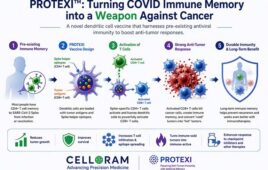
Cancer vaccine borrows COVID immune memory to activate T cells against tumors in mice

Merck and Moderna’s cancer vaccine is customized for each patient’s tumor