A new investigational cancer vaccine developed by Merck & Co. and Moderna is customized based on the genome of each patient’s tumor, designed to teach their immune system to recognize the cancer as a foreign body. The companies are investigating the vaccine as a combination treatment with Merck’s Keytruda, a monoclonal antibody that targets the PD-1 receptor on T-cells, breaking a pathway…
The oral exposure challenge in PROTACs: What drug developers need to solve early
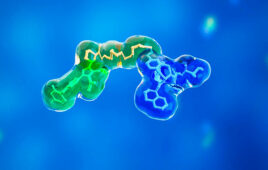
Proteolysis Targeting Chimera (PROTAC) drugs have evolved from a promising concept to a clinically validated modality. In May 2026, the U.S. FDA approved vepdegestrant (Veppanu®), the first PROTAC drug, marking an important milestone for targeted protein degradation and reinforcing the approach across a multitude of disease areas. PROTACs usually consist of three parts: a target-binding…
AbbVie’s Maviret cured 96% of HCV trial participants. The real world is more complicated.
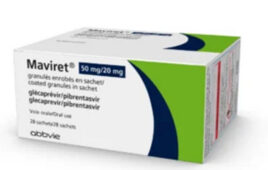
An estimated 69,000 Americans acquired hepatitis C in 2023, roughly double the mid-2010s rate, even though the disease has been curable with an eight- to 12-week course of oral antivirals for more than a decade. AbbVie’s MAVYRET became the first of those antivirals cleared for acute infection in June 2025, with a 96% cure rate in trial. In the EU,…
As the dream of the autonomous clinical trial dawns, agent supervision is today’s human job

In 2020, the average phase 3 protocol collected approximately 3.56 million data points. By 2025, that figure had reached about 5.96 million, a five-year increase of 67% and 6.4 times the 2012 average of 929,203, according to collaborative research from the nonprofit industry group TransCelerate BioPharma and the Tufts Center for the Study of…
Tufts model estimates 82x ROI and up to $21 million in value from Medable AI agent
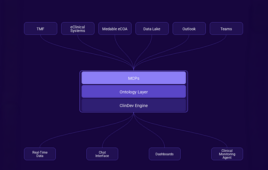
Tufts Center for the Study of Drug Development (CSDD) and clinical trial platform company Medable recently announced an analysis estimating that Medable’s Clinical Monitoring Agent could deliver an 82x return on investment for phase 3 trials and 64x for phase 2. Based on expected net present value (eNPV), that equated to roughly $21 million in…
Metabolic stability: The defining challenge for multifunctional peptides
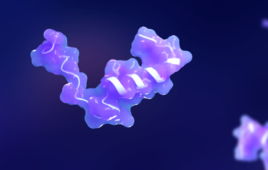
The demand for peptide therapeutics has grown rapidly in recent years, as the success of GLP-1 drugs has catapulted them to the forefront of developers’ and sponsors’ minds. Although peptides still represent a relatively small share of FDA-approved therapeutics, they offer distinct advantages in treating diseases where small-molecule drugs or therapeutic antibodies fall short. The…
As 59% fewer pharma companies cut staff in Q2 in 2026, job postings rise 15%

2022 was a big year for layoffs in biopharma. So were the next three. Novartis, for instance, outlined plans to cut up to 8,000 jobs in 2022, after pharmaceutical industry job cuts jumped 280% in 2021. Biogen followed in 2023 with a “Fit for Growth” program that put roughly 1,000 roles on the block. Bristol…
How Sheba Medical Center became OpenAI’s first international hospital partner

OpenAI’s first international hospital partnership is taking shape at a giant medical center where English is not the default language and where the electronic health record does not come from Epic, the dominant U.S. EHR vendor. That institution is Sheba Medical Center, the Israel-based medical center with its own 50-plus-person AI Center within ARC, its…
Gilead and Nucleai probe why target-positive tumors can still resist ADCs

Antibody-drug conjugates (ADCs) have emerged as one of the busiest and most crowded niches within oncology, given their potential to use an antibody to ferry a potent cytotoxic payload toward tumor cells. The class now spans about 15 FDA-approved products, and the segment is growing steadily. Evaluate Pharma projects the ADC category will reach $57…
Novo Nordisk’s ziltivekimab misses Phase 3 primary endpoint
Novo Nordisk’s ziltivekimab, an investigational human monoclonal antibody that targets the IL-6 ligand, a pro-inflammatory cytokine, to reduce cardiovascular inflammation, did not reduce the risk of major adverse cardiovascular events (MACE) in a Phase 3 trial. “Although ziltivekimab produced the expected biological effect, this did not result in MACE benefits in this population,” Martin Holst Lange, executive vice president, chief…
Verseon bets physics can take drug design beyond AI’s training data

The Bay Area-based pharma company Verseon began designing small-molecule drugs on a computational platform in 2002. That is well before most of the companies like Recursion and Exscientia now called AI drug discovery firms existed, and two decades before the launch of ChatGPT. Today, Verseon’s website states that its programs feature novel candidates that cannot…
BMS claims pharma’s most powerful AI supercomputer. How it stacks up to Lilly’s and Roche’s.
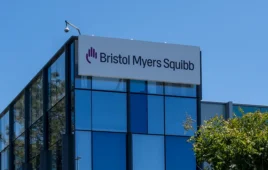
Bristol Myers Squibb said Monday it will deploy an NVIDIA DGX SuperPOD, a prepackaged supercomputing platform that NVIDIA sells as a single standard unit, combining multiple compute racks, high-speed networking and management software into one cluster. BMS describes it as the “most powerful and energy-efficient single-owned NVIDIA infrastructure in life sciences.” That claim lands nine…
Drug Discovery & Development parent company WTWH Media is now Arrowfly
WTWH Media, the parent company of Drug Discovery & Development, announced on July 13 that it has renamed itself Arrowfly. The change applies to the corporate entity. DDD keeps its name, its URL, its newsletter, its editorial staff and its archives. The Cleveland-based company operates more than 40 B2B media brands and more than 45…
Moderna bets on mRNA’s second act with cancer, autoimmune programs and AI research platform
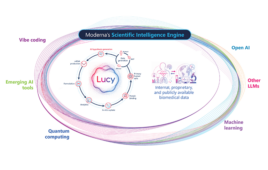
At its recent annual Science Day, Moderna signalled a strategic expansion beyond its established vaccine and rare disease franchises, unveiling new programs in in vivo CAR-T and solid tumor oncology. The firm also revealed an AI-driven research platform it says will accelerate the pace of drug discovery across its pipeline. The company publicly revealed two…
Ginkgo, Tangible and Inductive Bio aim to move ADME decisions from lead optimization to hit ID
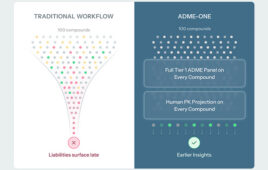
For years, many small-molecule teams have treated comprehensive Absorption, Distribution, Metabolism and Excretion (ADME) profiling as a lead-optimization step. That is, it serves as a place to spend heavily once a lead series has already emerged. Now, Ginkgo Datapoints, Tangible Scientific and Inductive Bio are betting that AI, automation and tighter compound logistics can move…
How CTF is trying to rescue pharma’s shelved rare disease drugs
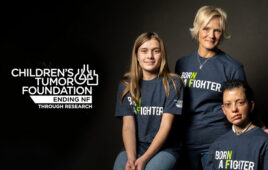
Right now, more than 5,000 potential rare disease treatments are sitting on drug company shelves, according to Children’s Tumor Foundation (CTF) CEO Annette Bakker. That includes drug candidates that companies have stopped actively developing, often after substantial preclinical, toxicology or early clinical work. Nonprofit organizations can help close the gap. One example is the Children’s…
eClinical Solutions study models 241% ROI from AI-powered clinical trial data platform

Imagine you were in charge or managing a project worth potentially billions of dollars that had upwards of six million data points. You could have any system you devise in the world to integrate this data. And yet, the first tool you reach for is a standard Excel spreadsheet. . That thought experiment isn’t far…
Rethinking evidence generation for ultra-rare diseases
FDA’s RDEP in Context Developing treatments for ultra-rare diseases presents fundamental challenges for traditional evidence generation. Patient populations for these conditions range from fewer than 10 to up to 1,000, making traditional randomized clinical trial (RCT) designs impractical and possibly unethical. These constraints require sponsors to adopt flexible evidence approaches without compromising the rigor needed…
Chinese firms landed 6 of 26 major pharma deals in 16 months, worth $53 billion
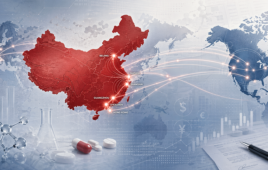
Over the past 16 months, Chinese-domiciled biotechs have featured in roughly 6 of every 26 major pharma licensing and acquisition deals, accounting for nearly one-third of total headline value. Roughly half of those deals involve firms of U.S. origin, mostly involving M&A. Just under 30% involves licensing deals with Chinese-headquartered firms while the remainder involves…
How Immuto Scientific pairs AI and mass spec for a step change in protein structure throughput
Cryo-electron microscopy can deliver near-atomic and, in favorable cases, atomic-resolution protein structures, but sample preparation and grid optimization remain major bottlenecks. Immuto Scientific, co-founded in 2018 by CEO Faraz A. Choudhury, Ph.D. and CTO Daniel Benjamin, Ph.D., both electrical engineers by training, is making a narrower pitch: that for selected workflows, especially antibody-antigen analysis, its…
How to tackle the unique pharmacokinetic properties of covalent drugs

Covalent drugs have been a transformative medical advancement since aspirin was first approved in 1899. Penicillin followed soon after and is one of the most impactful pharmaceutical breakthroughs in human history. Since around a decade ago, an increasing number of new covalent drugs have been approved for a wide range of conditions, bringing hope to…
Closing the information gap: ETH Zürich team integrates function and binding in one drug screening assay
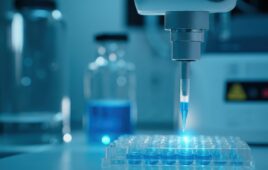
A team from ETH Zurich and Karolinska Institutet has developed a cross-linking MALDI mass spectrometry workflow that captures both functional response and target binding in a single assay. Drug screening has traditionally been split between functional assays and binding assays. However, neither tells the full story. Functional assays indicate whether a drug works, but not…
Sai Life Sciences plans to recruit 700+ professionals in FY27 as Indian CRDMO demand accelerates

Sai Life Sciences announced plans to hire more than 700 scientific, technical, and management professionals during 2026–27, citing growing global demand for integrated drug discovery, development, and manufacturing services. The Hyderabad-based CRDMO said the recruitment will span medicinal chemistry, biology, DMPK, process and analytical development, formulation development, process engineering, technology transfer, quality, peptides, business development,…
How digital tools and AI are accelerating drug discovery

In traditional drug discovery, typical timelines for successful drugs stretch from 10 to 14 years, or sometimes even longer to bring a drug from discovery to approval. In addition to that, the cost of bringing a drug to market can range from hundreds of millions to multiple billions of dollars. In fact, the inflation-adjusted cost…
Evogene, Systasy and LMU University Hospital Munich team up on AI-driven drug discovery for inflammatory diseases
A new international collaboration backed by a pan-European EUREKA grant aims to develop targeted small-molecule therapies for hyper-inflammatory diseases driven by dysregulated neutrophil activity, including inflammatory bowel disease (IBD). Evogene (Nasdaq: EVGN), Systasy Bioscience, and LMU University Hospital Munich announced the partnership on Feb. 11, with additional participation from the Weizmann Institute of Science. The…