[Adobe Stock]
The two companies began working together in late 2022, though the relationship traces back to the pandemic. “We’ve known the AstraZeneca team for about five years,” said Immunai CEO Noam Solomon in a recent interview. The initial collaboration focused on oncology clinical programs and has since widened considerably. “In October 2025 we announced an expansion into IBD, which represents another large department at AZ and reflects our growing interest in expanding to multiple indications,” Solomon said. “We started in immune oncology, expanded to other oncology areas, then into immunology and inflammation, and now we’re moving into cardiovascular inflammation, neuroinflammation, and even obesity and diabetes. The common thread is the immune system.”
AstraZeneca employs roughly 95,000 people and runs more than 100 Phase 3 studies across oncology, rare diseases, cardiovascular and metabolic medicine, and respiratory and immunology. Coordinating with an organization that size from a startup is operationally intensive. “Over the years, there are many dozens of people on their side and dozens on our side collaborating,” Solomon said. “We work with multiple groups: people on the AI and data science side, people in translational medicine, people in clinical development. Each group covers different indications and therapeutic areas.”

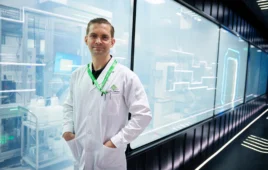
Noam Solomon
Why Immunai sees itself as a high-end plumber
That kind of cross-functional coordination points to the deeper challenge Immunai is trying to address: the infrastructure bottlenecks that slow drug development. Bringing a new drug to market costs $2.67 billion on average for top 20 pharma companies, according to a recent Deloitte estimate. “I describe myself as a plumber,” Solomon said. “I fix very expensive plumbing issues.”
A big part of the plumbing is data manipulation at scale. “First, generating a large volume of data from thousands of samples, creating a digital twin of the patients,” Solomon said. “Then applying our immune profiling and finding the clinical covariates manifesting in the immune system, so our platform can distill clinically meaningful insights from that.”
The pattern across Immunai’s partnerships tends to be pharma companies bringing clinical questions their existing infrastructure can’t resolve. “Usually those questions involve finding a better way to stratify patients for a clinical trial, identifying a biomarker for a toxic event, determining the optimal combination agent because a monotherapy isn’t producing the right efficacy results, or finding the right dose and schedule,” Solomon said.
In April 2025, Immunai and the Parker Institute for Cancer Immunotherapy assembled what they described as the largest single-cell dataset for real-world immunotherapy research, drawing from 3,700 blood samples across 1,070 patients treated with immune checkpoint inhibitors. In January 2026, Bristol Myers Squibb signed a separate multi-year partnership with Immunai focused on analyzing clinical immune data to clarify mechanisms of action, identify patient subgroups, and guide development decisions.
Turning patient samples into single-cell immune data
Many companies in the AI pharma market claim they apply AI to existing data, but Immunai takes a different approach. “The signal already exists, but it’s hidden in the clinical patient samples sitting in your biobanks,” Solomon said. “So in every collaboration, the starting point is the same: send us all the samples you have from the clinical trials, to our lab at 430 East 29th Street in New York. The first step is translating those biological specimens into digital data using single-cell multi-omic profiling of the patient’s immune system.”
In each project, Immunai analyzes how the immune system changes before and after a therapeutic intervention. “For every patient, think of it as an immune MRI: a profile at single-cell, multi-omic resolution, taken before and after treatment,” Solomon said. “Each profile is effectively a matrix of about 10,000 cells, and for each cell we have a large measurement containing roughly 37,000 gene expressions, around 75 surface proteins, and VDJ sequencing.”
That resolution lets the team track changes weeks and months after treatment. “Then we look at clinical endpoints: which patients had good progression-free survival or overall survival, and which didn’t,” Solomon said. “By correlating immune surrogate endpoints with clinical endpoints, we identify the immunological features relevant to efficacy, resistance, toxicity, and dosing.”
The advantages of single-cell resolution
Immunai’s AMICA database holds more than 300,000 samples, roughly 50,000 of them at single-cell resolution. Solomon argues the distinction between resolution and scale is where most competitors fall short. “A lot of big numbers in this field don’t actually lead to better decisions or better insights because the data was collected without depth,” he said. He compared low-resolution approaches to scaling black-and-white photographs. “You’ll never be able to see the difference between green and blue. If that’s the distinction you need to make, you’re stuck.”
The foundation model architecture also changes what Immunai can do with the small cohorts pharma partners typically provide, sometimes as few as 20 patients. “If you’ve built a foundation model on large-scale data, every new cohort compounds against the others,” Solomon said. “When you get a new cohort, you can resolve the signal.”
Filed Under: machine learning and AI