
For all the hope invested in them as treatments for depression, classic psychedelics may end up offering only incremental gains for most patients, based on some of the most recent data in the field. If that thesis proves true, the arc of psilocybin, the most widely studied psychedelic of late, would broadly echo the trajectory…
Boehringer Ingelheim eyes MASH as the next front for survodutide, a GLP-1/glucagon receptor dual agonist

For decades, fatty liver disease and its more serious inflammatory form, metabolic dysfunction-associated steatohepatitis (MASH), were often overlooked conditions with few approved treatments. Boehringer Ingelheim is among the companies now going after them with a concerted push. “We have a program in MASH, in the liver, the LIVERAGE program, plus a robust data-generation program to…
Blazing new paths for biotech

For the past several years, success has grown more elusive for American biotech firms. Even in the more robust investment climates prior to 2022, developing and growing a biotech always required a combination of risk appetite and patient capital that did not lend itself to the rapid exits typical of other areas of tech investing. …
Immunai’s digital ‘plumbing’ keeps AstraZeneca coming back

Immunai, a startup building a foundation model of the human immune system, has expanded its oncology collaboration with AstraZeneca for the third time. Immunai is eligible to receive up to $37.5 million over 2026 and 2027 under the new agreement, which extends its AMICA-OS platform deeper into AstraZeneca’s clinical development pipeline. The two companies began…
Top pharma companies set sustainability goals, but emissions are still increasing
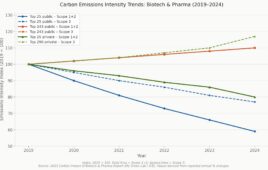
The health care industry contributes an estimated 4.4% of total global emissions annually. Approximately 71% of this comes from the health care supply chain, which includes the pharmaceutical and biotechnology sectors. Medicines contribute approximately 20% to 55% of health care’s total carbon footprint. This comes from corporate emissions, API production and manufacturing. Pharmaceutical manufacturing is…
Scaling pharma AI PoCs to enterprise deployments: Blending new tech with old-school rigor

Scalability is a common issue facing pharma leaders who have deployed Generative AI (GenAI) applications as a proof of concept (PoC). Many are dazzled by their promise of streamlining staid work processes. Agentic AI and other new GenAI technologies can make PoCs faster and easier to launch, advancing scalability as well as security and development…
How conversational AI can detect pharma safety events

Pharmaceutical manufacturers are tasked with monitoring and reporting safety events (adverse events, product quality complaints, special situations, etc.) to protect patient safety. This process – detecting, documenting, evaluating, reporting, and following up – is essential to meeting regulatory standards and ensuring optimal patient outcomes. However, many of these critical events are not being captured today. …
Why hospital biobanks should supply biotechs

When it comes to using biospecimens for research, the saying “garbage in, garbage out” applies (Compton, 2018). This maxim has been a driving force in biospecimen science: a field in which the focus is pre-analytical factors affecting biospecimen quality. It has also been a driving force in the professionalization of biobanking. As a result, the…
What’s driving the natural language processing revolution in pharma and life sciences

Pharmaceutical and life sciences companies are faced with a constant stream of new data flowing into often siloed information systems. About 80% of that information exists in unstructured text that is difficult to extract and use, despite its paramount importance in driving clinical and commercial outcomes. As a result, these organizations find themselves increasingly overwhelmed…