[Adobe Stock]
If that thesis proves true, the arc of psilocybin, the most widely studied psychedelic of late, would broadly echo the trajectory of selective serotonin reuptake inhibitors, which were placed on a pedestal before real-world results tempered the enthusiasm. In 1989, New York magazine hailed Prozac as a wonder drug. A year later, Newsweek put the capsule on its cover and called it a breakthrough for depression. Fluoxetine, Prozac’s chemical name, had won FDA approval in 1987 and arrived in a landscape hungry for new options. The pitch of the era held that depression was a chemical imbalance, and that SSRIs, with the SNRIs that followed, could correct it. By 2023, a systematic review in Molecular Psychiatry concluded there was “no support for the hypothesis that depression is caused by lowered serotonin activity or concentrations.”
The clinical record for SSRIs and SNRIs turned out more modest than pivotal trials suggested. In STAR*D, the largest real-world trial of antidepressant treatment, only about a third of patients reached remission on the first medication, and roughly two-thirds needed at least one more drug, with remission rates of 28% on the clinician-rated HAM-D17 and 33% on the patient-reported QIDS-SR16.
A real-world read from Zurich
A comparable gap may be opening for psilocybin, and the newest real-world data offers an early read. In a retrospective study in The Lancet Regional Health – Europe, psychiatrists at the University Hospital of Psychiatry Zurich followed 19 patients with treatment-resistant depression. The patients had received psilocybin under Switzerland’s limited-medical-use exemption, one of the few frameworks that permits the drug outside a clinical trial. Depression scores fell from roughly 31 to 20 on the clinician-rated MADRS, a large effect by statistical convention. About a third of patients responded and a fifth reached remission, figures the authors themselves flag as sitting at the bottom of the trial literature and roughly level with STAR*D. The benefit also front-loaded onto the first session, with repeat dosing adding little the small sample could separate from chance.
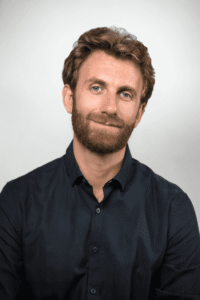
Rotem Petranker, Ph.D.
The fact that there appeared to be a treatment effect at all was heartening, said Rotem Petranker, Ph.D., who directs the Canadian Centre for Psychedelic Science and has spent years studying microdosing. “All the participants in this study had treatment-resistant depression, meaning nothing works,” Petranker said. “Imagine any disorder where nothing works, where every treatment we can give you is palliative, and then something works, even if it doesn’t work for everyone. I think that’s pretty cool.”
But the data is well short of the results that minted the hype. The first modern trials of classic psychedelics reported something near transformation: a 2021 Johns Hopkins study of 24 patients with major depression logged 71% response and 54% remission four weeks after two psilocybin sessions, and a head-to-head against the SSRI escitalopram that same year put psilocybin’s response near 70%. As the trials grew larger and more rigorous, the signal cooled. Psilocybin-focused pharma Compass Pathways’ Phase 2b in treatment-resistant depression, the biggest of that generation, started at roughly 37% response and slid to 20% by week 12. The Zurich patients, treated in ordinary clinical conditions rather than a trial, landed at 33% response and 22% remission, roughly half the early high-water mark and squarely in the range psychiatry already knows from SSRIs.
The cooling continued when the pivotal data finally arrived. Compass reported that both Phase 3 trials hit their primary endpoints, a single dose in 2025 and two doses in early 2026, but the separations from control were modest, about 3.6 and 3.8 points on MADRS. The company leaned on a 25 percent response threshold rather than the conventional 50 percent. Compass plans to file for approval by the end of 2026.
The 19-patient Zurich psilocybin cohort may offer data from a real-world difficult-to-treat patient population but is itself low-powered.
“No single study contains all the truth,” Petranker said. “The consensus seems to be that there’s something there. We don’t know whether the TRD response rate will be 30 percent of the population, 20, 40, 50, or 10, but it appears to be a novel, effective treatment for some mental health disorders, so it’s worth pursuing.”
The cautionary tale of MDMA
MDMA, the drug better known as ecstasy and, like the classic psychedelics, a Schedule I substance, offers another cautionary tale. Lykos Therapeutics, the company spun out of the advocacy group MAPS, took MDMA-assisted therapy for PTSD to the FDA on the strength of two positive Phase 3 trials. In August 2024 the agency declined to approve it and asked for another Phase 3. Lykos cut roughly three-quarters of its staff. To Petranker, the outcome was foreseeable. “It was clear to everyone but MAPS that the FDA wouldn’t approve it, because their submission didn’t fit the requirements,” he said. “A lot of people learned from that. Now Compass and others really try to cross their t’s and dot their i’s when they submit.”
Part of the problem was the fact that the MDMA therapy was a package deal bundled with intensive psychotherapy. “MDMA won’t work on its own; it requires a psychotherapy component,” Petranker said.
In a January 2026 review in Neuropsychopharmacology, psychiatry researchers Philip Harvey and Charles Nemeroff wrote that the FDA rejected the MDMA program “for reasons that could apply to clinical trials for classical psychedelics,” among them the difficulty of blinding patients who can tell they received an active drug.
Not everyone reads the modest numbers as a verdict against approval. Sandeep Nayak, who directs the Johns Hopkins Center for Psychedelic and Consciousness Research, said after the Phase 3 results that he anticipates the treatment will clear the FDA, pointing to the trials’ design and durability data.
A relative paucity of psychedelic data
Petranker notes that, compared to conventional antidepressants, the number of patients assessed remains relatively limited. “Over the last 20 years, something like 1,500 people have been administered psilocybin in a clinical trial setting,” he said. “Really not that many.” For context, STAR*D evaluated roughly 2,900 patients in its first treatment step alone, out of 4,041 outpatients enrolled.
That limited record of psilocybin, Petranker argues, is a reason to keep testing it. “Almost everyone [in the field] says, ‘We know it works, we just need to show it,’ and I’m like, ‘That’s not science. Science is, let’s see if it works,'” he said. “Where we’re all headed is from the very large, bombastic statements, ‘we’ve cured depression, this is it,’ to ‘this is a new tool we’ll use in the psychiatric toolbox.'”
More data, more muted signal?
Two recent meta-analyses support the case that psilocybin, despite its different mode of action, may not offer dramatically superior efficacy to more standard treatment options. In JAMA Network Open, Hieronymus and colleagues found similar active-arm response rates across psilocybin, SSRIs and esketamine, 48%, 46% and 52%, respectively, while psilocybin control arms responded at a lower rate than SSRI or esketamine controls.
Williams, Barnett and Szigeti, writing in JAMA Psychiatry, treated psychedelic-assisted therapy trials as functionally open-label, then compared them with open-label antidepressant trials. Across 24 trials, psychedelic-assisted therapy and open-label antidepressants produced nearly identical improvement on the 17-item Hamilton Depression Rating Scale: a 0.3-point difference favoring antidepressants, with a confidence interval spanning both directions (95% CI, -1.39 to 1.98; P = .73). The authors concluded that psychedelic-assisted therapy showed no significant advantage under equal-unblinding conditions.
The result surprised Szigeti. “What I wanted to show is that even if you compare psychedelics to open-label antidepressants, psychedelics are still much better,” he told UCSF. “Unfortunately, what we got is the opposite result, that they are the same, which is very surprising given the enthusiasm around psychedelics and mental health.”
Six years ago, Petranker published a paper urging the field to slow down, “you’re writing checks you won’t be able to cash,” he said. “What we need now is rigorous, slow science.” A self-proclaimed skeptic, he expected the effects to shrink as trials moved toward real-world conditions. “The 50 or 60 percent response rates we’ve seen in some clinical trials? I’m very skeptical of those. If you look at SSRI trial results, the effects there are much bigger than what you see in real life,” he said. “It probably has something to do with the placebo response. People are very optimistic, there’s a lot of expectancy.”
Petranker was once more hopeful about microdosing itself. In a 2020 interview, he pointed to survey data showing that people who microdosed “fare better than people who don’t,” with the most common gains in mood, focus, and creativity.
More data made Petranker more skeptical. In what has been described as the largest randomized trial of psilocybin microdosing for depression, Petranker’s team gave patients two milligrams, a fraction of the standard dose. Both the drug and placebo groups improved, more than half of participants correctly guessed which arm they were in, and the clearest signal appeared not on depression scales but on a measure of dysfunctional attitudes. “I used to think a dose so small it’s unnoticeable could still be effective,” he said. “I don’t really think that anymore.” A preprint was published earlier this year.
Filed Under: Neurological Disease