 Eli Lilly is on track to overtake pharma rivals and claim the industry’s top spot by late 2026, completing one of the most dramatic repositionings in Big Pharma’s recent history. Aggressive and base scenarios place Lilly’s rise to the number one slot in 2026, while a conservative prediction forecasts that the firm will do so in 2028. (More on the methodology below.)
While Lilly’s emergence as the largest Big Pharma isn’t guaranteed, it is now the default expectation. Already, the scale of its growth has little precedent. As recently as 2020, Eli Lilly posted $24.5 billion in revenue, about half of what Roche’s pharma unit or Novartis generated that year. Now, the company’s own guidance for 2025 is in the range of $63.0 billion to $63.5 billion, more than two and a half times its 2020 revenue. Lilly could potentially close out the year as the second-biggest pharma company as its guidance is potentially higher than the lower end of Pfizer’s most recent guidance of $61 to $64.0 billion. It’s also within striking distance of Merck & Co.’s Q3 guidance of $64.5 to $65.0 billion.
Under base-case assumptions that reflect current tirzepatide momentum and Keytruda’s approaching loss of exclusivity, Lilly overtakes Merck by more than $10 billion in 2026. Even conservative modeling, which assumes CVS-style formulary pressure slows Lilly’s growth while Merck outperforms on Keytruda subcutaneous uptake, only delays the crossover to 2028.
| Year | LLY (Base) | MRK (Base) | Gap | LLY (Consv.) | MRK (Consv.) | Gap |
|---|---|---|---|---|---|---|
| 2025 (guide mid) | 63.3 | 64.8 | -1.5 | 63.3 | 64.8 | -1.5 |
| 2026 | 77.2 | 66.7 | +10.5 | 65.8 | 68.6 | -2.8 |
| 2027 | 87.2 | 68.0 | +19.2 | 69.7 | 71.4 | -1.7 |
| 2028 | 95.9 | 66.7 | +29.2 | 73.9 | 71.4 | +2.5 |
What is behind Lilly’s growth
Eli Lilly just reported Q3 2025 revenue of $17.6 billion, a 54% year-over-year surge that beat analyst expectations by $1.6 billion and prompted the company to raise its full-year guidance. Already the world’s most valuable pharmaceutical company by market capi, Lilly now appears on track to claim the revenue crown as well.
Tirzepatide, the company’s diabetes and obesity superstar, is doing the heavy lifting. Mounjaro generated $6.5 billion and Zepbound $3.6 billion in Q3, bringing the franchise to $10.1 billion for the quarter. Despite CVS Caremark’s July 1 formulary removal for some plans, Lilly cited minimal impact. By quarter-end, Zepbound held 71% of new U.S. obesity prescriptions, and roughly 75% of ex-U.S. Mounjaro obesity revenue was out-of-pocket pay.
Walmart now offers Zepbound at LillyDirect prices starting at $349 per month for the lowest dose. Lilly indicated about 35% of Zepbound prescriptions in Q2 were cash-pay, bypassing traditional PBM gatekeeping entirely.
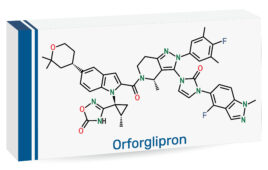
Behind the revenue surge is a manufacturing moat. Since 2020, Lilly has committed more than $50 billion to U.S. manufacturing expansion, including a $6.5 billion Texas API plant for orforglipron, the next-gen oral therapy for type 2 diabetes and weight management that is in clinical development. Lilly also has a $4.5 billion Indiana advanced “foundry” and a new $1.2 billion Puerto Rico facility also tied to the oral GLP-1 pipeline.
Its pipeline is moving fast. Lilly plans to submit orforglipron to the FDA this quarter, and management says the oral GLP-1 could qualify for expedited priority review, potentially bringing a once-daily pill to market by late 2026. Further out, Lilly and Nvidia are building a DGX SuperPOD with more than 1,000 Blackwell GPUs. The system would be the largest AI supercomputer in pharma, intended to accelerate discovery, trial design and manufacturing analytics through TuneLab. With a January go-live target, the supercomputer won’t move 2026 revenue but could meaningfully improve R&D productivity in the years ahead.
What could hold Lilly back?
The path to sustained dominance isn’t guaranteed. While Lilly’s Q3 2025 revenue of $17.6 billion signals momentum, five structural headwinds could compress multiples or delay the revenue crossover that analysts now price into 2026: payer economics turning structural, manufacturing execution risk, oral GLP-1 margin compression, safety wildcards and competitive resilience from a top-tier rival.
One question is whether PBM exclusions like CVS’s July 1 Zepbound removal represent episodic negotiating tactics or the beginning of structural pressure on net pricing. So far, the evidence looks manageable rather than existential. CVS dropped Zepbound but Lilly still posted a $10.1 billion tirzepatide quarter in Q3. About 1 in 10 people using Zepbound switched to a different GLP-1 in July, and a class-action lawsuit alleging the decision was rebate-driven rather than evidence-based underscores patient and provider resistance to forced switches. If multiple large PBMs adopt similar stances simultaneously, Lilly’s pricing power could face real constraints.
Supply or launch timing disappointments
Execution risk remains around new U.S. capacity and the orforglipron filing and approval sequence. Lilly has announced more than $50 billion in U.S. manufacturing expansion since 2020, with fresh projects in Texas, Indiana, and Puerto Rico. That scale lessens but doesn’t eliminate execution risk. Any delay in orforglipron’s anticipated Q4 2025 FDA submission would push meaningful volume upside into late 2027, creating a window where Merck could sustain its lead longer than base-case models assume.
Oral competition and class economics
Novo’s daily pill and Lilly’s orforglipron are both expected near injectable pricing, limiting pure “access” upside and intensifying PBM negotiations around therapeutic interchange. Novo offers oral semaglutide at $499 per month through NovoCare Pharmacy, matching Lilly’s cash-pay strategy.
Current large outcome datasets, including SELECT with semaglutide and SURMOUNT with tirzepatide showing cardiovascular benefit and durable weight loss, mitigate this risk but do not eliminate it. The ongoing SURPASS-CVOT trial comparing tirzepatide to dulaglutide in patients with established cardiovascular disease will provide definitive evidence, with results expected in 2025 to 2026. Any unexpected signal around pancreatitis, thyroid neoplasm or other class effects in long-term real-world data could trigger regulatory action or payer coverage restrictions that materially impact uptake trajectories.
Merck outperforms consensus pre-LOE
Another possibility relates to Keytruda subcutaneous (Qlex) uptake and Gardasil stabilization after the Q2 China shock (a 55% year-over-year decline), which could extend Merck’s revenue dominance beyond 2026. Merck’s Q3 2025 showed Keytruda at $8.1 billion, up 8%, with management expecting 30% to 40% patient adoption of the subcutaneous version over 18 to 24 months. A subcutaneous formulation that improves patient compliance and enables more convenient dosing could sustain high-single-digit Keytruda growth through 2027, delaying Lilly’s crossover even under base-case tirzepatide assumptions. However, Gardasil’s 25% decline and Keytruda’s approaching 2028 loss of exclusivity create structural headwinds that will eventually overwhelm any subcutaneous uptick.
Pfizer finds a credible obesity/metabolic path quickly
As of 2025, Pfizer’s danuglipron is shelved after potential drug-induced liver injury surfaced in April 2025. Pfizer’s 2025 guidance implies flat to modest growth. Pfizer still has an oral GIPR antagonist in Phase 2, but without a near-term GLP-1 answer, Pfizer is more of a “what could help close the gap” scenario than an active blocker to Lilly surpassing Merck. Analysts speculate Pfizer may pursue inorganic growth, with Viking Therapeutics’ VK2735 emerging as a potential acquisition target. A bold M&A move in late 2025 or early 2026 could change the competitive landscape, though integration timelines mean any impact on 2026 revenue would be minimal.
Ultimately, it would take a stack of headwinds (CVS-type formulary pressure plus orforglipron slip plus above-trend Merck growth) to push the overtake out to 2028. Under guidance-consistent assumptions, 2026 is the base-case crossover. Given that the 2026 revenue crossover is now priced in by the market, the operative question is no longer if Lilly will become the number one pharma by revenue in the coming years, but how the market can justify the asymmetric valuation that already exists, a valuation that prices in not just the crossover but a decade of flawless execution and market dominance.
Methodology
The crossover year is defined as the first year Lilly’s total revenue exceeds Merck’s. These growth assumptions reflect Q3 2025 product velocity (tirzepatide $10.1 billion versus Keytruda $8.1 billion in a single quarter), visible payer formulary actions, Keytruda’s 2028 loss of exclusivity and Medicare price negotiation, and Lilly’s announced manufacturing capacity additions. We anchor 2025 to company guidance midpoints: Lilly $63.25 billion, Merck $64.75 billion, Pfizer $62.50 billion. For 2026 through 2028, we model three transparent, rules-based scenarios:
- Base case: Lilly grows +22%, +13%, +10% annually; Merck grows +3%, +2%, -2%; Pfizer grows +2% each year
- Conservative case: Lilly grows +4%, +6%, +6%; Merck grows +6%, +4%, 0%; Pfizer grows +1%, +2%, +2%
- Aggressive case: Lilly grows +34%, +24%, +15%; Merck grows +3%, +2%, -4%; Pfizer grows +2% each year
Sources
- Lilly Q3 2025 Earnings Release
- Lilly Q3 2025 Earnings Call Transcript
- Merck Q3 2025 Earnings Release
- Pfizer Danuglipron Discontinuation
- CVS Caremark GLP-1 Formulary Changes
- Reuters Healthcare & Pharmaceuticals coverage of manufacturing expansion, product launches, and competitive dynamics
- Lilly Manufacturing Expansion Announcements
- CNBC: Oral GLP-1 Competition Analysis
Filed Under: Metabolic disease/endicrinology