[Adobe Stock]
By then, FDA had published a February warning letter to MEDVi, alleging that branding compounded semaglutide and tirzepatide under the company’s own name obscured the products’ actual source. The same letter alleged MEDVi had misleadingly implied equivalence to FDA-approved drugs. MEDVi said in a statement that it had never received the warning letter, saying it was directed at an affiliate. An archived January version of medvi.io, however, routed prospective customers directly into MEDVi’s intake system at medvi.org while terms posted on medvi.io identified MEDVi LLC as the contracting company.
A number of companies in the compounded GLP-1 market appear to be following a similar playbook with overlapping clinicians, pharmacy networks, website designs and marketing conventions. As of August 24, VitalSlim and MDRxLabs displayed Drs. David Mansour, Ana Lisa Carr and Kelly Tenbrink, the same three physicians previously featured by MEDVi. Both sites identify “CareGLP Affiliated P.C.s” and OpenLoop Health as medical-provider networks. AltRx identifies OpenLoop Healthcare Partners as its medical-services provider, while MEDVi’s current disclosures also name CareGLP-affiliated practices and OpenLoop Health. Several of the sites list overlapping pharmacy providers, including Triad Rx.
![AltRx’s website on Aug. 24, 2026, featured Drs. David Mansour, Ana Lisa Carr and Kelly Tenbrink. A pending class-action complaint against OpenLoop Health and Triad Rx identifies the same three physicians as having previously appeared on MEDVi’s website. The physicians are not defendants in the case. [Screenshot/AltRx]](https://www.drugdiscoverytrends.com/wp-content/uploads/2026/08/Screenshot-2026-08-24-at-4.10.53-PM-scaled.png)
AltRx’s website on Aug. 24, 2026, featured Drs. David Mansour, Ana Lisa Carr and Kelly Tenbrink. A pending class-action complaint against OpenLoop Health and Triad Rx identifies the same three physicians as having previously appeared on MEDVi’s website. The physicians are not defendants in the case. [Screenshot/AltRx]
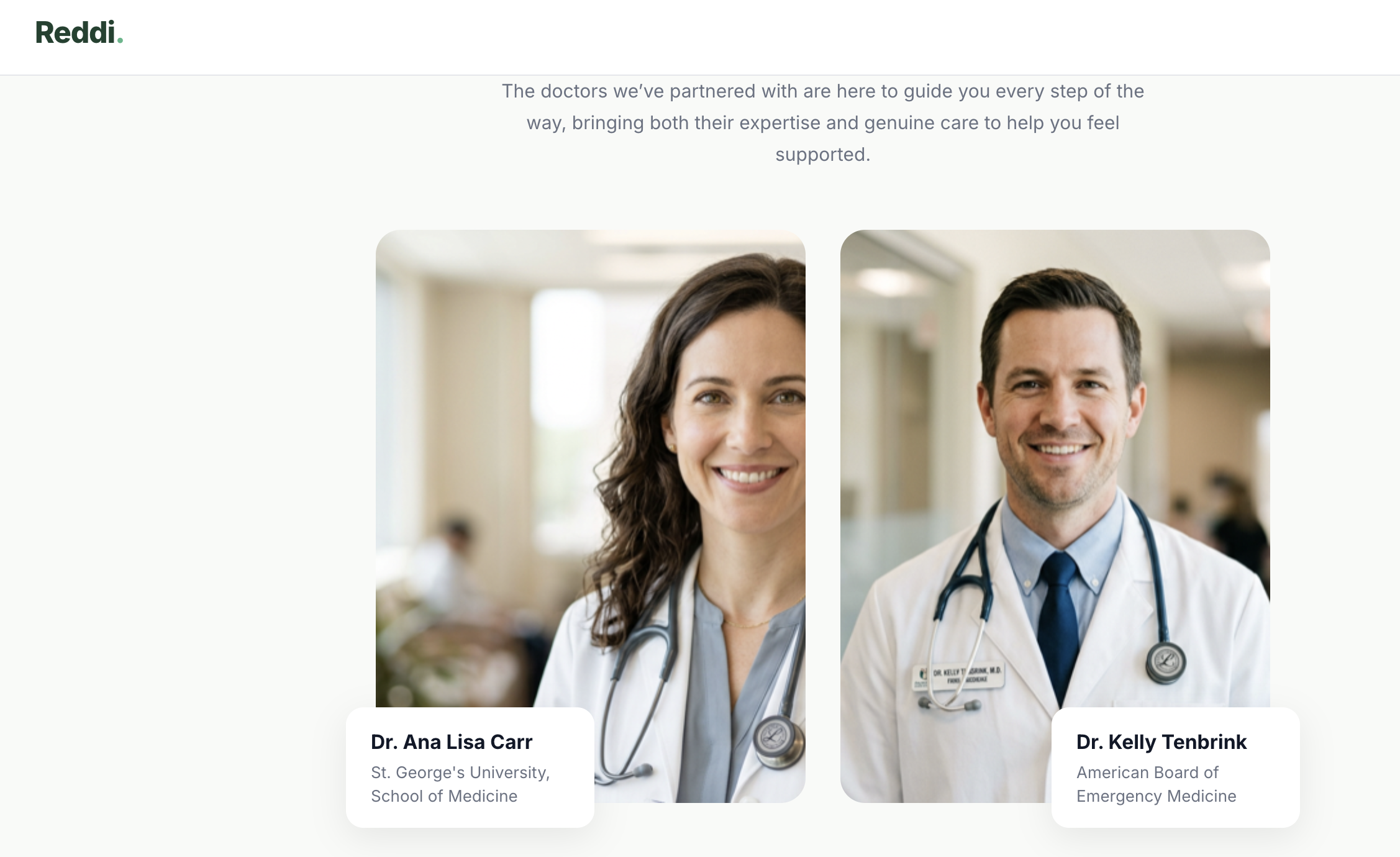
A website for Reddi (reddimed.com) lists Drs. Ana Lisa carr and Kelly Tenbrink, albeit with different faces.
Adverse events from compounded obesity drugs increasing
In any event, adverse event reports associated with the broader use of compounded GLP-1 drugs have continued to rise. As of May 31, 2026, FDA had received 990 reports associated with compounded semaglutide and more than 730 associated with compounded tirzepatide. The agency cautions that the reports do not establish causation, but that the totals are likely undercounts because many state-licensed pharmacies are not required to report adverse events. At the same time, America’s Poison Centers says it managed 22,966 GLP-1 agonist exposure cases from 2019 through 2025, with calls increasing nearly 1,500% over that period. Most involved accidental therapeutic errors with FDA-approved drugs, while compounded products have been associated with 10-fold dosing mistakes caused by confusion over syringe measurement units.
![OpenLoop's marketing site states that the company provides clinicians for its telehealth network and says every provider is vetted and credentialed. [Screenshot/OpenLoop]](https://www.drugdiscoverytrends.com/wp-content/uploads/2026/08/Screenshot-2026-08-24-at-4.30.00-PM-scaled.png)
OpenLoop’s marketing site states that the company provides clinicians for its telehealth network and says every provider is vetted and credentialed. [Screenshot/OpenLoop]
An unprecedented rise in compounding
The surge in compounding has little precedent. Novo Nordisk estimated in January that as many as 1.5 million Americans were still using compounded GLP-1s, and a study published in JAMA Health Forum this summer described the post-shortage market as “robust.” The article identifies 75 clinics and medical spas offering compounded GLP-1s in Oklahoma and West Virginia alone.
The boom also generated substantial revenue for large compounders. An internal sales dashboard obtained by the Houston Chronicle showed that Houston-based Empower Pharmacy, which operates both a 503A pharmacy and a 503B outsourcing facility, generated $311 million during the first 10 months of 2024, with GLP-1 formulations accounting for 66% of that revenue. Figures Empower provided to the Houston Business Journal put its full-year revenue at $377 million, up from $119 million in 2022. At the industry level, bankers cited by Bloomberg estimated that compounded weight-loss drugs were bringing in as much as $1 billion a year for pharmacies.
FDA added Wegovy to its shortage list in March 2022, Ozempic that August and tirzepatide that December. Those listings opened a narrow legal path for pharmacies to sell copies of drugs still under U.S. patent, and a direct-to-consumer industry filled it fast enough that FDA sent more than 55 warning letters to online sellers in a single day in September 2025.
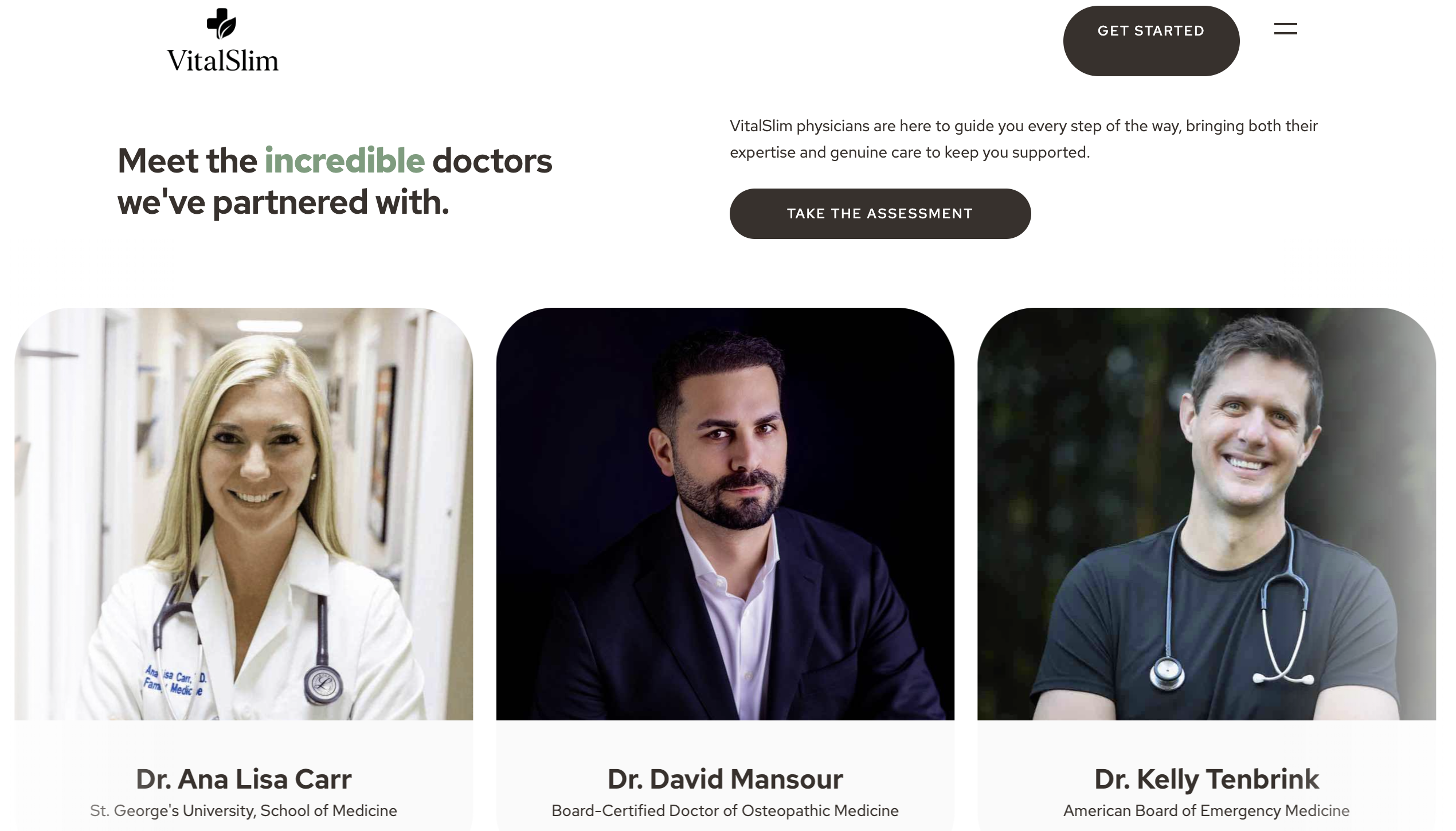
VitalSlim is another OpenLoop-connected GLP-1 site that features Drs. David Mansour, Ana Lisa Carr and Kelly Tenbrink, the same three physicians previously featured by MEDVi. The site also uses the “Finally serious about weight loss?” framing and some of the same promotional imagery previously seen on MEDVi. [Screenshot/VitalSlim]
The Outsourcing Facilities Association sued FDA in late 2024 over both the tirzepatide and semaglutide shortage determinations, arguing that FDA acted too quickly in declaring the shortages resolved.
Congress has also weighed in with the bipartisan SAFE Drugs Act of 2025, which would limit compounding under section 503A of a drug that is “essentially a copy” of a commercially available product to no more than 20 times per month, absent a patient-specific change deemed significantly different by the prescriber. As of August 2026, the bill remains before the House Energy and Commerce Committee.
The Alliance for Pharmacy Compounding and National Community Pharmacists Association are currently opposing the SAFE Drugs Act’s proposed 20-unit monthly limit and additional reporting requirements.
Pharma pushback and fraud allegations
Novo and Lilly have also taken aim at compounding related to their respective metabolic franchises. In February 2026, Novo Nordisk sued Hims & Hers for patent infringement and says it has now filed 132 suits across 40 states, winning 44 permanent injunctions. Lilly sued the compounders Strive Pharmacy and Empower in April 2025, then four telehealth companies weeks later.
FDA has also warned that some compounded semaglutide and tirzepatide products carry false label information, including pharmacy names that either do not exist or did not make the drugs. Complaints extend beyond the contents of the drugs to the telehealth sales model. FitRx and Zealthy customers have described poorly disclosed charges, recurring subscriptions and obstructed cancellations, including an $866 charge disputed by a WIRED contributor after he registered to check the price of compounded tirzepatide.
The OpenLoop and Triad Rx connections are also central to a pending civil RICO complaint alleging that the companies operated infrastructure behind a network of consumer-facing telehealth storefronts selling oral tirzepatide. The complaint identifies MEDVi as one of those storefronts and alleges the formulation has no demonstrated oral absorption or efficacy. Lilly does not market oral tirzepatide. MEDVi is not a defendant in the case.
Filed Under: Drug Discovery and Development