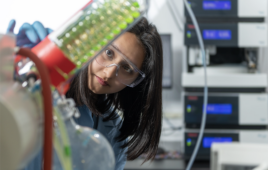
Sai Life Sciences is opening a new CMC Process R&D Center at its integrated R&D campus in Hyderabad.
Why has it taken so long, historically, to bring a new drug to market? In a word: complexity.
At one end of the spectrum, there is the complexity of disease, genetic variability, the presence of environmental variables that cause patients to respond differently to the same treatment. The thread extends into clinical development, where the average Phase 3 protocol now collects 5.9 million data points, growing 11% a year since 2020, while nearly a third of the procedures behind them support no primary or key secondary endpoint. And it follows the molecule into process development, where a reaction that behaves in a round-bottom flask can misbehave in a vessel 2,000 times larger, because mixing and heat transfer do not scale with volume. In work Sai published with AstraZeneca this year, the reagent in question was a Turbo-Hauser base, reactive enough that its formation had to be tracked by infrared in real time before the iodination step downstream could be trusted.
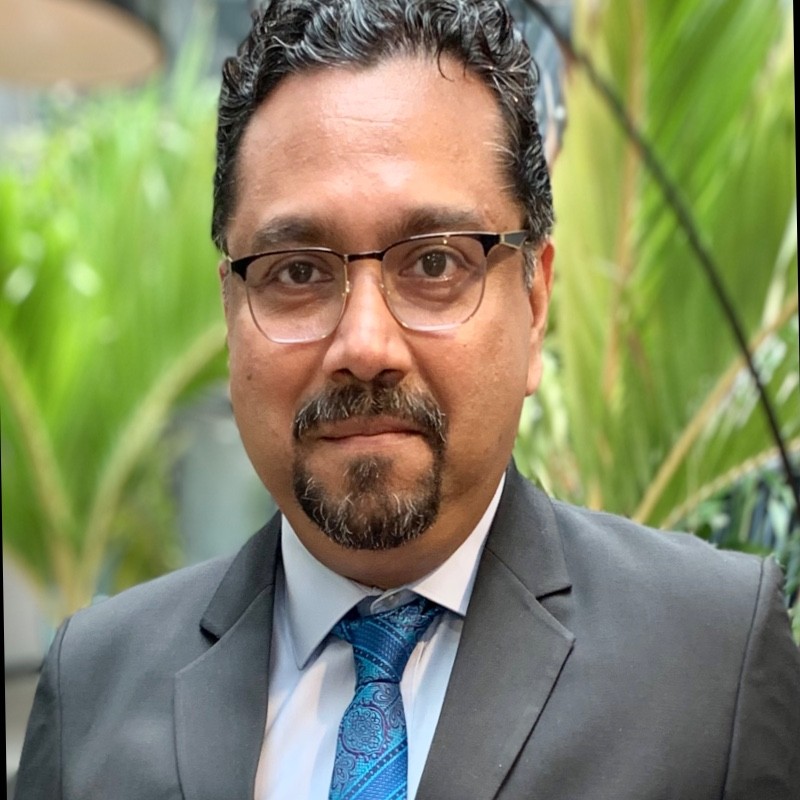
Tuneer Ghosh
It is no wonder, then, that a new drug has traditionally taken 10 to 12 years to reach the market, at a record $2.67 billion per asset, according to Deloitte’s latest analysis of the top 20 biopharma companies. Tuneer Ghosh, president of CMC at Sai Life Sciences, says his customers have stopped accepting that timeline. “I think those are things of the past,” Ghosh said. “People want speed.”
Ghosh says many Sai clients want to compress traditional workflows without giving up quality standards. That pressure shows up most clearly in process development, where companies want to move lab-scale chemistry into plant-scale manufacturing with fewer intermediate scale-up batches.
“We are understanding today that large pharma wants to go directly from a 50-gram experiment in the lab to a 50- or 100-kilogram batch directly in the plant. They really don’t have the time to go from a 50-gram batch to a 500-gram batch to a one-kilogram batch to a 10-kilogram and then to 100-kilogram,” he said. “Those days are pretty much over. Now, to get to a 50- or 100-kilogram batch from a 50-gram batch in the lab, we’ve got to be very precise with our technology, with the science.”
One recent example is a 2026 paper Sai published in Organic Process Research & Development with AstraZeneca, “ReactIR Monitoring of Turbo-Hauser Base Formation Enables a Robust Iodination Reaction During an Early Scale-Up Campaign.” The work used in-line infrared monitoring to follow the formation of a reactive base and support a subsequent iodination process during early scale-up. The work is “essentially reaction kinetics,” Ghosh said. Using ReactIR and kinetic modelling, the researchers examined how the Turbo-Hauser base TMPMgCl·LiCl forms on scale and developed a protocol that produced the target building block at decagram scale.
“Once the kinetics of a particular reaction is known, then obviously it’s easier for us to understand the mechanism of reaction,” Ghosh said. “And once the mechanism of the reaction is known, then it’s very easy to derive parameters that we would want to control in the plant.” The goal is to “get it right first time,” he said.
The published study stops at the decagram scale, or tens of grams, and therefore does not demonstrate the direct jump to a 50- or 100-kilogram plant batch that Ghosh described. It illustrates one part of the approach: using real-time measurements and kinetic models to identify the reaction parameters that would need to remain controlled as the process moves to larger equipment. The study, Ghosh said, was “just a part of what we eventually intend to achieve, which is to take a 50-gram experiment in the lab to a 100-kilogram batch using modelling.”
The broader goal is what Ghosh calls “data-rich experimentation,” generating as many useful data points as possible and feeding them into models. “So, the purpose is kinetic modelling,” he explained. “Generate data, because data-rich experimentation is what we are actually targeting. Generate as much data, as many data points as possible. Feed all of that data into models.”
Sai has also invested in engineering tools including Aspen, DynoChem and MixIT to examine mixing requirements, agitator design, heat and mass transfer, and other factors that can affect scale-up. The investments have created something of a flywheel effect. “The more accurate data points that you feed into the model, the more accurate the model is,” Ghosh said. The goal is for the model to generate data that flows into the manufacturing recipe in the batch record.
That modelling effort builds on a digital foundation Sai has spent several years building. The company’s operations are largely paperless, with LIMS and ELN supporting laboratory work and the bespoke GMP Pro platform connecting tech transfer through to batch release.
Now Sai is trying to make those systems feed a compartmented data lake while also respecting the customer’s IP. “The IP is owned by customers, because we are a CDMO,” Ghosh said. “So we are creating a data lake with compartments, where we can preserve customers’ data, and then use that data to further fine-tune the models.”
The data lake is part of a broader digitalization effort that includes process optimization and AI dimensions. In terms of the size of the data lake, Ghosh said it is too early to say “because we’ve just started working on it. We are running with BCG a digitalization roadmap,”
Ghosh said the effort, known as Sai 360, is “an integrated operating system that will enable a uniform end-to-end workflow across all teams and leadership control tower.” It will offer “end-to-end visibility and early warning platform for the leadership at appropriate levels to track the relevant processes,” he continued.
When asked about the motivation behind the effort, Ghosh noted in written remarks that “the need for speed and complexities in the process is driving us to think differently. We are pivoting to a ‘science-first’ approach.” He continued: ”Once the science is understood well, it is a lot easier to plan technology, process and problem-solving.” Ultimately, the approach is much more granular with milestone-based planning. “The key is to reduce surprises and to act in real time if there is a problem,” Ghosh concluded.
Filed Under: Drug Discovery and Development