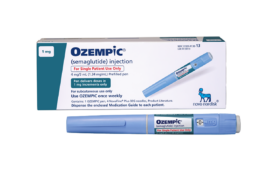
On Thursday, the Trump administration announced agreements with Eli Lilly and Novo Nordisk to reduce the prices of the companies’ GLP-1 drugs for Americans. Under the agreements, Ozempic and Wegovy will be sold at $350 per month and Zepbound for an average of $346 per month, depending on dose, when purchased through TrumpRx, a platform that connects patients directly with drug manufacturers to help patients find the best price. The platform is expected to launch in January 2026.
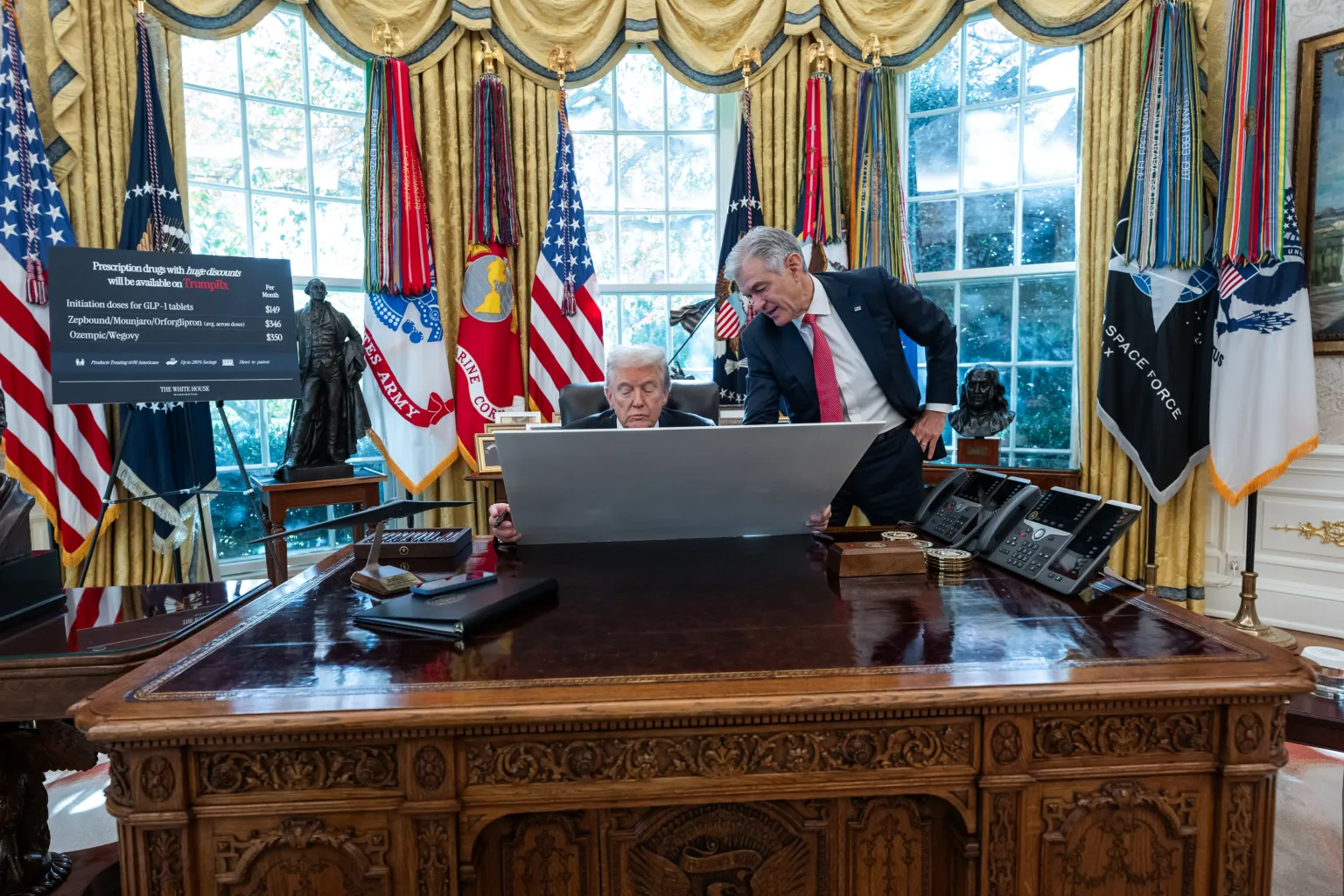
Donald Trump announced a deal to lower the prices of GLP-1s. Credit: The White House
The announcement also states that if the FDA approves the Wegovy pill, “or certain similar GLP-1 drugs” in the companies’ pipelines, the initial dose of the pill will be priced at $150 per month through TrumpRx.
Additionally, Ozempic, Wegovy, Mounjaro and Zepbound will be available at $245 for patients on Medicare with a copay of $50 per month as soon as April 1, 2026.
The agreements also reduce prices for other Eli Lilly and Novo Nordisk medicines through TrumpRx. Lilly’s Emgality, a treatment for migraines, will be sold at $299 per pen, a discount of $443. Trulicity, one of Lilly’s diabetes medicines, will be $389 per month, a discount of $589. Novo’s insulin products will be sold at $35 per month. Lilly already has an agreement with the administration to sell insulin products at the same price.
Most Favored Nation pricing
The agreement also states that the companies will guarantee Most Favored Nation (MFN) prices on all new medications, repatriate increased foreign revenue on existing products and provide every state Medicaid program access to MFN prices.
MFN pricing guarantees a buyer the best price a seller offers to any of its other buyers. If a seller offers another buyer a discount, they must offer the same discount to the MFN. In the U.S., where the concept has become tied to drug pricing, MFN prices mean that a pharmaceutical company must sell a drug for the lowest price paid for that same drug in economically similar, developed countries, for example, the U.K.
The goal of the MFN policy is to reduce the price differences between the same drugs in America and abroad. According to the White House, “the prices Americans pay for brand-name drugs are more than three times the price” that economically similar countries pay. A fact sheet on the subject also stated that “Americans are subsidizing drug-manufacturer profits and foreign health systems, both in development and once the drugs are sold” because drug manufacturers benefit from spending by the U.S. government, then discount their products abroad to gain access to new markets, balancing this loss with hiking up prices in the U.S.
In an article published by The Petrie-Flom Center at Harvard Law School Ganeswar Marcha, a legal researcher in health law, warns that shrinking revenues in the U.S. caused by MFN pricing may delay or scale back investment in new treatments. Pharmaceutical companies argue that they may be more hesitant to invest in high-risk R&D. PhRMA, the industry trade group, argues MFN-style foreign reference pricing would reduce investment and limit access: “Importing foreign prices from socialist countries would be a bad deal for American patients and workers,” said its CEO Stephen J. Ubl in May. He added that such a rule would “mean less treatments and cures and would jeopardize the hundreds of billions our member companies are planning to invest in America.”
Marcha also states that MFN pricing does not treat the root causes of inflated drug prices in the U.S.: pharmacy benefit managers (PBMs) negotiating secretive rebates, Medicare’s lack of authority to directly negotiate with drug manufacturers and U.S. patent law allowing excessive extensions that delay generics from entering the market.
Lowering drug prices in the U.S. would likely cause prices elsewhere to rise, which may seem like an improvement in equality. In actuality, this undermines global health equity by reducing access for countries with universal healthcare or limited budgets. Marcha concludes that MFN pricing could cause a “global affordability crisis.”
American manufacturing
In return for the deal, Lilly will be exempt from tariffs for three years and will not be subject to future pricing mandates, the company said. Novo Nordisk will also receive the three-year tariff exemption. As the administration has been considering imposing a 100% tariff on all imported branded drugs for companies that are not breaking ground on new U.S. sites, this exemption could help both companies save big.
Novo Nordisk has also committed an additional $10 billion investment towards manufacturing in the U.S., including a commitment to produce the Wegovy pill end-to-end in the U.S.
“Novo Nordisk currently expects an estimated direct, negative low single-digit impact on global sales growth in 2026,” after implementing the agreement, the company said.
Lilly has invested approximately $27 billion in U.S. manufacturing
In the market
Lilly stock was up 1.26% at close on Thursday, while Novo lagged behind at -3.31%, likely from investor concern over lost revenue due to the dropping prices. On Monday afternoon, Lilly was up almost 4.73% and Novo was up 0.33%.
Novo Nordisk on Monday also pulled its bid for Metsera, allowing Pfizer to acquire the company for $10 billion and ending the bidding war. This may have contributed to Novo’s small surge as investors viewed the move as a sign of financial discipline. Novo Nordisk cited its “commitment to financial discipline and shareholder value” as the main reason for pulling out.
Analysts had identified Novo’s $10 billion bid as risky. “The $10 billion price rested on optimistic assumptions about Metsera’s future performance, estimating Pfizer would need to generate about $11 billion in revenue from the deal by 2040 — nearly double Metsera’s current projections,” Courtney Breen, an analyst at Bernstein, said.
After the bid was pulled, analysts and investors expressed cautious relief and hope for future discipline. “We expect Novo to improve their risk management and use their cash more carefully,” said Markus Manns, portfolio manager at Novo shareholder Union Investment.
Filed Under: Endocrinology, Metabolic disease/endicrinology