
After kickstarting the GLP-1 wave that transformed the pharma landscape and briefly sending its market value above Denmark’s annual economic output, Novo Nordisk now trades about 5% below where its shares stood five years ago. After its shares hit an all-time closing high of $137.40 on June 25, 2024, the stock slid about 66% to…
Boehringer Ingelheim eyes MASH as the next front for survodutide, a GLP-1/glucagon receptor dual agonist
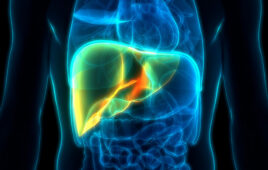
For decades, fatty liver disease and its more serious inflammatory form, metabolic dysfunction-associated steatohepatitis (MASH), were often overlooked conditions with few approved treatments. Boehringer Ingelheim is among the companies now going after them with a concerted push. “We have a program in MASH, in the liver, the LIVERAGE program, plus a robust data-generation program to…
Canada approves generic semaglutide from Dr. Reddy’s, a G7 first enabled by Novo Nordisk’s lapsed CAD$250 patent
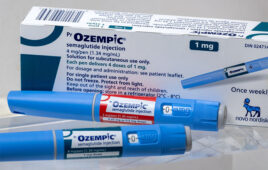
Ozempic is by far the best-selling drug in Canada, with $2.9 billion in sales in 2025, more than three times the next best-selling drug. More than a million Canadians are currently on it. And it is going generic. Health Canada has authorized Dr. Reddy’s Laboratories’ generic semaglutide injection, making Canada the first G7 country to…
From list price to net price: How finance leaders decode real drug costs

In the healthcare industry, drug pricing discussions often start and end with list price. Public debate usually revolves around annual list price increases, policymakers argue for transparency, and headlines emphasize wholesale acquisition cost (WAC). However, list price is just the beginning for payers, providers, and health systems responsible for overseeing actual budgets. The true financial…
OrsoBio’s LXR inverse agonist shows promise for hard-to-treat triglyceride disorders

OrsoBio, a small biotech company focused on developing therapies for obesity and obesity-related disorders, is looking beyond the GLP-1 trend in weight-loss solutions. In its pipeline, the company is developing mitochondrial protonophores that increase energy expenditure and could be used to treat obesity, diabetes and fatty liver disease. LXR inverse agonist for hypertriglyceridemia A drug…
SLAS 2026: Orchestration patforms, API-first instruments and the rise of semiautonomous labs

SLAS 2026 in Boston (Feb. 7–11) drew the usual mix of liquid-handler demos and poster sessions, but this year’s show floor had something of a different energy. Three orchestration platforms launched in the same week. Multiple instruments shipped API-first. Just two days earlier, on Feb. 5, OpenAI and Ginkgo Bioworks shared results from an autonomous…
FDA refuses to review Moderna’s mRNA flu vaccine

Moderna received a refusal-to-file (RTF) letter from the FDA’s Center for Biologics Evaluation and Research (CBER) for its investigational mRNA vaccine for influenza, the company said Tuesday. The letter is inconsistent with the feedback received at pre-Phase 3 and pre-submission consultations, Moderna said. The company has requested a meeting with the FDA. The vaccine, mRNA-1010,…
Terray says TerraBind delivers 26x faster inference than Boltz-2 by skipping diffusion-based coordinate generation
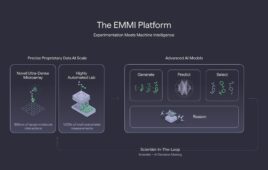
When MIT and Recursion released Boltz-2 last June, it marked a milestone: the first open-source AI model to jointly predict protein structure and small-molecule binding affinity. The model approaches the accuracy of physics-based free-energy perturbation methods at roughly 1,000x the speed. Its predecessor Boltz-1 had already been widely adopted, and Boltz-2 built on that momentum.…
American Society of Gene & Cell Therapy and Orphan Therapeutics Accelerator partner for medicines for rare diseases

The American Society of Gene & Cell Therapy (ASGCT) and Orphan Therapeutics Accelerator (OTXL), a biotech non-profit, have launched the CGTxchange, a jointly owned clearinghouse and marketplace designed to identify, evaluate and advance clinically validated cell and gene therapies (CGTs) for ultra-rare diseases that have been shelved due to commercial constraints. This will serve as…
Novartis picks Salesforce’s Agentforce as pharma bets big on AI agents

Big Pharma companies are still betting big on AI, with major players pouring resources into agent platforms. The goal: unify fragmented data, streamline operations from clinical trials to sales, and enable more personalized healthcare provider interactions. Novartis has selected Salesforce’s Agentforce Life Sciences for a global rollout over the next five years. The deal follows…
Ajinomoto CELLiST Korea launches CELLiSTTM AAV production supplement 1 to improve gene therapy manufacturing efficiency
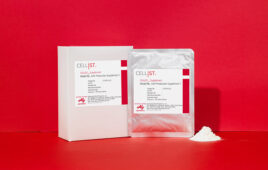
Ajinomoto, founded in 1909 after chemist Kikunae Ikeda isolated glutamate from kelp broth and commercialized it as MSG, has evolved from seasoning to cell culture media over more than a century Now, its Korean subsidiary Ajinomoto CELLiST Korea, which focuses on cell culture media development and manufacturing, announced the launch of CELLiSTTM AAV Production Supplement…
Lilly’s triple agonist delivers up to 71.2 lbs of weight loss in Phase 3 trial
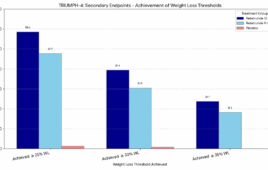
Lilly announced results from its Phase 3 TRIUMPH-4 trial of retatrutide, a first-in-class GIP, GLP-1 and glucagon triple hormone receptor agonist, on Thursday. In the efficacy-estimand analysis, participants taking the highest dose (12 mg) lost an average of 28.7% of their body weight at 68 weeks, about 71.2 pounds from a baseline of 248.5 pounds.…
Regulatory strategy reimagined: Three trends accelerating drug development

Is AI a risk or an opportunity? Is regulatory divergence a barrier or a catalyst for innovation? The answer depends on how prepared and how agile your organisation is. As regulatory frameworks shift beneath our feet, the question facing every drug developer is not ‘if’ but ‘how’ these macro trends will disrupt their strategy. In…
Novo Nordisk lays off dozens of US employees at NC plant

Novo Nordisk has laid off dozens of employees at its plant in North Carolina, an analysis of LinkedIn posts by Reuters found. The layoffs come after the company announced a plan to cut 9,000 jobs globally in an effort to compete with Eli Lilly last month. The exact number of layoffs at the Clayton plant…
Proscia adds Pictor Labs’ virtual stains; firms cite 96–100% ‘appropriate for workup’ in evaluations

Pathology labs still spend hours, and sometimes days, moving fragile tissue through reagent-intensive staining workflows that add cost, variability and waste. Virtual staining, an approach which uses AI models to transform label-free tissue images into counterparts that mimic chemical stains, aims to compress that process significantly while preserving scarce tissue and standardizing results across sites.…
RFK appointed five new members to ACIP

Three days before the ACIP’s meeting last week, Robert F. Kennedy Jr. appointed five new members to the ACIP, a process that usually takes months. The panel now has a total of 12 members. The new members will “bring diverse expertise that strengthens the committee and ensures it fulfills its mission with transparency, independence, and…
WHAM launches 2025 Edge Awards to support early-career researchers in women’s health
Women’s Health Access Matters (WHAM) has opened nominations for its 2025 Edge Awards, providing $25,000 grants to early-career investigators studying sex-based differences in health outcomes. The awards target research in autoimmune diseases, brain health, cancer and heart health, conditions that often affect women differently than men. For the first time, WHAM is also accepting proposals…
Proscia launches ‘Aperture’ AI platform to accelerate clinical trial recruitment at point of diagnosis

Only 7.1% of U.S. adults with cancer enroll in treatment trials (JCO, 2024), a bottleneck that slows drug development and limits access to targeted therapies. Proscia, a Philadelphia-based digital pathology company, aims to address that dynamic with its new tool, Aperture, which uses AI to flag potential candidates right at the point of diagnosis by…
Implementation Science: Improving adoption of medical advances in routine care

Evidence-based practices (EBPs) such as new treatments, improved surgical practices and updated screening programs drive healthcare forward and create better patient outcomes. However, healthcare organizations often struggle to adopt these promising medical advances, despite evidence supporting their efficacy and recommended use in routine care. Studies suggest that new practices can take years to be implemented…
Revitalizing the brain’s ‘housekeepers’ to combat Alzheimer’s

A potential new strategy against Alzheimer’s disease is taking shape in the brain’s own defense system. By boosting a specific enzyme in the brain’s immune cells, researchers at Cedars-Sinai have dramatically reduced the hallmark plaques of Alzheimer’s and reversed cognitive decline in mice. The news opens the door to potential cellular therapies for a disease…
Why Regeneron’s Lynozyfic FDA approval validates its extreme R&D thesis
KEY TAKEAWAYS: Regeneron (#20 by revenue in FY2024) became the third company to launch a BCMAxCD3 bispecific for myeloma, following J&J (#3) and Pfizer (#2). Company spends 36.1% of revenue on R&D—highest in pharma—growing at 19.5% annually Patent portfolio shows 652 antibody patents (50.3% of total) with 31 bispecific-specific filings Tarrytown, New York–based Regeneron may…
Parallel Bio’s $21M in Series A will drive aim to trim $2B and 9 years from drug development timelines

Cambridge-based biotechnology company Parallel Bio has closed a $21 million Series A funding round led by AIX Ventures. The company develops a drug testing platform that uses human organoid technology as an alternative to animal testing. The funding round included new investors Amplo and Salesforce CEO Marc Benioff, along with existing backers Metaplanet, Humba Ventures,…
Recce targets A$15.8M to advance anti-infectives into Phase 3 trials
Sydney-based Recce Pharmaceuticals has secured A$5.0 million via private placement and launched a A$10.8 million entitlement offer to support Phase 3 trials of its synthetic anti-infectives for diabetic foot infections (DFI) and acute bacterial skin and skin structure infections (ABSSSI). In an April 10 announcement, the company said the combined A$15.8 million raise (before costs)…
The true cost of steroid-toxicity
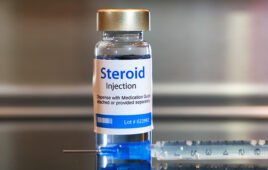
Glucocorticoids, commonly referred to as steroids, are currently the standard of care for the treatment and management of many autoimmune disorders. They are highly effective at suppressing inflammation and the reducing the activity of the body’s immune system, providing rapid relief from associated symptoms. At the time of prescribing, steroids appear to be a low-cost,…
Q&A: AnaptysBio’s CMO on rosnilimab’s ‘compelling’ phase 2b RA results

AnaptysBio has unveiled positive findings from its Phase 2b RENOIR clinical trial evaluating rosnilimab. Nearly 70% of participants achieved low disease activity (CDAI ≤10) by Week 14, with improvements persisting through Week 28. The investigational therapy met its primary endpoint by delivering statistically significant gains in DAS28‑CRP scores at Week 12 compared to placebo, alongside…