 VeriSIM Life, a San Francisco-based startup, has created BIOiSIM, an AI-powered platform that simulates drug compound behavior in the human body by acting like a virtual laboratory. It assigns each a predictive “credit score” predicting its viability for drug development.
“It’s like a FICO score for drug development,” founder and CEO Dr. Jo Varshney said. BIOiSIM’s scoring system draws from an inferential search space of more than 1 billion drug-like compounds and capacity to model 800 billion total simulation scenarios powered by 10 billion deep learning neural network effects. The vast search space of drug-like compounds and data processing capabilities enable it to evaluate numerous factors such as its potency, selectivity, and safety profile to determine a drug’s overall likelihood of success.
BIOiSIM focuses on predictive insights
The considerable scale of data allows for a comprehensive analysis of drug compounds, bolstering the predictive accuracy of its models and resulting in a comprehensive score that reflects the viability, safety, and potential efficacy of a given drug candidate.
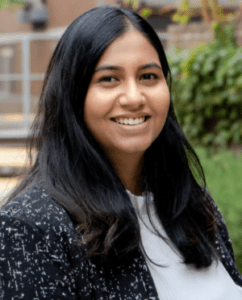 Importantly, the system is also not a black box where the reasoning behind the score is hidden or inscrutable. “You can go in and access a detailed report of everything that led to that score. It also tells you the recommendations on how to improve it,” Varshney said.
BIOiSIM provides a multidimensional Translational Index score for each combinatorial therapy. This allows for ranking therapies from potentially most to least efficacious, helping drug developers “assess their drug candidate’s potential and risks,” Varshney said. That is, the resulting data enables investigators to make informed decisions about which compounds to progress to the next stage of development and their potential likelihood for clinical success.
BIOiSim also incorporates human expertise. The ratio of machine to human intelligence caries according to the problem in question. If an 80-20 split between machine and human intelligence is a good starting point, the ratio could shift depending on how complex a given problem is.
Notable collaborations
VeriSIM Life collaborates with research institutions like the Mayo Clinic, and Clarivate. An NSF grant supported its rapid COVID-19 drug repurposing research while an NIH grant funded AI-driven development of medications for substance use disorder. Additionally, Debiopharm contributd to VeriSIM’s Series A funding in 2022, backing its mission to reduce animal testing and optimize preclinical stages.
Aim to not just accelerate drug discovery but reduce animal testing as well
Varshney has grand ambitions for VeriSM Life to reboot the drug development process using BIOiSIM. She envisions a more efficient and ethical approach through the simulation of human biology. VeriSIM Life’s aim is to predict a drug’s potential success in clinical trials early on by simulating how it will interact with human biology. This allows researchers to make informed decisions, potentially reducing the number of animals used in testing by eliminating poor candidates through simulation.
For example, the technology could identify issues with toxicity or efficacy before reaching costly clinical trials stages. Varshney elaborated, “The goal of reducing animal testing, if not potentially eliminating it, is stronger than ever for us.” Overall, through more targeted and effective drug screening powered by bioinformatics, VeriSIM Life seeks to accelerate and refine the drug pipeline.
BIOiSIM beyond initial discovery
Varshney emphasizes the long road ahead in drug development, “It’s typically a 10-15 year journey.” She notes that VeriSM Life’s focus extends beyond the initial discovery stages, with BIOiSM aiding in preclinical and clinical trial prediction.
VeriSIM Life is more than a platform company. Its PulmoSIM Therapeutics subsidiary is focused on developing therapies for rare and progressive respiratory diseases like pulmonary arterial hypertension (PAH) and idiopathic pulmonary fibrosis (IPF). PulmoSIM has two drug assets in its pipeline for PAH and IPF, with completed proof-of-concept preclinical studies showing key disease-reversal data. One of their drugs, PT001, has received orphan drug designation from the FDA on June 7, 2021.
Balancing platform and pipeline for maximum impact
Unlike some platform biotech companies that primarily offer technological platforms without direct involvement in drug development, VeriSIM Life believes balancing platform and drug development offers best of both worlds. “You cannot build a product without knowing how the product is going to really be perceived by the customers,” she explained. “You need that kind of feedback.”
Working with clients also offers tech-enabled services with a long-term royalty model. “If the drug makes it to the market, you want to be part of that royalty… we’re talking hundreds of millions of dollars.”
Tackling the vast challenge of disease
But in the end, the company’s larger aim is moving the needle on patient outcomes. With the current cost of developing a drug eclipsing $2 billion and taking over a decade, it will be difficult for the industry to tackle the full scale of unmet need across the vast spectrum of diseases with poor treatment outcomes or large unmet needs. Chronic conditions alone represent a staggering number of cases worldwide, and conditions like diabetes could affect about one in three adults by 2050, CDC projected in 2010. Added to that, National Organization for Rare Disorders (NORD) estimates that there are more than 1,200 rare disorders, and cumulatively, more than 10,000 rare diseases affect more than 30 million Americans.
With the current cost of developing a drug eclipsing $2 billion and taking over a decade, it will be difficult for the industry to tackle the full scale of unmet need across the vast spectrum of diseases with poor treatment outcomes or large unmet needs. Chronic conditions alone represent a staggering number of cases worldwide, and conditions like diabetes, on a severe upward trajectory, could affect about one in three adults by 2050, CDC projected in 2010. Added to that, National Organization for Rare Disorders (NORD) estimates that there are more than 1,200 rare disorders, and cumulatively, more than 10,000 rare diseases affect roughly one in ten, or 30 million Americans.
BIOiSim’s tool thus aims to provide a new tool to combat this vast challenge. “Everybody should be empowered to get the drug development process as efficient as possible,” Varshney said.
Filed Under: Drug Discovery, Drug Discovery and Development, machine learning and AI, Rare disease