A small molecule that can turn short-lived ‘killer T-cells’ into long-lived, renewable cells that can last in the body for a longer period of time, activating when necessary to destroy tumour cells, could help make cell-based immunotherapy a realistic prospect to treat cancer.
In order to protect us from invading viruses and bacteria, and from internal threats such as malignant tumour cells, our immune system employs an army of specialist immune cells. Just as a conventional army will be made up of different types of soldiers, each with a particular role, so each of these immune cells has a particular function.
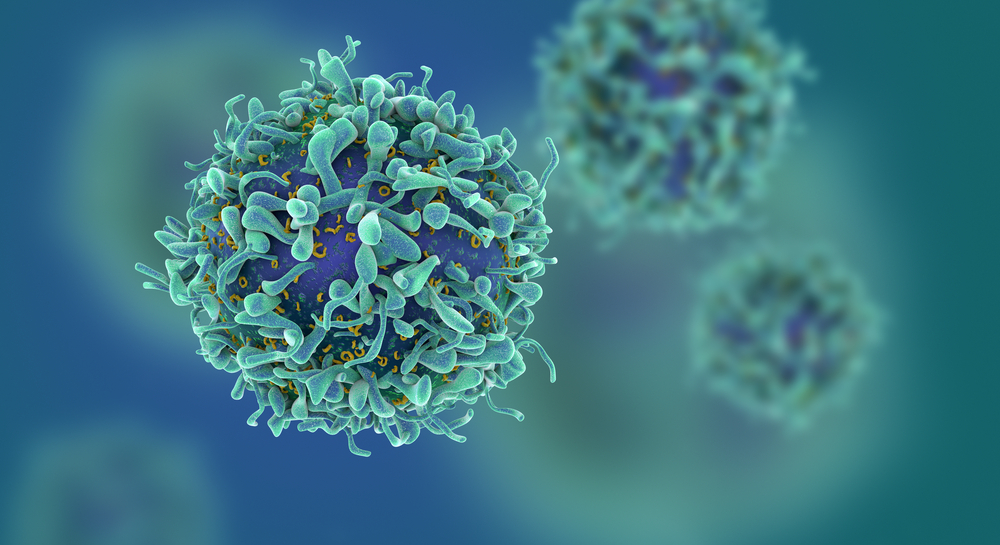
Among these cells are cytotoxic T-cells – ‘killer T-cells’, whose primary function is to patrol our bodies, programmed to identify and destroy infected or cancerous cells. Scientists are now trying to harness these cells as a way to fight cancer, by growing T-cells programmed to recognise cancer cells in the laboratory in large numbers and then reintroducing them into the body to destroy the tumour – an approach known as adoptive T-cell immunotherapy.
However, this approach has been hindered by the fact that killer T-cells are short-lived – most killer T cells are gone within three days of transfer – so the army may have died out before it has managed to rid the body of the tumour.
Now, an international team led by researchers at the University of Cambridge has identified a way of increasing the life-span of these T-cells, a discovery that could help scientists overcome one of the key hurdles preventing progress in immunotherapy.
In a paper published today in the journal Nature, the researchers have identified a new role for a molecule known as 2-hydroxyglutarate, or 2-HG, which is known to trigger abnormal growth in tumour cells. In fact, the team has shown that a slightly different form of the molecule also plays a normal, but critical, role in T-cell function: it can influence T-cells to reside in a ‘memory state’. This is a state where the cells can renew themselves, persist for a very long period of time, and re-activate to combat infection or cancer.
The researchers found that by increasing the levels of 2-HG in the T-cells, the researchers could generate cells that could much more effectively destroy tumours. Rather than expiring shortly after reintroduction, the memory state T-cells were able to persist for much longer, destroying tumour cells more effectively.
“In a sense, this means that rather than creating killer T-cells that are active from the start, but burn out very quickly, we are creating an army of ‘renewable cells’ that can stay quiet for a long time, but will go into action when necessary and fight tumour cells,” says Professor Randall Johnson, Wellcome Trust Principal Research Fellow at the Department of Physiology, Development & Neuroscience, University of Cambridge.
“So, with a fairly trivial treatment of T-cells, we’re able to change a moderate response to tumour growth to a much stronger response, potentially giving people a more permanent immunity to the tumours they are carrying. This could make immunotherapy for cancer much more effective.”
Filed Under: Drug Discovery