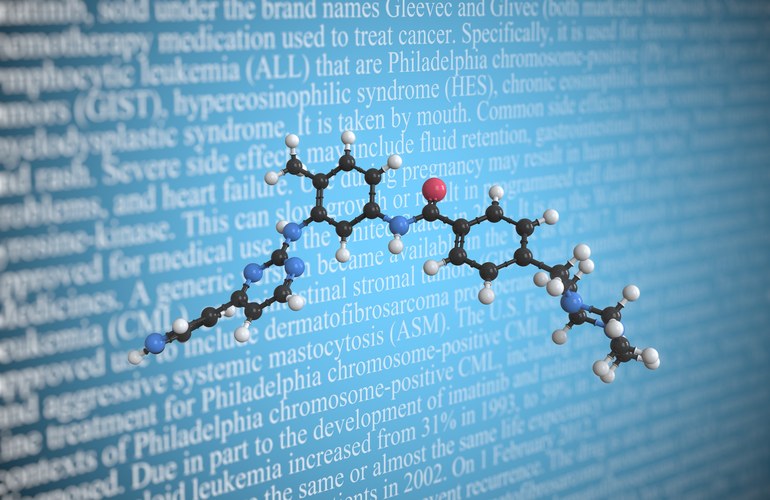
A model of imatinib, one of the two approved drugs combined in SM-19. Credit: Adobe Stock
Humanitas Global Health, a biotechnology company developing medicines and AI tools for drug discovery and prescription safety, announced its public launch on Oct. 27 at the American Association of Pharmaceutical Scientists’ PharmSci 360 conference in New Orleans. The company used the event to announce an agreement to commercialize Louisiana State University’s DeepDrug, an AI platform for designing potential medicines and predicting their biological effects, and hosted a panel on explainable AI in drug development and prescription safety.
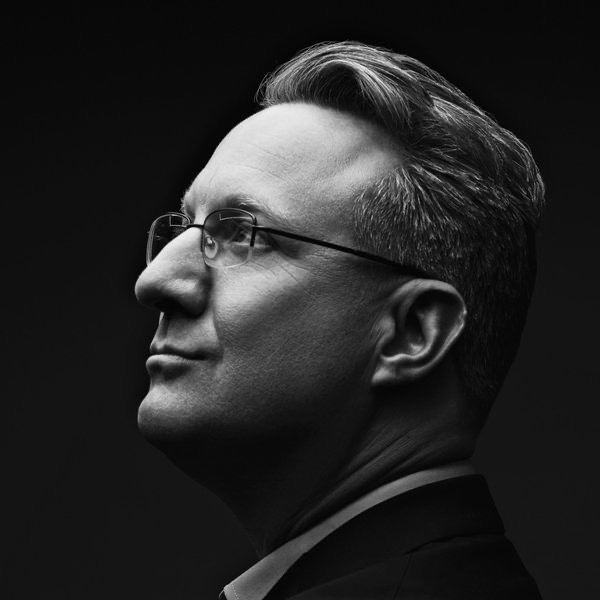
Chris Galliano, founder and CEO, Humanitas Global Health. Credit: Humanitas Global Health
The debut comes ahead of a planned major funding round, according to Chris Galliano, Humanitas’s founder and CEO, who said the company had spent six years in stealth and is “less of a startup and more of a roll-up”; its website lists 104 programs across 19 asset classes and three portfolio companies. DeepDrug grew out of work Galliano began in 2015 with Supratik Mukhopadhyay, the LSU professor who led the team that created DeepDrug. Galliano credits their shared background in model-based systems engineering, which uses formal models to describe complex systems, with shaping the technology.
That technology pairs a large language model with what the company calls a hypergraph, a framework for representing relationships among multiple biological and chemical entities. “We discovered long ago that we needed hybrid architectures as a strategy to be future-proof, and so we use LLM as an orchestration layer, but we need another aspect of that to do more fine-grain analytics based on measurements,” Galliano said. The graph tracks three kinds of relationships: protein-protein, protein-drug and drug-drug interactions. “That hybrid configuration is what allows us to retain the knowledge and also retain the measurements and manage our nodes and our analytics at a much finer grain than not having a graph,” he said.
The graph also makes predictions traceable. Galliano said the team needs to be able to walk the graph with explainability “to have that traceability all the way through that would hold up in a regulatory package,” and that the capability resonated with major pharma clients. Traceability is one part of what Humanitas calls Ethical Intelligence, which its release describes as AI built on explainable, traceable evidence and designed to give answers grounded in verifiable data and to acknowledge uncertainty.
How DeepDrug builds a candidate

Frank Cerasoli, chief development officer, Humanitas Global Health. Credit: Humanitas Global Health
In drug design, DeepDrug assembles a candidate molecule and then refines how it behaves in the body, according to Frank Cerasoli, Humanitas’s chief development officer, who held drug development roles at Pfizer, Roche and Sandoz and was part of the development and launch team for the obesity drug Contrave.
The process begins with pharmacophores, the chemical features involved in a molecule’s interaction with a biological target. “It has the ability to take a vast number of pharmacophores, kind of bolt them together into what might be a drug, while integrating into it its human targets,” Cerasoli said of DeepDrug.
That initial assembly then undergoes successive revisions to improve properties such as absorption while preserving its intended activity. “You kind of end up with some kind of Frankenstein molecule, and I don’t mean to be sort of demeaning this, but that then gets revised, iterated over and over and over again,” he said. Those rounds eventually extend to toxicology and pharmacokinetics. “For example, it might not have the right pharmacokinetic properties, so what can be adjusted on it that can provide those right pharmacokinetic properties?” Cerasoli said. “Or maybe it doesn’t have the right absorption properties, so what on the molecule can be adjusted to keep the same efficacy and allow for absorption?” Such revisions aim to preserve the desired activity while improving how the candidate behaves in the body.
Screening those revised candidates for toxicity is part of deciding which should advance to laboratory testing, Galliano said. “When we do this payload design, we’re able to round-trip it and do our own internal toxicology analysis, and then that translates to cell and animal studies.”
The team built an antibiotic model from the past century of penicillin chemistry and ran its output through the toxicity screener, yielding 11 de novo antibiotic candidates, Galliano said. Those candidates go next to cell and animal testing, after which the team plans to match the strongest three to each antibiotic need on published critical-need lists, with sepsis high on the list. The company’s site says it is developing the candidates with the University of British Columbia’s Neglected Global Diseases Initiative.
The intended payoff is a shorter list of candidates to test. Galliano said the platform returned about 1,000 candidates per target in 2020, while the current version produces between 10 and 20. He compared the older output to what an LLM-driven screen might deliver: a down-select from a million compounds to 1,000 hits, “but you still got to go wet lab on those 1,000, and that’s a lot of cycle time, a lot of investment,” he said.
That smaller shortlist puts the emphasis on the quality of the selection: how many candidates retain their predicted activity and safety profile when tested. Galliano argues that grounding the selection in measured chemical and biological interactions is what makes a short list trustworthy. “If the quality of the experiment is right, and we have some outputs, they’re very credible because they’re based on measurements,” he said.
Antibiotics first, then COVID-19
The platform’s public track record starts with antibiotics. The LSU DeepDrug team, then focused on discovering new antibiotics, reached the semifinals of the IBM Watson AI XPRIZE in January 2020 as one of 10 teams left from 147 that entered in 2016. Galliano described the antibiotic work as a moonshot in a field large drugmakers have little incentive to enter. “Big pharma isn’t incentivized to go into antibiotics because of the risk profile and the lack of success,” he said.
When COVID-19 arrived, the team retooled DeepDrug for antiviral targets and went after the virus through its human host. Galliano, then chief technology officer and co-inventor at Skymount Medical, a Canadian drug discovery company partnered with LSU, said the group mapped the human proteins the virus depends on, narrowed them to about 25 targets and ranked approved drugs on their ability to disrupt viral entry, fusion and replication. The spike protein, the target most of the industry pursued, kept mutating. Whatever the mutation, Galliano said, the team knew which human proteins the virus would always want to consume, “because we knew that human proteins would not change, whereas the spike was constantly changing.”
That search produced SM-19, which pairs two drugs already approved for other uses: imatinib, a tyrosine kinase inhibitor approved for seven blood cancers and solid tumors, and mebendazole, a treatment for worm infections, Cerasoli said by email. SM-19 combines 400 mg imatinib tablets with 100 mg mebendazole tablets; neither drug, alone or in combination, is indicated for COVID-19. SM-19 cut viral load by up to 97% in cell and animal studies, LSU reported.
The project took 13 months from its start, through cell and animal testing, protocol development and interactions with the FDA, to the May 2021 approval that allowed the first human study to begin, Cerasoli said. Human studies began in Europe on Aug. 10, 2021, LSU reported, and in February 2022, Skymount received UK regulatory approval for a placebo-controlled trial of SM-19 in mild to moderate COVID-19. Both approvals remain valid, and the trials are on hold pending completion of Humanitas’s acquisition activities, Cerasoli said.
From drug design to prescription safety
Prescription safety, the second use the LSU license covers, grew out of the same toxicity screener. Galliano said the team first applied it to single therapeutics, then scaled it to cocktails of two or three drugs and from there built a drug-drug interaction tool. “So now we could look at 15, 20 drugs, 25 drugs under the same lens and look at them in the same go and compute their ADME principles post-metabolism,” he said, referring to absorption, distribution, metabolism and excretion. Once a drug is metabolized, he added, “it’s a different ball game,” and modeling that step accurately is what he considers the platform’s distinguishing feature.
Humanitas is packaging that tool as InteractIQ, an interaction checker for pharmacies and hospitals at the point of care. Galliano pointed to Medicare patients, who he said are often seen by two to seven specialists and can be taking seven to 17 drugs a day. InteractIQ grades each patient on a total health score from zero to 100 and, among the options in a drug class, recommends “the best, safest drug within that class,” he said. Cerasoli described the gap it targets in electronic health records: “They miss quite a few, and those that they find are pretty much already known by the practitioner. So it’s not really a helpful system.”
Testing against EHR alerts and frontier models
Humanitas is pitching its pairing of an LLM and a graph as general-purpose models post strong results on clinical questions. In a June 2026 Nature Medicine study, GPT-5.2, Gemini 3.1 Pro Preview and Claude Opus 4.6 outperformed the specialized clinical tools OpenEvidence and UpToDate Expert AI on 500 MedQA questions, 500 HealthBench items and 100 real clinical queries. Galliano grants that LLMs are good orchestrators but argues that drug work needs more than a language model. “As soon as someone tells me they’re using an LLM to do this kind of work, there is some utility, but there’s also great limitation,” he said. Given the measurements and multidimensional computing the work requires, he added, “they’re going to have a hard time if they’re solely using an LLM.”
Humanitas’s validation of InteractIQ starts with a comparison against the interaction alerts built into electronic health records. The retrospective validation uses records from LCMC Health, a New Orleans hospital system, with LSU Health as a collaborator during data evaluation, Cerasoli said by email. “Our goal, as the protocol is written, is to find a million records, and then from there, assess the interactions and the efficiency of that process inside the electronic health record versus the efficiency and the outcome from InteractIQ,” Cerasoli said. The comparison will cover how many interactions each system flags, how each flag is explained to the provider and what remediation is offered, along with a prediction of the clinical benefit each remediation would have delivered. Cerasoli said the results will guide a prospective study that follows future patient records.
Galliano says he would welcome a head-to-head test against frontier models as OpenAI and Anthropic show growing interest in pharmaceutical applications. “I’d love to have an Olympics where somebody could give us a standard set of criteria and put us in a box and go toe to toe with both of them,” he said. “I would love that. I would welcome it any time, anywhere.” He added that the company has run such comparisons for others.
Filed Under: Drug Discovery, Infectious Disease, machine learning and AI, PharmSci360