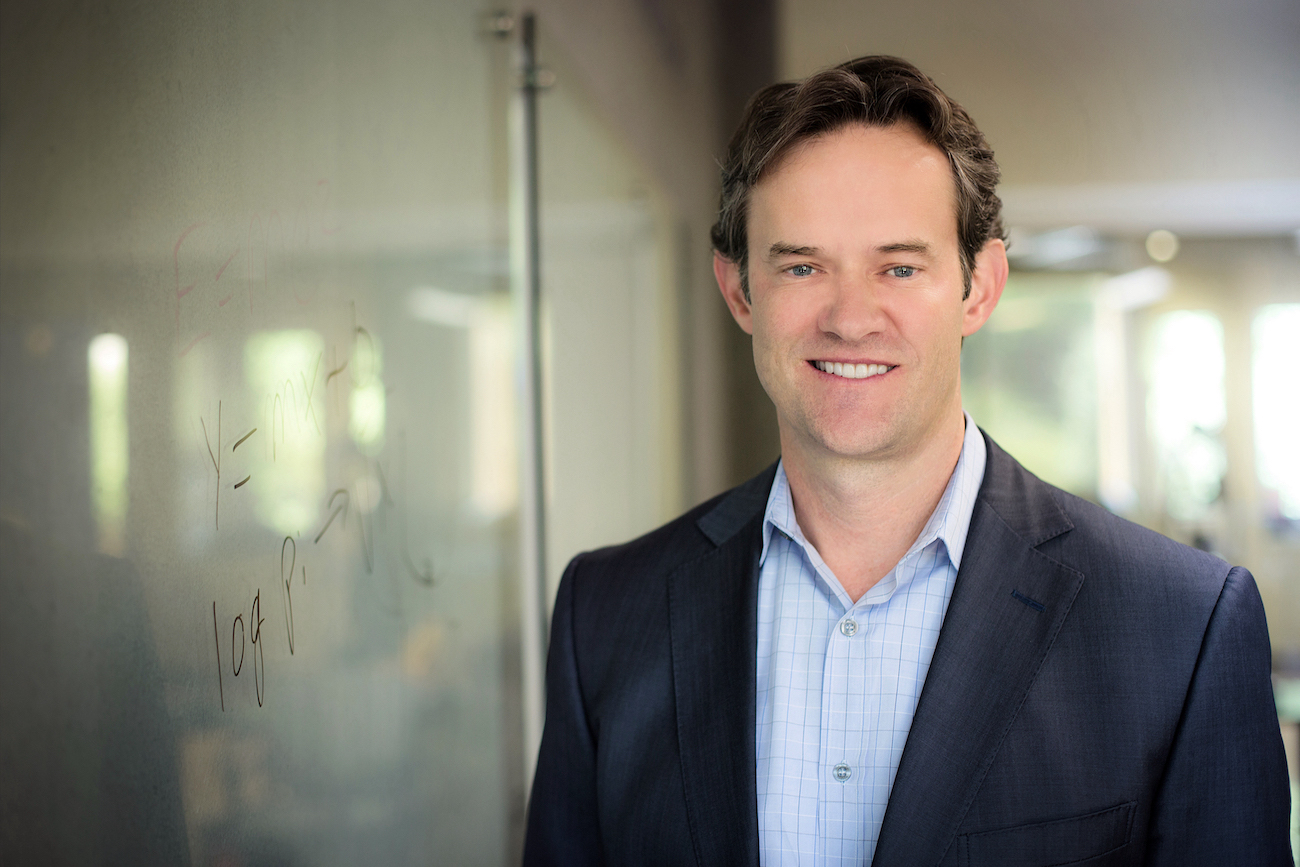
Dr. Frederick Beddingfield III, CEO, Rubedo Life Sciences (Photo credit: Rubedo Life Sciences)
Dr. Frederick Beddingfield spent more than a decade at Allergan helping scale Botox into a multibillion-dollar franchise, one of the most popular pharmaceutical options for making people look younger. He helped lead clinical and regulatory strategy for dermatology and aesthetics, then moved into startups: CMO of Kythera, the company behind Kybella that Allergan acquired for roughly $2 billion, and later CEO of Sienna Biopharmaceuticals. A stint at Apollo Health Ventures gave him a front-row seat to the longevity investor ecosystem. Now, as CEO of Rubedo Life Sciences, he’s placing his next bet on something harder to sell but potentially more consequential: making tissue behave younger.
Beddingfield is part of a small but growing cohort of veteran pharma executives moving into geroscience, the study of aging’s underlying cellular mechanisms. A growing number of companies are taking an aging-biology lens into conventional, FDA-approvable disease categories. Insilico Medicine is advancing an AI-designed TNIK inhibitor in idiopathic pulmonary fibrosis. BioAge has pursued obesity targets mined from human longevity cohorts (azelaprag; discontinued in December 2024 after liver transaminitis in a Phase 2 trial). Meanwhile, Rubedo is going after inflammatory skin diseases by eliminating senescent cells, sometimes called “zombie” cells because they stop dividing but don’t die.
While the field is gaining momentum, it’s still early. “I knew the FDA is not approving an anti-aging drug per se, a longevity drug,” he told me over lunch during JPM week. “But they will approve a drug for an age-related disease.”
Rubedo’s near-term plan is to do exactly that: pick indications where senescent cells plausibly drive pathology, and where a first proof point could be both clinically meaningful and regulator-friendly.
The science and the mechanism
Rubedo’s target is cellular senescence: dysfunctional cells that accumulate with age, stop dividing, and begin secreting a pro-inflammatory cocktail of signals. In animal models, clearing these cells has improved multiple age-linked phenotypes. Such experiments have helped propel senescence into one of longevity biology’s most hyped, and contested, therapeutic frontiers. “You can do this to mice and then they become ‘Arnold Schwarzenegger‘ mice,” Beddingfield said. “More hair, better skin, bigger muscles. They get rid of their diabetes.” The underlying mouse data support improvements in metabolic function and several age-linked phenotypes, though the magnitude varies by model and endpoint.
In humans, early clinical senolytic programs have yielded limited and mixed signals, with dose-limiting toxicities for some agents. Many first-generation approaches have raised selectivity and tolerability questions, especially given the heterogeneity of senescent cell populations: if you can’t reliably distinguish a harmful senescent cell from an innocent bystander, efficacy and safety both get messy fast.
Rubedo’s lead program, RLS-1496, is a topical GPX4 modulator designed to push ferroptosis-sensitive senescent cells toward death. GPX4 (glutathione peroxidase 4) is a key enzyme that protects cells from oxidative damage; disrupting that protective system can sensitize cells to ferroptosis, an iron-dependent, regulated form of cell death. The selectivity argument hinges on cell state: senescent cells are already in cell-cycle arrest, often associated with markers like p16, which Beddingfield describes as an “inherent vulnerability.” In oncology, companies exploring ferroptosis strategies may need to force cancer cells into the right state before a GPX4-oriented approach bites. In senescence, the cells of interest are already parked there. That framing is central to Rubedo’s thesis, though researchers have also shown that certain senescent cell populations play beneficial roles in wound healing and tissue remodeling—making blanket clearance strategies a risk.
The company also emphasizes that senescent cells are not all created equal. In the skin, Beddingfield said Rubedo sees strong sensitivity in senescent keratinocytes and fibroblasts in preclinical work, while melanocytes appear less responsive. That uneven sensitivity, in his telling, helps guide indication selection toward tissues where the company expects a wider therapeutic window.
That target selection came out of Rubedo’s ALEMBIC platform, an AI-driven engine trained on human tissue datasets including single-cell and spatial approaches, built from work by co-founder and CSO Marco Quarta at Stanford. ALEMBIC flagged GPX4 as an actionable vulnerability in pathologic senescent cells, an angle that wasn’t the dominant frame for GPX4 in earlier drug development efforts.
Clinical proof point
Rubedo dosed its first patient in May 2025 in a single-center, ascending-dose, randomized, double-blind, vehicle-controlled Phase 1 study of topical RLS-1496. The core readout is straightforward dermatology: safety, tolerability and lesion-level improvement in mild-to-moderate stable plaque psoriasis.
But Beddingfield said he designed the trial to do double duty. Because the drug is topical and systemic exposure is expected to be limited, the trial is also measuring plasma bioavailability. He said Rubedo was able to convince regulators to move directly into patient studies rather than running a traditional healthy-volunteer program first. Each participant also has a non-lesional skin area treated and monitored in parallel, generating aging-skin data alongside the disease endpoints. He said the company is measuring biological age of skin using an epigenetic clock approach, with the goal of showing that a senolytic mechanism can change the underlying tissue state.
Rubedo previously said it expected initial Phase 1 results in Q4 2025, but Beddingfield said during JPM week that the timeline had shifted, with psoriasis efficacy data now expected in early 2026, atopic dermatitis data to follow, and actinic keratosis results later in the year. The FDA has also cleared an IND for an RLS-1496 study in AK, a particularly clean aging-biology indication given its association with cumulative sun exposure. Rubedo has said it is developing a systemic formulation of RLS-1496 that, if it reaches the clinic, would broaden the platform’s reach beyond dermatology into metabolic, fibrotic, and other age-linked conditions.
Why it’s different
Biologics and JAK inhibitors have transformed psoriasis and atopic dermatitis, but they work by inhibiting specific immune pathways. Senolysis, in Rubedo’s framing, is mechanistically distinct: rather than blocking one cytokine at a time, you eliminate a cell population that produces multiple inflammatory signals, without directly inhibiting immune signaling the way cytokine blockers or JAK inhibitors do. That distance also creates combination logic. Even patients on systemic biologics often remain on topicals for residual disease, and a non-immunosuppressive topical with a different target could slot into the rotation problem that defines psoriasis care, where patients cycle through multiple agents as responses wane, tolerability constraints accumulate, or both.
The business bet
Rubedo is pursuing Series B financing to fund its next stage of development, though Beddingfield said the company has runway to complete the current phase of clinical work. The company closed a $40 million Series A in April 2024 led by Khosla Ventures and Ahren Innovation Capital, with participation from Hevolution and other longevity-focused investors. On the non-dilutive side, the company’s most visible move is in skin care: a multi-year partnership with Beiersdorf, announced in 2024, to develop cosmetic products aimed at cellular aging. Beiersdorf also participated as a strategic investor through its Oscar & Paul venture fund. Beddingfield described the deal as “biobucks-heavy,” emphasizing milestone structure and downstream royalties rather than near-term cash. The broader pitch is that dermatology lets Rubedo run two plays at once: a conventional drug development story with disease endpoints and regulatory pathways, and a consumer partnership track that can generate earlier revenue signals and help fund the longer arc.
“I spent 10 years at Allergan with Botox making people look younger,” Beddingfield said. “Now I’m actually making them younger.”
Filed Under: Drug Discovery