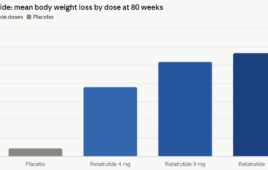
Last month, a University of Oxford meta-analysis published in The BMJ examining 37 studies with over 9,000 participants found that patients who stopped taking GLP-1s were likely to gain approximately 1 pound per month, returning to their previous weight within two years.
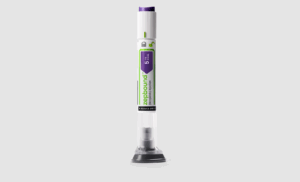
Zepbound injection for weight loss. Credit: Eli Lilly
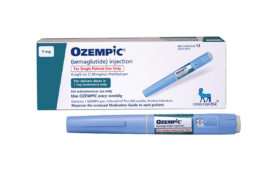
However, data shared with Reuters ahead of peer review shows this may not be the case. Researchers from the data analytics firm nference analyzed real-world data from a large network of U.S. academic medical clinics, finding that most patients had kept the weight off or lost even more weight 18 months after stopping semaglutide, sold as Ozempic and Wegovy, or tirzepatide, sold as Mounjaro and Zepbound.
With an estimated 15 million Americans currently using GLP-1s and the market projected to reach $100 billion annually, understanding post-treatment outcomes has major implications for patients, prescribers, and payers alike.
Real-world evidence reveals most maintained loss
The study applied artificial intelligence to analyze 14 million doctors’ notes and 15 million clinical data entries on more than 135,000 patients treated with a single GLP-1 drug over the course of one year.

[Adobe Stock]
The analysis found that patients who received exercise counseling after their prescriptions ended were almost twice as likely to maintain their weight loss. However, observational studies like this are often considered less reliable than controlled clinical trials, which showed weight regain after discontinuing the drugs.
The nference data also does not account for patients’ other medical conditions, how much of the drug used or lifestyle factors.
The study found that approximately 36% of 18,000 tirzepatide users kept the weight off and 36% continued to lose weight six months after stopping use. However, 28% of users had regained the weight they lost.
Among 37,500 semaglutide users, about 33% regained the weight, 32% maintained the loss and 35% continued to lose weight after six months.
Different studies, different results
Why did nference reach a different conclusion than clinical trial studies? A few possible reasons.
Clinical trials enforce structured protocols that real-world patients may not follow. Additionally, trial populations may not reflect the diversity of real clinical practice. Participants in trials often can’t have multiple health conditions, must be in a certain age range and can’t be on certain other medications. Real-world situations hardly ever follow such rules. While clinical trials provide clean data about drug safety and efficacy, they don’t accurately reflect clinical practice.
Often, drugs appear to be more effective in clinical trials than they are in the real world. It is rare for a drug to be more effective in the real world than it was in trial. The reasons for this are not fully understood.
In reality, weight gain or loss after discontinuation of GLP-1s likely depends on a slew of variables. Lifestyle changes seem to make a large difference, meaning that these medications may work best as part of a comprehensive treatment rather than standalone therapeutics.
The nference analysis is also not the first to diverge from clinical research findings. In January 2024, Epic Research analyzed outcomes for patients who stopped semaglutide and liraglutide after achieving at least five pounds of weight loss. They found that only 17.7% of semaglutide patients regained all the weight or exceeded their initial weight. A majority, 56.2%, either maintained their weight or continued losing after stopping the medication. The pattern was similar for liraglutide users.
Filed Under: Endocrinology