Few software releases have shaken drug discovery like AlphaFold. Its creators shared a Nobel Prize, and its public database put predicted structures for more than 200 million proteins open to researchers worldwide. Turning those structures into drugs poses another set of problems. Seattle-based Talus Bio is going after proteins that resist that approach, notably transcription…
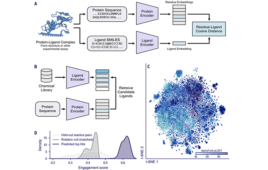
Terray says TerraBind delivers 26x faster inference than Boltz-2 by skipping diffusion-based coordinate generation
When MIT and Recursion released Boltz-2 last June, it marked a milestone: the first open-source AI model to jointly predict protein structure and small-molecule binding affinity. The model approaches the accuracy of physics-based free-energy perturbation methods at roughly 1,000x the speed. Its predecessor Boltz-1 had already been widely adopted, and Boltz-2 built on that momentum.…
Deep Origin’s Balto AI Assistant offers bespoke drug discovery tools via a chat interface

After ChatGPT debuted in late 2022 and GPT-4 hit the scene in March of the following year, many executives at pharma companies sat up and took note, interested in new tech that could accelerate the stubbornly slow drug development process. Translating that vision into reality, however, is not straightforward and a significant number of pharma…
Why Atomwise sees a ‘generational shift’ in drug discovery with AI applied to screening
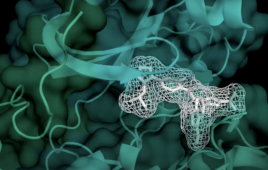
Atomwise’s AIMS (Artificial Intelligence Molecule Screening) project has demonstrated significant potential to accelerate drug discovery. In a landmark multiyear study published in Nature Scientific Reports, the project used Atomwise’s AI platform, AtomNet, to successfully identify structurally novel compounds across a diverse range of therapeutic targets. In the virtual high-throughput screening (HTS) study, AtomNet analyzed 318…