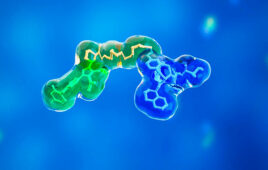
Proteolysis Targeting Chimera (PROTAC) drugs have evolved from a promising concept to a clinically validated modality. In May 2026, the U.S. FDA approved vepdegestrant (Veppanu®), the first PROTAC drug, marking an important milestone for targeted protein degradation and reinforcing the approach across a multitude of disease areas. PROTACs usually consist of three parts: a target-binding…
Verseon bets physics can take drug design beyond AI’s training data

The Bay Area-based pharma company Verseon began designing small-molecule drugs on a computational platform in 2002. That is well before most of the companies like Recursion and Exscientia now called AI drug discovery firms existed, and two decades before the launch of ChatGPT. Today, Verseon’s website states that its programs feature novel candidates that cannot…
Ginkgo, Tangible and Inductive Bio aim to move ADME decisions from lead optimization to hit ID
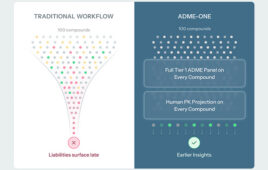
For years, many small-molecule teams have treated comprehensive Absorption, Distribution, Metabolism and Excretion (ADME) profiling as a lead-optimization step. That is, it serves as a place to spend heavily once a lead series has already emerged. Now, Ginkgo Datapoints, Tangible Scientific and Inductive Bio are betting that AI, automation and tighter compound logistics can move…
How to tackle the unique pharmacokinetic properties of covalent drugs

Covalent drugs have been a transformative medical advancement since aspirin was first approved in 1899. Penicillin followed soon after and is one of the most impactful pharmaceutical breakthroughs in human history. Since around a decade ago, an increasing number of new covalent drugs have been approved for a wide range of conditions, bringing hope to…