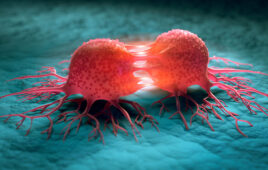
North American researchers have identified drugs that showed promising perspectives in treating cancers, according to a recent study published in Cancer Research. These drugs are normally used to treat other diseases, such as heart failure, cardiac arrhythmia, and infections. “We identified a dozen or so drugs that reactivate tumour suppressor genes through an epigenetic mechanism that was never observed before”, said Noël Raynal, MSc, PhD, who is an investigator at the mother-child research hospital CHU Sainte-Justine. “Epigenetic mechanisms control gene expression. They are highly deregulated in cancer cells. The mechanism that we discovered controls gene expression by targeting intracellular calcium levels,” he explains.
All the identified drugs are U.S. Food and Drug Administration (FDA) -approved. “Since these drugs’ safety and efficacy in humans are already known and proven, they may readily go through clinical validation and be made available to patients more quickly,” said the first author of the study, who is also a professor in the Department of Pharmacology at the University of Montreal.
Cancer occurs when genetic and epigenetic cell heritage is altered. Cells are deregulated and then multiply abnormally to form tumour clusters. “Human body cells have a natural defence, called tumour suppressor genes, which are silenced by epigenetic mechanisms triggered by cancer,” explained Noël Raynal. “We wanted to quickly find treatments that reverse this deregulation.”
To achieve their goal, the researchers screened more than 1,100 FDA-approved drugs. From this number, they chose the 14 most promising drugs, which were detected using a cellular model created in the laboratory of Jean-Pierre Issa, MD, a professor at Temple University, Philadelphia. Among the drugs selected for validation in various types of cancer cells were notably cardiac glycosides and antibiotics, whose epigenetic effects were previously unknown.
“We discovered that modifying intercellular calcium fluxes could serve as a therapeutic target to modify epigenetic alterations in cancer cells. All our drug candidates had in common their ability to act on the calcium channel and activate an enzyme essential for the anticancer effect,” said the researcher. The scientists also observed a “class effect,” since half of the drugs were cardiac glycosides. “This is consistent with epidemiological studies showing less cancer in patients treated with cardiac glycosides, and less aggressive cancers in patients that did have cancer,” he said.
For now, the range of clinically approved drugs known to reprogram cancer cells and restore their “epigenetic health” is limited to four drugs, which act on two mechanisms only: histone modification and DNA methylation. “We need more research on drugs that target intracellular calcium signalling, such as cardiac glycosides and antibiotics. They hold huge potential for expanding the number of effective drugs to cure cancer patients,” he concluded.
Source: University of Montreal
Filed Under: Drug Discovery