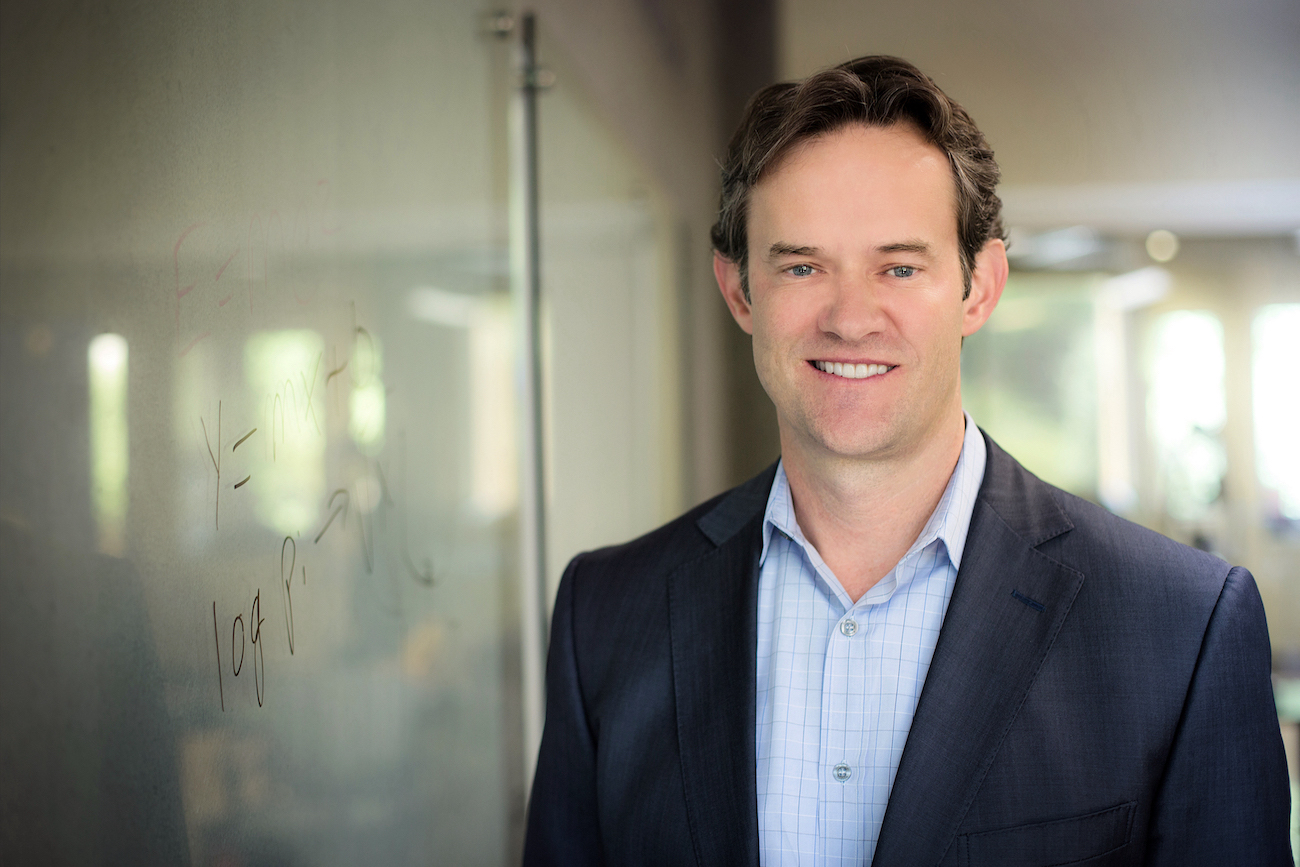
Dr. Frederick Beddingfield III, CEO, Rubedo Life Sciences (Photo credit: Rubedo Life Sciences)
For millions of individuals with actinic keratoses (AK), rough, scaly patches of skin caused by cumulative UV exposure, the path to preventing skin cancer can seem like a destructive ordeal. Current standard therapies, such as cryosurgery, photodynamic therapy or topical treatments like 5-fluorouracil (Efudex) and imiquimod, are often associated with severe local skin reactions that leave patients to deal with weeks of intense redness and peeling.
The AI- and longevity-focused startup Rubedo Life Sciences recently announced positive preliminary results for its lead investigational candidate RLS-1496, a selective modulator of glutathione peroxidase 4 (GPX4), in a Phase 1b/2a study in actinic keratosis. In the first 18 of 24 patients evaluated, the open-label trial showed a 46% reduction in AK lesion count at four weeks versus 11% on the untreated contralateral forearm, with no serious adverse events and no discontinuations tied to side effects.
Why many patients abandon today’s actinic keratosis treatments
Many field therapies can be effective, but they often come with the local reactions patients most want to avoid. Beddingfield, a dermatologist who has written the prescriptions himself, described the redness from Efudex, a topical chemotherapy, as “extreme.” “It looks like they had a CO2 laser treatment, or a blowtorch treatment.” The FDA label for Carac, a 0.5% fluorouracil cream, notes that most patients experience application-site reactions including redness, dryness, burning, pain, erosion and swelling, and warns that treated areas may look “unsightly” during and after therapy.
“What we tell patients, and I’ve written hundreds of these prescriptions, is that if you don’t get irritation you won’t get improvement. The same is true for imiquimod,” said Beddingfield, referring to another prescription topical cream for skin growths and cancers.
Real-world adherence to topical AK therapies is poor. A 2023 study of 113 patients found nearly half non-adherent, and only about a third used their medication exactly as directed. For 5-FU specifically, where the irritation is most severe, the drug can reduce lesion counts by roughly 90% in some studies, yet the irritation it causes leads patients to stop early. In a large Dutch trial of field-directed therapies, 12% of patients were nonadherent even under trial conditions. A 2023 study of patients who refused a second course of 5-FU found the side effects burdensome enough, physically and psychologically, to override their concern about the lesions themselves.
“These patients are in your office constantly, because even if you clear the AKs, they come back,” Beddingfield said. “So there’s a compliance issue, a tolerability issue, an appearance issue, and a lot of room for improvement.”
RLS-1496 could break the cycle if future trials align with preliminary data. “We didn’t see any irritation, yet we’re getting efficacy, so this works by an entirely different mechanism, and it’s much more pleasant for the patient.”
The potential to turn back the cellular clock
Rubedo also designed the trial to test whether RLS-1496 improves the sun-damaged skin that gives rise to AKs. RLS-1496 could potentially be “almost a regenerative treatment for the skin, potentially preventing future actinic keratoses or skin cancers.” He added, “you could essentially turn back the clock on the sun damage most of us did in our teens.”
The results released so far cover lesion counts only. The readout for the skin-aging measurements, which would show whether the drug rejuvenates damaged skin, are expected within weeks.
Rubedo believes the drug can do both jobs thanks to a mechanism that differs from how the older treatments work. “It’s a bit of what I’d call Nietzschean biology,” he said. “What doesn’t kill you makes you stronger, but at the cellular level, not the person level.”
RLS-1496 selectively modulates GPX4, a selenoenzyme that normally shields cells from ferroptosis, an iron-dependent form of programmed cell death. Briefly inhibiting it does two opposite things depending on the cell, in Rubedo’s model. Senescent cells, already stalled in cell-cycle arrest, tip into ferroptosis and clear out. Cells that are merely aged but still working read the same inhibition as a mild stress and mount an adaptive response. For now that two-part mechanism is a hypothesis, and the AK results released so far are preliminary and based on lesion counts.
A Phase 2b dose-ranging AK study begins in Q4 2026.
Filed Under: Dermatology