Figure courtesy of IQVIA
In drug development today, therapies originally designed for one disease are being reimagined for broader use. Obesity treatments are becoming whole‑body therapeutics with cardiometabolic and psychiatric ambitions, for example. In gynecologic oncology, the emergence of checkpoint inhibitors alongside a growing field of antibody-drug conjugates is reshaping study design and bringing nuanced treatment sequencing decisions to the forefront. And in cell and gene therapy, platforms once synonymous with advancing cancer care are pivoting into autoimmune and cardiovascular domains. Beyond pipeline ambitions, this convergence offers an opportunity to elevate innovative thinking around trial design. Below, we explore how indication expansion is unfolding and what it means for clinical development in 2026 and beyond in obesity, oncology and cell and gene therapy.
From weight loss to whole-body medicines
The anti-obesity field is not only gaining scientific acceptance but also undergoing strategic reframing.
In December 2025, the World Health Organization issued Glucagon-like Peptide-1 (GLP-1) guidelines, conditionally recommending long-term use of these therapies for adults with obesity (Body Mass Index ≥30) combined with intensive behavioral support as part of a comprehensive strategy.
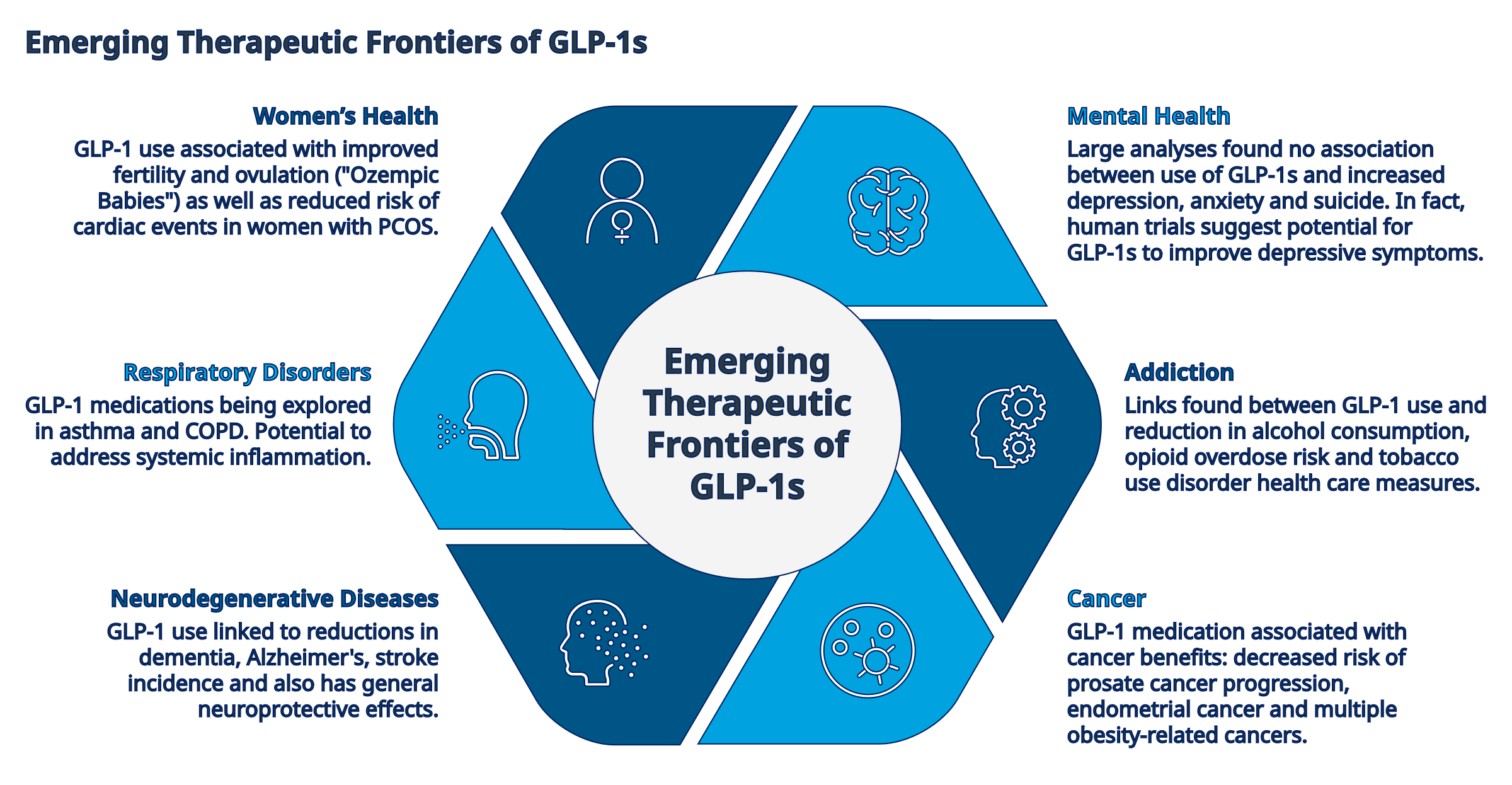
These emerging multi‑pathway agonists are increasingly being evaluated as systemic therapies to treat non-weight-management indications. Real‑world data signals and expanding clinical programs suggest potential benefits across cardiovascular risk, certain cancers and immunologic, psychiatric and neurologic endpoints.
Cardiometabolic outcomes have taken center stage, with clinical trials tracking secondary and composite endpoints beyond weight loss. At the same time, central nervous system indications have been tempered by recent outcomes. Findings presented at the Clinical Trials on Alzheimer’s Disease 2025 Congress in San Diego in December 2025 from the EVOKE and EVOKE+ Phase III studies evaluating oral semaglutide in early Alzheimer’s disease did not meet the main cognitive endpoint despite biomarker signals underscoring the translational gap between metabolic modulation and the complex nature of neurodegenerative processes. In this case, examining the safety and efficacy of a combination therapy approach, higher doses, injectable administration or earlier intervention may be worthwhile.
The takeaway is clear: expanding indications for weight management therapies will demand tailored endpoints, extended follow-up to confirm durability, and careful management of tolerability as dosing escalates. Recent guidance from the U.S. Food and Drug Administration emphasizes body‑composition monitoring and functional outcomes, reflecting the field’s maturation from “how much weight is lost?” to “what else is improving?” Competitive dynamics and reimbursement pressures are already influencing trial feasibility, while treatment shortages, manufacturing scale-up and off-label demand have impacted trial operations and site engagement globally. Development programs are advancing ambitiously and learning from setbacks with the future hinging on expanding endpoints (e.g., cardiovascular risk, sleep apnea and liver health), trial designs that reflect real-world use, and disciplined claims supported by data-driven evidence.
Checkpoint immunotherapy meets an ADC boom in gynecologic cancer care
Platinum-resistant ovarian cancer, or PROC, remains a critical issue, but two evolving therapeutic strategies are transforming the landscape.
The first Phase III evidence of an overall survival signal in PROC for a checkpoint immunotherapy-based regimen was presented at the European Society for Medical Oncology Congress in October 2025. The ENGOT-ov65/KEYNOTE-B96 Phase III study demonstrated that checkpoint inhibitor pembrolizumab combined with weekly paclitaxel with or without bevacizumab, an anti-angiogenic monoclonal antibody, achieved a statistically significant overall survival benefit over weekly chemotherapy with/without bevacizumab.
These data are under FDA Priority Review. The outcome may lead to oncologists offering immunotherapy early in recurrence. Also, showing a survival advantage with pembrolizumab encourages developers to evaluate broader use of immunotherapy in PROC.
Secondly, the industry is seeing a surge in antibody-drug conjugates, with multiple programs targeting PROC.
A striking feature of these emerging therapies is the use of highly potent topoisomerase-I inhibitors, particularly exatecan, as the cytotoxic payload. This strategy has fueled optimism because exatecan delivers strong antitumor activity at very low concentrations when linked to a tumor-specific antibody. In February, based on early results of promising anti-tumor activity and manageable safety profile from a Phase I study, the FDA granted Fast Track Designation to CUSP06, a Cadherin-6 ADC employing exatecan as the payload, for the treatment of PROC. In addition, TUB-040, a next-generation NaPi2b-targeting exatecan ADC earned Fast Track Designation from the FDA in 2024 for PROC, signaling regulatory momentum in this space. However, these results also introduce a practical challenge: the risk of cross-resistance when patients receive more than one ADC with the same payload mechanism.
As more exatecan-based ADCs enter clinical trials, oncologists will face increasingly complex treatment sequencing decisions, and developers may need to explore alternative payloads to preserve efficacy across treatment lines.
With immunochemotherapy establishing a noteworthy precedent in overall survival and ADCs multiplying, clinicians and investigators are encountering high-stakes decisions about patient selection and treatment sequencing. In PROC, timing and collaborative infrastructure are now as pivotal as the molecules themselves, with stakeholders needing to consider:
- Biomarker-driven approaches to prioritize therapies.
- Sequence modeling to balance prior toxicity, future efficacy and payload choice.
- Collaboration with established gynecologic oncology networks to streamline trial infrastructure and site activation and ensure quicker access to multicenter studies.
From cancer platforms to autoimmune and cardiovascular disease
Much of the clinical trial expansion in cell and gene therapies can be attributed to chimeric antigen receptor T-cell therapies, which were historically designed for cancer care. Repurposing oncology-specific know‑how and insights regarding antigen selection, platform vector design, regulatory requirements and evolving trial design frameworks has supported movement beyond oncology indications.
Exploring autoimmune conditions
The application of oncology-proven CAR-T constructs targeting CD19, CD20 or BCMA, for B-cell mediated, autoimmune conditions is the most notable trend. A landscape report published in Frontiers in Immunology in October highlighted 56 ongoing CAR-T trials for autoimmune rheumatic diseases, with most in Phase I but some in Phase II.
Systemic lupus erythematosus (SLE) and lupus nephritis have led the way. A recent systematic review of CAR-T in SLE analyzed 16 studies involving 145 patients. Findings affirm the transformative potential of CAR-T use for this patient population:
- Mean baseline SLE Disease Activity Index scores decreased significantly, from 13.1 to 2.3 at six months and 1.4 at 12 months.
- 70% of patients achieved Definition of Remission in SLE or no disease activity, while 89% reached residual disease activity targets.
- Safety signals were manageable, with cytokine release syndrome reported in 56% of participants, predominantly mild (grades 1–2), and only rare severe cases.
Emerging as a promising treatment of rheumatoid arthritis as well, a landmark case published in Annals of the Rheumatic Diseases in 2024 described how a CD19-directed CAR-T infusion induced deep remission in a patient with polyrefractory rheumatoid arthritis, eliminating autoantibodies and restoring clinical function. Now, building on proof-of-concept case reports toward structured clinical trials, next-generation strategies are advancing. In October, at the American College of Rheumatology Convergence 2025, interim Phase 1b results for SBT777101, an autologous CAR regulatory T-cell therapy, showed early signs of clinical activity and a favorable safety profile with no dose-limiting toxicities, cytokine release syndrome or immune effector cell-associated neurotoxicity syndrome.
Researchers are also making headway in rare autoimmune neurological disorders. In a Phase II study, the CD19-targeting CAR-T mivocabtagene autoleucel demonstrated significant improvement in individuals with stiff person syndrome, with a 46% median improvement in a timed 25-foot walk at week 16 and sustained B-cell depletion without high-grade cytokine release syndrome or immune effector cell-associated neurotoxicity syndrome.
As these programs advance, developers face questions around durability, safety, scalability and placement within disease specific treatment algorithms, as well as defining appropriate efficacy endpoints. Still, the ability to redeploy oncology-grade CAR-T platforms for immune-mediated disorders marks one of the most exciting evolutions in cell therapy today.
What’s next?
Moving past established antigen targets, a preclinical study published in Circulation in November showed that a CAR-T regulatory therapy held promise as an effective treatment against atherosclerosis. The engineered CAR-T recognized oxidized low-density lipoprotein, or LDL, reducing arterial plaque formation by roughly two‑thirds in mice. This anti‑inflammatory twist on CAR technology could complement lipid‑lowering in carefully selected patients. For developers, however, the road from mouse-to-medicine is long and requires answers about safety, manufacturing scale, product cost and endpoints.
Meanwhile, CAR-Ts, CAR-T regulatory T cells, chimeric autoantibody receptor (CAAR) T cells and other cell based treatments are being evaluated for various conditions, including gastrointestinal autoimmune diseases, including ulcerative colitis and Crohn’s disease, and in preclinical stages for chronic viral infections, such as HIV.
The strategic lesson is consistent with the therapeutic expansion seen in obesity and oncology fields: Platform versatility creates opportunity.
Viable therapeutic versatility
The defining feature of today’s R&D is not just versatility; it’s purposeful expansion. As obesity, oncology and cell and gene therapy programs move beyond their original boundaries, success will hinge on more than ambition. It requires adaptive trial designs, enhanced country and site selection, endpoints that capture real-world value and strategic treatment sequencing to navigate crowded pipelines.
While some indication-expansion efforts will inevitably face setbacks, these lessons are catalysts for smarter development. When grounded in biology, supported by robust evidence and aligned with patient and payer priorities, therapeutic versatility can translate into meaningful outcomes across multiple disease areas.
Indication expansion is no longer a trend; it is a core strategy shaping how the industry discovers, tests and delivers therapies for the future.
About the authors
 Erica Caveney, MD, Vice President and Head of Obesity Center of Excellence, IQVIA
 Jessica Knight-Perry, MD, MS, Senior Medical Director, Strategy Lead, IQVIA Cell and Gene Therapy Center of Excellence
 Kristin Zorn, MD, Senior Medical Director, Medical Strategy Lead, IQVIA Oncology Center of Excellence
Filed Under: Metabolic disease/endicrinology