A drug first designed to prevent cancer cells from multiplying has a second effect: it switches immune cells that turn down the body’s attack on tumors back into the kind that amplify it. This is the finding of a study led by researchers from NYU Langone Medical Center and published recently in Cancer Immunology Research.
According to experiments in mice, macrophages – immune cells that home in on tumors – take in the drug nab-paclitaxel (brand name Abraxane). Once inside these cells, say the study authors, the drug changes them so that they signal for an aggressive anti-tumor immune response.
“Our study reveals a previously unappreciated role for Abraxane in tumor immunology,” says corresponding author Dafna Bar-Sagi, PhD, Vice Dean for Science and Chief Scientific Officer at NYU Langone.
“In doing so, it suggests ways to improve the drug and argues for its inclusion in new kinds of combination treatments,” says Bar-Sagi, also a professor in the Department of Biochemistry and Molecular Pharmacology at NYU Langone, and associated with its Perlmutter Cancer Center.
Abraxane over Paclitaxel
Abraxane is comprised of the decades-old cancer drug, paclitaxel, combined with nanoparticles of the protein albumin (nab). Paclitaxel alone is not effective against pancreatic cancer, but Abraxane (nab-paclitaxel) is part of a leading treatment for the disease. Why the albumin-bound form works better has been a major question in the field.
Paclitaxel prevents structures called microtubules inside cancer cells from breaking up, a required step if they are to multiply as part of abnormal growth. Many in the field assume that nab-paclitaxel too primarily targets microtubules in cancer cells, with albumin perhaps helping the drug to get inside cells, and with fewer toxic side-effects.
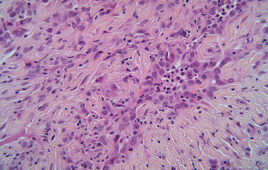
The new findings suggest that, on top of any effect on cancer cells, Abraxane’s effectiveness may proceed from its impact on macrophages, which roam the bloodstream and build up in many tumors.
The study results revolve around the immune system, in which cells like macrophages trigger a massive attack on bacteria or other invading microbes. This system can also recognize and attack cancer cells. Factors secreted by tumor cells, however, dampen the immune response in part by switching macrophages from their immune-stimulating stance, termed M1, into an M2 mode that suppresses their immune function.
In experiments in macrophage cell lines, the study authors found that nab-paclitaxel is more effective than paclitaxel partly because albumin enables macrophages to take up the drug through a natural process called macropinocytosis.
Once inside macrophages, according to experiments in mice with pancreatic tumors, nab-paclitaxel causes the macrophages to switch from immune-suppressing M2 cells back into M1 cells that amplify the body’s effort to kill cancer cells. Past studies had found that paclitaxel has a similar structure to substances given off by bacteria that trigger macrophage activation. The study authors show that the same pathway is evoked by nab-paclitaxel in pancreatic tumor-associated macrophages.
“Our findings argue that it may be possible to develop more treatments that selectively target macrophages by coupling albumin to immune-activating agents,” said lead study author Jane Cullis, PhD, a postdoctoral fellow in Bar-Sagi’s lab. “We may also be able to adjust albumin’s structure such that drugs attached to it stay in macrophages longer, or combine Abraxane with T-cell treatments for greater therapeutic effect. In principle, such treatments should be useful against the many tumor types infiltrated by macrophages.”
Filed Under: Drug Discovery