Eli Lilly’s triple agonist, retatrutide, demonstrated an average weight loss of 16.8% in a Phase 3 trial for the treatment of type 2 diabetes, the company announced today.
Retatrutide is an investigational first-in-class GIP, GLP-1 and glucagon triple hormone receptor agonist. The drug met the primary and key secondary endpoints, delivering superior A1C reduction and weight loss at 40 weeks compared to placebo.
Participants had an average A1C reduction of up to 2.0% and lost an average of 36.6 pounds. No weight-loss plateau was observed, with participants continuing their weight loss trajectory through 40 weeks.
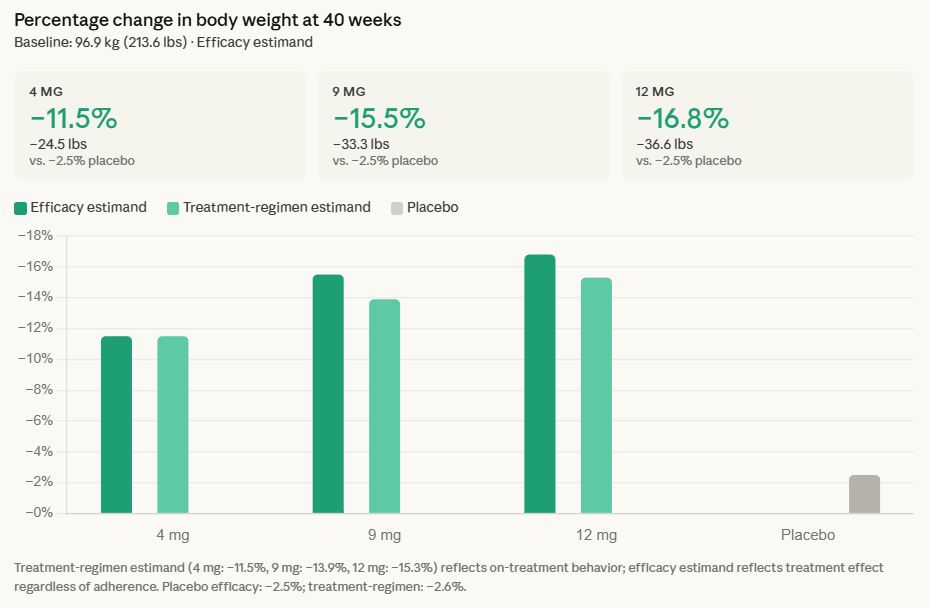
Data from Eli Lilly
“For many people with type 2 diabetes, it is a struggle to achieve both A1C control and weight loss, since obesity has historically been harder to treat for those with type 2 diabetes,” said Kenneth Custer, executive vice president and president of Lilly Cardiometabolic Health. “With triple agonist retatrutide, we set out to make a molecule that could help patients achieve substantial A1C reduction and weight loss. These results support the potential of this molecule for people living with type 2 diabetes.”
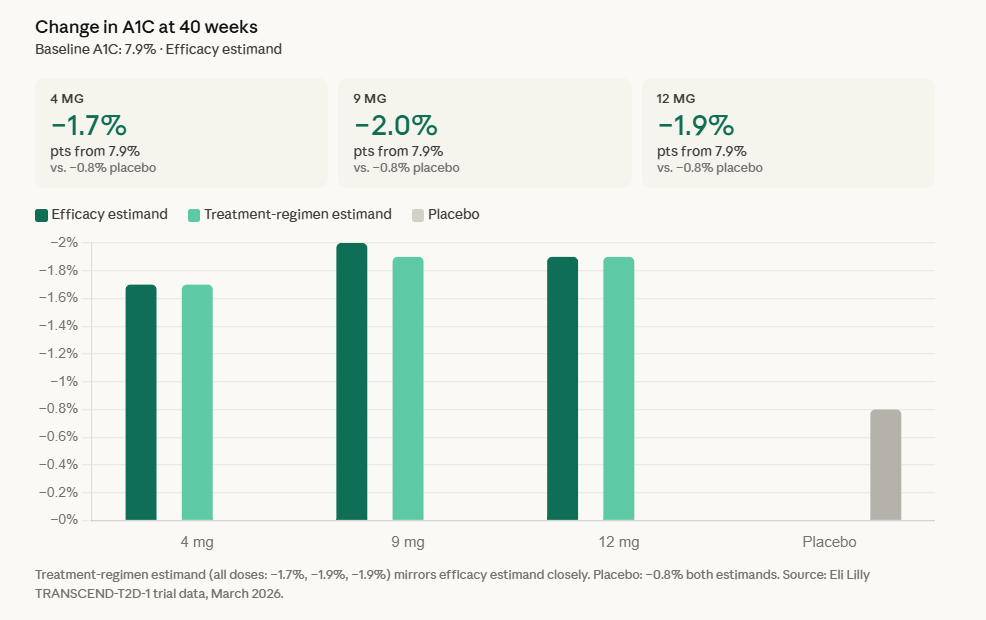
Data from Eli Lilly
Retatrutide also showed clinically meaningful improvements from baseline across key cardiovascular risk factors, including non-HDL cholesterol, triglycerides and systolic blood pressure.
Common adverse effects included nausea, diarrhea and vomiting, which are consistent with similar therapies.
Lilly is studying retatrutide in several Phase 3 clinical trials to evaluate its potential efficacy and safety in obesity and overweight with at least one weight-related medical problem, type 2 diabetes, knee osteoarthritis, moderate-to-severe obstructive sleep apnea, chronic low back pain, cardiovascular and renal outcomes and metabolic dysfunction-associated steatotic liver disease.
Filed Under: Endocrinology, Gastroenterology