Drug Discovery and Development

  • Home Drug Discovery and Development
  • Drug Discovery
  • Women in Pharma and Biotech
  • Oncology
  • Neurological Disease
  • Infectious Disease
  • Resources
    • Video features
    • Podcast
    • Views
    • Webinars
    • PharmSci360
  • Pharma 50
    • 2026 Pharma 50
    • 2025 Pharma 50
    • 2024 Pharma 50
    • 2023 Pharma 50
    • 2022 Pharma 50
    • 2021 Pharma 50
  • Advertisers
    • Advertise
    • PR Submissions
    • Eblast Submissions
  • SUBSCRIBE

Engineered exosomes from pig semen: a high-yield platform for non-invasive ocular drug delivery

By Julia Rock-Torcivia | April 1, 2026

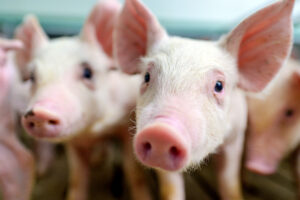
Researchers in China have used pig semen to develop eye drops that can deliver cancer drugs to the back of the eye. In a mouse model of retinoblastoma, the drops killed cancer cells and slowed tumor growth, the scientists reported in Science Advances. 
Adobe

Most therapies that need to reach the retina use injections that can damage the organ and are uncomfortable for patients. Patients at risk of cancer spreading beyond the eye often require surgical removal of the eye. The scientists aimed to solve this problem by extracting lipid-based particles called exosomes from pig semen and using them as carriers for anticancer agents. 

The team was inspired by the discovery that exosomes play a role in the penetration of physiological barriers in the female reproductive tract during sperm migration. They hypothesized that the particles may be able to slip through barriers in the eye. Additionally, crossing the blood-retinal barrier and achieving high bioavailability at the back of the eye through topical drops has historically been a massive roadblock in ophthalmic pharmacology. 

Previous studies have shown that exosomes have promise as drug carriers for crossing biological barriers. However, there have been few studies exploring their use for ocular delivery.

The study found that exosomes can enter the eye without damaging tissue via a pathway involving epidermal growth factor, which mediates reversible tight-junction disruption. The exosomes reached the back of the eye through two simultaneous routes: through the cornea and through the conjunctiva. This differs from the mechanism the particles use to pass through barriers in the reproductive tract. 

The exosomes were loaded with a nanozyme system composed of carbon dots, manganese dioxide and glucose oxidase, which induces oxidative stress to trigger cancer cell self-destruction. The exosomes were modified with folic acid to improve targeting. Retinoblastoma cells carry significantly higher concentrations of folic acid receptors on their surface than healthy retinal cells, meaning the engineered exosomes seek out the cancer cells, sparing healthy tissue. 

After 30 days, treated mice had healthy eyesight, and their tumors were about 2% to 3% the size of those in untreated mice. 

The team is continuing to explore this approach as they investigate using bull semen as well. 


Filed Under: Oncology, Ophthalmology

Tagged With: apoptosis, autophagy, bioavailability, blood-retinal barrier, cancer drug delivery, carbon dots, conjunctiva, cornea, Drug delivery, epidermal growth factor, exosomes, extracellular vesicles, eye drops, folic acid, folic acid receptor, glucose oxidase, intraocular cancer, lipid nanoparticles, manganese dioxide, mouse model, nanozyme, non-invasive therapy, ocular drug delivery, ophthalmic pharmacology, oxidative stress, pediatric cancer, pig semen, reactive oxygen species, retina, retinoblastoma, Science Advances, semen-derived exosomes, Shenyang Pharmaceutical University, targeted therapy, tight junction, tumor suppression, Yu Zhang
 

Related Articles Read More >

Physician in a white coat reviewing information on a tablet with a patient in an exam room.
What real-world data shows about current cancer care
Roche Towers, Basel, Switzerland
Roche picks cancer targets, Hansoh builds the ADCs in deal with $400 million upfront
Measuring Psilocybin Magic Mushroom Micro Doses in Laboratory for A Scientific Experiment
After decades of trial failures in chemotherapy-linked neuropathy, psilocybin shows promise in preventing it in mice 
Cancer vaccine borrows COVID immune memory to activate T cells against tumors in mice 
“ddd
EXPAND YOUR KNOWLEDGE AND STAY CONNECTED
Get the latest news and trends happening now in the drug discovery and development industry.

MEDTECH 100 INDEX

Medtech 100 logo
Market Summary > Current Price
The MedTech 100 is a financial index calculated using the BIG100 companies covered in Medical Design and Outsourcing.
Drug Discovery and Development
  • MassDevice
  • DeviceTalks
  • Drug Delivery Business News
  • Medtech100 Index
  • Medical Design Sourcing
  • Medical Design & Outsourcing
  • Medical Tubing + Extrusion
  • Pharmaceutical Processing World
  • R&D World
  • Subscribe to our E-Newsletter
  • About Us
  • Contact Us

Copyright © 2026 Arrowfly LLC. All Rights Reserved. The material on this site may not be reproduced, distributed, transmitted, cached or otherwise used, except with the prior written permission of Arrowfly
Privacy Policy | Advertising | About Us

Search Drug Discovery & Development

  • Home Drug Discovery and Development
  • Drug Discovery
  • Women in Pharma and Biotech
  • Oncology
  • Neurological Disease
  • Infectious Disease
  • Resources
    • Video features
    • Podcast
    • Views
    • Webinars
    • PharmSci360
  • Pharma 50
    • 2026 Pharma 50
    • 2025 Pharma 50
    • 2024 Pharma 50
    • 2023 Pharma 50
    • 2022 Pharma 50
    • 2021 Pharma 50
  • Advertisers
    • Advertise
    • PR Submissions
    • Eblast Submissions
  • SUBSCRIBE