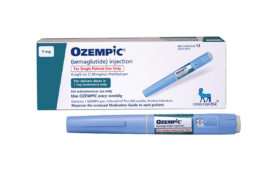
Eli Lilly, Novo Nordisk, AstraZeneca and more announced recent GLP-1 clinical and preclinical data at the American Diabetes Association’s (ADA’s) national conference this week. The conference was eventful, with several experts being escorted out by police after handing out copies of an editorial criticizing the Trump administration’s science policies. The editorial was published in the…
Beyond the silver bullet: Why precision medicine is the next frontier for the $1 trillion obesity market
“I remember when we decided the internet was going to cure everything, and it didn’t…it came with a certain set of problems,” said Mark Bagnall, CEO of Phenomix Sciences. GLP-1s are having a similar moment, he says. GLP-1s have been transformative for many; by 2025, more than 30 million Americans were taking them for weight…
Lilly’s triple agonist achieves 16.8% weight loss in phase 3 trial
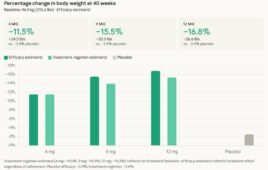
Eli Lilly’s triple agonist, retatrutide, demonstrated an average weight loss of 16.8% in a Phase 3 trial for the treatment of type 2 diabetes, the company announced today. Retatrutide is an investigational first-in-class GIP, GLP-1 and glucagon triple hormone receptor agonist. The drug met the primary and key secondary endpoints, delivering superior A1C reduction and…
Novo Nordisk’s triple agonist delivers up to 19.7% average weight loss in Phase 2 trial

Novo Nordisk’s triple agonist UBT251 delivered a mean weight loss of 19.7% after 24 weeks in a Phase 2 trial in China, the company announced on Tuesday. UBT251 is a triple agonist of the receptors for GLP-1, GIP and glucagon (triple G) and is being jointly developed with United Biotechnology. The trial was conducted by…
Novo Nordisk’s new weight loss treatment inferior to Lilly’s tirzepatide

Novo Nordisk’s latest weight loss treatment, CagriSema, did not meet the primary endpoint of showing non-inferiority compared to tirzepatide, the company announced on Monday. CagriSema, a combination of cagrilintide and semaglutide, achieved 23% weight loss after 84 weeks of treatment, compared to 25.5% with tirzepatide. The treatment was safe and well tolerated, with mostly mild…
FDA’s first new motion sickness drug in decades may matter more for GLP-1 side effects

The FDA’s Dec. 30 approval of Vanda Pharmaceuticals’ Nereus (tradipitant) adds a rare new option to a category that has leaned for decades on older anticholinergics and antihistamines, including the scopolamine patch and over-the-counter products such as meclizine and dimenhydrinate. In reporting on the decision, Reuters noted the approval as the first new FDA-cleared treatment…
Lilly’s triple agonist delivers up to 71.2 lbs of weight loss in Phase 3 trial
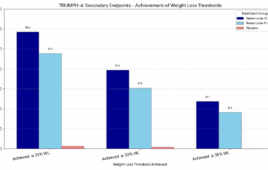
Lilly announced results from its Phase 3 TRIUMPH-4 trial of retatrutide, a first-in-class GIP, GLP-1 and glucagon triple hormone receptor agonist, on Thursday. In the efficacy-estimand analysis, participants taking the highest dose (12 mg) lost an average of 28.7% of their body weight at 68 weeks, about 71.2 pounds from a baseline of 248.5 pounds.…
Austrian researchers find IgA-tagged vesicles turn gut’s own antibodies against it, worsening ulcerative colitis
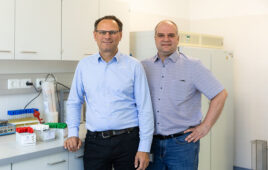
Understanding the foundations of ulcerative colitis, a condition affection millions worldwide, has proven elusive. Now, researchers at the Medical University of Graz and the University of Graz have shed light on the role of gut bacteria and their antibody-coated vesicles (extracellular sacs) in spiking the chronic inflammation in the colon linked to the condition. Analyzing…
One of C. difficile’s metabolic powers might be turning a toxin into a fuel

Research from Vanderbilt University Medical Center, published in Cell Host & Microbe, sheds light on a unique survival tactic employed by Clostridioides difficile (C. diff), opening up potential avenues for therapeutic intervention against this major cause of healthcare-associated diarrhea and mortality. The study reveals that C. diff can use 4-thiouracil (4-TU), a compound found in the human gut…
Lilly’s FDA approval for Omvoh close up: Nearly 90% of one-year responders maintained remission through two years

The FDA’s approval of Omvoh (mirikizumab-mrkz) for Crohn’s disease—its second IBD authorization since 2023—establishes it as the first biologic in >15 years with Phase 3 two-year efficacy data at launch. In the pivotal VIVID-1 trial, 53% of Omvoh-treated patients achieved clinical remission at one year versus 36% on placebo*, with early endoscopic response tripling placebo…
How an engineered algae-based biologic aims to break the annual $5B cycle of c. diff reinfection

Imagine a shape-shifting pathogen invisible to the naked eye, armed with toxin-laced barbs that rupture human cells. This isn’t fiction—it’s Clostridioides difficile, a superbug causing 29,000 U.S. deaths annually through severe diarrhea and colitis. After an initial infection, up to 35% of patients experience recurrence, with subsequent episodes becoming increasingly likely—up to 60% of these…
I gave an AI tool 25 minutes to write a science paper. Here’s what happened.

As a journalist interested in decoding AI and its impact on the research landscape, I recently took Insilico Medicine’s DORA (Draft Outline Research Assistant) for a test drive, a new platform summarized here. DORA, a specialized agentic-based tool aims to draft scientific content while promising to slash the time and effort required to produce first…
GLP-1 drugs could open a new frontier in NASH treatment
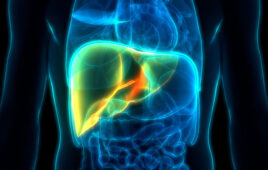
This morning, Eli Lilly reported positive phase 2 results for its dual GLP-1 and GIP receptor agonist tirzepatide in patients with nonalcoholic steatohepatitis (NASH). In the SYNERGY-NASH trial, the therapy achieved NASH resolution without worsening fibrosis in 61.3% of patients. That is considerably higher than data for semaglutide. Picturing tirzepatide’s NASH resolution in a phase…
Lumen Bioscience cracks the code on spirulina as a biologics factory for c. diff, metabolic disease and more
Clostridioides difficile, commonly known as C. diff, is a significant health threat in the U.S. Recent estimates suggest that C. diff, a common bacteria, can cause infection in roughly 500,000 patients annually in the U.S., with around 30,000 of these cases resulting in death. “Actually, it’s more like 5 million when you think about it…
Zepbound helps people lose 25% of body weight on average 88 weeks, but weight regain is a concern

Lilly’s hot weight loss drug Zepbound (tirzepatide) may be one of the most effective drug therapies for weight loss. In an open-label 36-week study, participants lost an average of 20.9% of their body weight in 36 weeks. With an average weight of 107.3 kg (236.5 lbs), that equates to about 22.4 kg (49.4 lbs) on average.…
Insilico Medicine’s latest AI-engineered drug ISM5411 could provide a novel approach for treating IBD
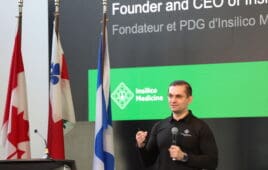
Capping off a busy 2023, Insilico Medicine has announced a potentially first-in-class oral PHD inhibitor for the treatment of inflammatory bowel disease (IBD). ISM5411 is the fifth AI-backed drug candidate from Insilico Medicine to reach clinical stages. ISM5411 targets prolyl hydroxylase domain (PHD) enzymes via modulation of the hypoxia-inducible factor (HIF) pathway, which is involved…
Evidence on GLP-1 drugs and muscle loss remains murky

[Updated on March 18, 2024] Do GLP-1 drugs lead to loss of muscle mass? The German expression “jein,” spanning both yes and no, captures researchers’ present understanding of the complexity of this issue. Yes, recent research on glucagon-like peptide-1 (GLP-1) drugs for weight loss indicates these medications may lead to significant reductions in lean body…
Will GLP-1 drugs transition from obesity and diabetes to diverse clinical indications?

The explosive sales growth of GLP-1 drugs has analysts projecting that the antiobesity drugs could be a $44 billion market by 2030. Some observers are more upbeat, projecting that the sector could be worth more than $100 billion in the coming years. Pfizer CEO Albert Bourla projects that the market will reach $90 billion by…
Mirikizumab shows continued promise for ulcerative colitis after regulatory hiccup
Lilly has announced that its interleukin-23 blocker mirikizumab demonstrated promise in patients with moderately to severely active ulcerative colitis (UC) in the ongoing open-label LUCENT-3 extension study. The trial evaluated two-year efficacy and safety of the monoclonal antibody in patients who had previously undergone UC treatments, including biologics, that were ineffective, stopped working, or were…
Guselkumab shows durable benefits in Crohn’s disease in LTE of phase 2 study

The interleukin-23 blocker guselkumab (Tremfya) continues to show promise in treating Crohn’s disease (CD). First winning FDA approval for plaque psoriasis in 2017, guselkumab recently demonstrated robust efficacy and a consistent safety profile in the long-term extension of the GALAXI Phase 2 study for CD. Some 54.1% of patients receiving guselkumab achieved clinical remission by…
The 50 best-selling pharmaceuticals of 2022: COVID-19 vaccines poised to take a step back
The COVID-19 pandemic has had a profound impact on the best-selling pharmaceuticals, leading to shifts in the list with Pfizer and BioNTech’s Comirnaty surpassing AbbVie’s Humira for the No. 1 spot in 2021. That momentum continued in 2022, with Pfizer and BioNTech jointly raking in $59.1 billion in revenue from the sales of the COVID-19…
Regeneron and Sonoma Bio partner to develop Treg cell therapies for autoimmune diseases

Treg cell therapies are at the forefront of a collaboration between Regeneron (Nasdaq:REGN) and privately-held Sonoma Biotherapeutics, as they work together to discover, develop, and commercialize novel therapies for autoimmune diseases. This partnership combines Regeneron’s VelociSuite technologies with Sonoma Biotherapeutics‘ expertise in gene-modified T cell (Treg) therapies. Under the terms of the agreement, Regeneron will…
Sandoz’s Hyrimoz to challenge AbbVie’s Humira dominance

The generic and biosimilar company Sandoz, a Novartis (NYSE:SIX) subsidiary, has received FDA approval for its Humira biosimilar Hyrimoz (adalimumab-adaz) injection. AbbVie’s (NYSE:ABBV) megablockbuster Humira is a biologic medication with indications for an array of autoimmune conditions, including rheumatoid arthritis, Crohn’s disease and psoriasis. Sandoz’s biosimilar will likely be priced significantly lower than Humira’s. This…
European and Canadian authorities move to limit risk from JAK inhibitors
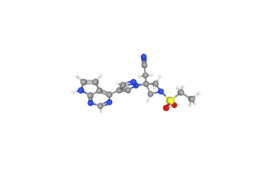
The European Medicines Agency (EMA) is backing a series of measures to reduce the risk of serious side effects associated with Janus kinase (JAK) inhibitors, limiting their use in high-risk individuals. Similarly, Health Canada is recommending updated labeling for the drug class to disclose the risk of serious cardiovascular events and cancer. The agency is…
Guselkumab plus golimumab shows promise in Phase 2a ulcerative colitis trial

Janssen (NYSE:JNJ) has announced positive data from the first randomized controlled trial to test the safety and efficacy of combination therapy with an interleukin (IL)-23p19 subunit antagonist (guselkumab) and a tumor necrosis factor-alpha (TNFα) antagonist (golimumab) in ulcerative colitis. In the Phase 2a VEGA study, 48% of patients who received combination induction therapy with guselkumab and…