
Only about 5% of adult cancer patients join clinical trials. Experts explain how real-world data fills gaps and what makes it representative and reliable.
Remepy, a startup that pairs drugs with AI-driven apps, clears a Phase IIa test in Parkinson’s

“There’s an app for that.” The phrase became something of a mantra in the early smartphone era, as apps went from niche to mainstream after Apple opened its App Store in July 2008 and Android Market followed months behind it. Medicine caught the fever quickly. Prominent future-facing clinicians, from Scripps cardiologist Eric Topol to Singularity…
Insilico CEO sees potentially $2.75 billion collaboration as ‘fusing Lilly’s clinical excellence’ with Insilico’s ‘end-to-end AI engine’
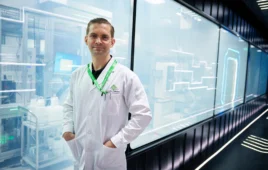
On March 29, Insilico Medicine announced a drug discovery deal with Eli Lilly that gives the Big Pharma firm an exclusive worldwide license to a portfolio of preclinical oral therapeutics. The collaboration also sets up joint R&D programs across a range of therapeutic areas. Under the terms of the deal, Insilico is eligible for a…
The FDA’s AI ambitions depend on better data practices
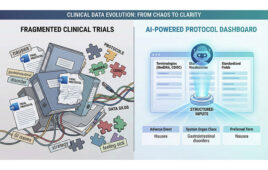
In June 2025, the Food and Drug Administration rolled out Elsa, an agency-wide generative AI assistant that officials say is already helping to speed the review of new drugs and devices and shrink weeks of paperwork into minutes. It is a vision that could reshape how lifesaving therapies reach patients, but Elsa’s first six months…
Pharma leaders support new Pistoia Alliance data standardization initiative
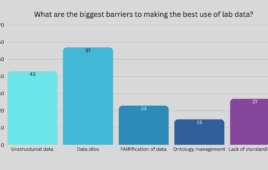
The Pistoia Alliance, a nonprofit alliance that advocates for greater collaboration in life sciences R&D, launched the next phase of its Chemistry, Manufacturing and Controls (CMC) Process Ontology project on Thursday. The project, which aims to develop a pharmaceutical CMC process ontology based on the ISA-88/95 framework, is supported by Eli Lilly, Amgen, Merck &…
Why the next breakthrough drug depends on smarter infrastructure

In pharmaceutical R&D, most leaders believe the constraints are scientific: new biology, rare targets, combinatorial complexity. But across the industry, promising drug discovery pipelines are being delayed – not by a lack of scientific progress, but by infrastructure that can’t keep pace. The next transformative molecule won’t be held back by biology – it will…
Finding signals in the storm: Automation in biomarker discovery

Biomarkers are strategic assets for biopharma companies, significantly improving the success rate of clinical trials1. Yet, discovering them often feels like navigating through a blizzard of unstructured information, searching for the one true signal that can guide the way. While laboratory automation has eased benchwork, the real storm rages in the data, obscuring access to…
Inside IQVIA’s quest to build a multi-agent AI ‘dream team’ to transform clinical trials

2025 was predicted to be the “year of the agent,” referring to the AI technology that can perform autonomous tasks on behalf of a user. And the trends are lining up. “I think agents are already here,” said Raja Shankar, IQVIA’s vice president, machine learning. With adoption gaining ground in retail, financial services, customer service,…
Xaira and Verily co-founder ponders low-hanging fruit and blue-sky potential in FDA’s genAI rollout

The FDA is betting big on genAI to transform tedious workflows, setting a June 30 deadline for agency-wide deployment. While details of its plans are scarce at present, using genAI to reduce FDA’s paperwork burden seems inevitable. The broader goal doesn’t qualify as “a high-order AI problem today,” said Vik Bajaj, founder and CEO of…
Capgemini’s life-sciences lead says ROI and data security, not algorithms, will decide pharma’s AI future

Pharma executives, observing peers in retail and banking tout GenAI payoffs “in weeks and months,” increasingly ask why their own firms can’t match that pace. This pressure for a ROI for an industry that has seen productivity gradually stall since the 1950s. So, when pharma executives ask Sheetal Chawla, Capgemini’s head of life sciences: “When…
As FDA pushes agency-wide generative AI, pharma experience show similar tools can cut clinical study-report drafting time by 30% or more

Jinzhong (Jin) Liu, a deputy director within FDA’s Center for Drug Evaluation and Research (CDER), recently had a “game-changer” experience. New generative AI tools enabled him to “perform scientific review tasks in minutes that used to take three days,” he quipped in an announcement. This success wasn’t isolated; FDA Commissioner Martin A. Makary, “blown away”…
FDA’s genAI push could save CDER hundreds of thousands of review hours annually

Determined to slash bureaucratic drag on drug approvals, FDA chief Dr. Martin Makary is ordering every center to plug generative-AI tools into its review pipeline by June 30, an agency-wide gamble that, he says, will turn days of paperwork into minutes of analysis. Multiple independent studies, including from McKinsey, Bain, Capgemini, the Federal Bar Association,…
Elsevier plugs 500,000 ClinicalTrials.gov records into Embase

Elsevier has pushed roughly half a million ClinicalTrials.gov entries into Embase, its subscription biomedical database. The May 6 update lets R&D teams run a single search that pulls trial data from 200‑plus countries and matches it with Embase’s peer‑reviewed papers, in‑press manuscripts and conference abstracts. Elsevier notes that traditional approaches to synthesizing data from multiple sources…
The challenge of AI inventorship in healthcare

Generative AI has become a crucial tool in drug discovery, significantly accelerating the identification of new therapeutics. AI systems, trained with data on target engagement and pharmacological properties, can rapidly generate new therapeutic candidates, reducing R&D timelines by years. Several AI-assisted drugs are already in clinical trials. Like any pharmaceutical, AI-assisted therapeutics require patent protection.…
From Graz to global — Innophore’s journey with NVIDIA’s BioNeMo

When a 30-person Austrian startup gets showcased by Jensen Huang, CEO of the trillion-dollar tech giant NVIDIA, schedules tend to fill up fast. That’s precisely the case for Innophore, a biotech company tapping NVIDIA’s computational clout with its Catalophore platform to accelerate AI-driven drug safety screening and binding-site analysis. This year, the company was highlighted…
Menarini and Insilico ink $550M deal for AI-discovered cancer therapy

Second collaboration builds on rapid progress of AI-designed KAT6 inhibitor licensed in 2024 Agreement includes $20 million upfront payment with potential total value exceeding $550 million plus tiered royalties New preclinical asset demonstrates broad anti-tumor activity across multiple solid tumor types Less than a year after their first collaboration, pharmaceutical giant Menarini Group and AI-driven…
Oracle exec maps data integration strategy for modern clinical trials in 2025 and beyond

From FHIR-based APIs to “hybrid data models” and blockchain-enabled audit trails, biopharma companies are exploring a range of strategies in their quest to incorporate Real World Data (RWD) into clinical trials. But technology alone won’t resolve the deeper issues at play. From bridging disparate data sources to safeguarding patient privacy under evolving regulations, sponsors face…
By 2025, clinical research and patient care converge: Data integration, validation, and evolving markets

A growing chorus of experts agree: 2025 signals a year when AI and its generative variants (genAI) move beyond early experimentation into a period of tangible, large-scale impact — including in the life sciences. While challenges remain as EY recently noted, the future will likely be one where the focus shifts from anticipating breakthrough genAI…
Biotech in 2025: Precision medicine, smarter investments, and more emphasis on RWD in clinical trials

In 2025, genetic validation is poised to emerge as a high-stakes litmus test in cardiovascular R&D, investors will continue to get better at funneling cash into proven science, and patients will continue their evolution to become more-active partners shaping their healthcare. To hear more about each of these trends, we considered feedback from three industry…
Tiny breaths, big impacts: Bridging the gap between laboratory discoveries and clinical applications in breath research with mouse models

The understanding that there is a connection between breath and diseases can date back to over two thousand years ago, when Hippocrates described fetor oris and fetor hepaticus in his report on breath aroma (1). Since then, research into volatile organic compounds (VOCs) exhaled in breath and their involvement in disease physiology has led to…
Xaira Therapeutics bolsters leadership team and relocates headquarters to fuel AI-powered drug discovery

Xaira Therapeutics, an AI-driven biotechnology startup that emerged earlier this year with a $1 billion funding round, continues to demonstrate its ambitions and staying power. Despite recent biotech industry turbulence, with some AI-focused biotech firms announcing layoffs and restructuring, Xaira has doubled down on growth. The firm is bolstering its leadership roster while announcing a…
Transforming pharmacovigilance with GenAI for faster, safer drug approval

As we approach the second quarter of the 21st century, speed is a driving force in the pharmaceutical environment. The industry currently faces a critical challenge in drug lifecycle management: how to accelerate drug safety monitoring while sticking to stringent safety and regulatory standards. Traditional methods of processing safety cases—essential for tracking adverse effects and…
2024: The year AI drug discovery and protein structure prediction took center stage—2025 set to amplify growth

The global AI drug discovery market, valued around $1 to $1.7 billion in 2023, will be worth a multiple of that by the decade’s end. Analysts project the sector could be worth $9 billion or more. 2024 Nobel Prize in Chemistry Recipients: David Baker Demis Hassabis John Jumper Achievement: Computational protein design and structure prediction…
Anima Biotech aims to open the ‘black box’ of disease with large-scale cellular experiments

While many AI companies focus on analyzing existing scientific literature, this approach faces a fundamental challenge: the reliability of the source material itself. “Up to 70% of experiments described in publications cannot be replicated,” notes Yochi Slonim, CEO of Anima Biotech. “You do it once and you publish it. You do it again, it doesn’t…
GenAI is an ‘always available intern’ but for delicate pharma tasks, human guidance is critical

ChatGPT may be one of the quickest adopted tech platforms in recent memory, but the potential of it and other large language models ability transform the world has also been met with occasional provider outages, hallucinations, and memory problems. “There’s a lot of resentment towards the hype,” notes Christopher M. McSpiritt, head of life sciences…