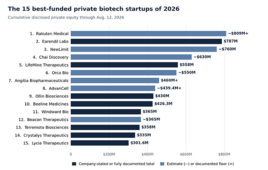
By one measure, Alphabet-controlled Isomorphic Labs would tower over every company on this list. The AI drug discovery company has raised $2.7 billion in external financing, including a $2.1 billion Series B announced in May. Its corporate structure, however, puts it outside our definition of an independent biotech startup: Alphabet still controls at least 75%…
Novo Nordisk’s ziltivekimab misses Phase 3 primary endpoint
Novo Nordisk’s ziltivekimab, an investigational human monoclonal antibody that targets the IL-6 ligand, a pro-inflammatory cytokine, to reduce cardiovascular inflammation, did not reduce the risk of major adverse cardiovascular events (MACE) in a Phase 3 trial. “Although ziltivekimab produced the expected biological effect, this did not result in MACE benefits in this population,” Martin Holst Lange, executive vice president, chief…
Moderna bets on mRNA’s second act with cancer, autoimmune programs and AI research platform
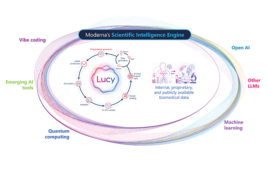
At its recent annual Science Day, Moderna signalled a strategic expansion beyond its established vaccine and rare disease franchises, unveiling new programs in in vivo CAR-T and solid tumor oncology. The firm also revealed an AI-driven research platform it says will accelerate the pace of drug discovery across its pipeline. The company publicly revealed two…
Blazing new paths for biotech

For the past several years, success has grown more elusive for American biotech firms. Even in the more robust investment climates prior to 2022, developing and growing a biotech always required a combination of risk appetite and patient capital that did not lend itself to the rapid exits typical of other areas of tech investing. …
Sai Life Sciences names winners of Biotech Pitch Day 2026
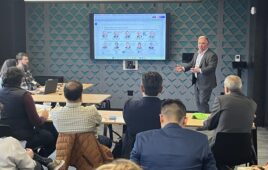
Sai Life Sciences recently hosted its Biotech Pitch Day 2026 at the company’s Boston-area site, with 10 early-stage biotech companies presenting to a judge panel that included Daniel Resnicow, operating partner at Engine Ventures; Stephanos Ioannidis, who leads the Modalities Innovation Lab at Astellas Pharma; independent R&D executive Bharat Lagu; and Arjun Goyal, founder and…
How to tackle the unique pharmacokinetic properties of covalent drugs

Covalent drugs have been a transformative medical advancement since aspirin was first approved in 1899. Penicillin followed soon after and is one of the most impactful pharmaceutical breakthroughs in human history. Since around a decade ago, an increasing number of new covalent drugs have been approved for a wide range of conditions, bringing hope to…
Moving beyond the binary: how the convergence of small and large molecules is reshaping pharmaceutical R&D
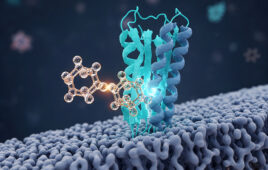
Pharmaceutical R&D is at an inflection point. Consider that small molecules accounted for 65% of FDA novel drug approvals in 2025. That is a jump from 56% in both 2023 and 2024. The note that even as biologic sales are growing three times faster than their chemical counterparts and are projected to overtake them by…
Senate clears FDA Modernization Act 3.0, aiming to align FDA regulations with nonclinical-testing reforms
The U.S. Senate on Dec. 16 passed the FDA Modernization Act 3.0 (S.355) by unanimous consent, sending legislation to the House that would require the FDA to update its regulations to reflect changes Congress enacted in 2022. The bill instructs HHS, acting through the FDA commissioner, to publish an interim final rule no later than…
Lilly launches TuneLab, sharing AI drug-discovery models with biotechs

Eli Lilly launched “TuneLab,” an AI/ML platform that gives selected biotechs access to drug-discovery models trained on years of Lilly research data. Initial public partners include Circle Pharma and insitro. Lilly says the first release reflects more than $1B worth of internal data investment. Lilly says biotechs run its models locally on their own infrastructure…
Novartis bets $200M upfront on Arrowhead’s Parkinson’s RNAi, total value up to $2.2B
Novartis has signed a global licensing agreement with Arrowhead Pharmaceuticals for the preclinical RNA interference (RNAi) therapy ARO-SNCA, targeting alpha-synuclein in Parkinson’s disease and related disorders. The deal, announced Tuesday and reported by Reuters, includes a $200 million upfront payment to Arrowhead, with up to $2 billion in potential milestones, plus tiered royalties (capped in…
Lilly’s oral GLP-1 drug orforglipron achieves 12.4% weight loss in phase 3 trial but trails injectable rivals tirzepatide and retatrutide
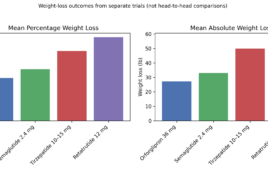
Lilly recently reported topline results from the ATTAIN-1 phase-3 trial evaluating orforglipron, a once-daily oral glucagon-like-peptide-1 (GLP-1) receptor agonist for adults with obesity or overweight without diabetes. GLP-1 receptor agonists mimic gut hormones to curb appetite and slow digestion, a mechanism driving the success of therapies from Novo Nordisk (Ozempic for diabetes and Wegovy for…
AI agents are proliferating in pharma, but taming them may be the next frontier

AI agents have moved from pilots to practice: 14% of large enterprises report partial or full deployments and 23% are piloting, according to the “Rise of agentic AI” report from Capgemini. But as adoption ticks up, trust in fully autonomous agents slid from 43% to 27% over the past year. What does that mix mean…
Sai Life Sciences exec: GLP-1 boom has ‘exploded the peptide field’ as firm opens new center
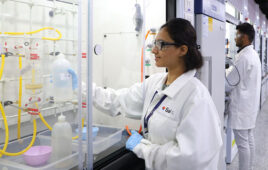
Demand for next-generation GLP-1 drugs is fueling a boom in peptide research, prompting companies like Sai Life Sciences to expand capabilities amid a hot market for obesity and diabetes treatments. “The GLP-1 agonists have exploded the peptide field,” said Maneesh Pingle, Ph.D., executive vice president and head of discovery services at Sai Life Sciences, in…
As some biotechs cut, Genmab unveils striking new site near Princeton
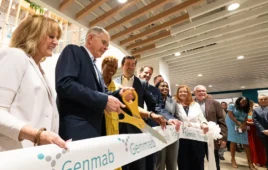
Genmab, a Danish company focused on developing antibody therapies for patients with cancer, opened a new site in Plainsboro, NJ. The company was awarded $8.4 million in tax credits over seven years by the Murphy Administration to develop the new location. Expanding presence in NJ “Our extension at the Princeton Forrestal Center will strengthen our…
How Thermo Fisher’s KingFisher PlasmidPro crunches hours of plasmid prep to 5 minutes hands-on

Five minutes of hands-on bench time now separates researchers from purified plasmid DNA using a new automated system from Thermo Fisher Scientific. The company’s cartridge-based KingFisher PlasmidPro automates the traditionally hours-long maxi-prep process. The KingFisher PlasmidPro benchtop instrument offers walk-away operation. Kevin Lowitz, vice president and general manager for sample prep at Thermo Fisher Scientific,…
AP Biosciences charts course for safer CD137 bispecifics with its T-cube platform
AP Biosciences is building the protocol around one key objective: confirm that conditional CD137 agonism, a tumor-restricted T-cell costimulation, can be delivered safely in patients whose HER2-positive solid tumors express the p95HER2 variant, a truncated, drug-resistant form of HER2. To that end, it recently dosed the first patient in the Phase 1/2 trial of its…
Why smaller, simpler molecular glues are gaining attention in drug discovery
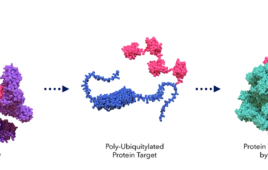
Targeted Protein Degradation (TPD) has emerged as a promising modality in drug discovery, hijacking the body’s natural disposal systems to eliminate disease-causing proteins. While bivalent degraders like PROTACs have pioneered the field, demonstrating clinical promise, attention is increasingly turning toward a new upstart — Molecular Glue Degraders (MGDs). These smaller, simpler molecules offer advantages but…
Spatial biology: Transforming our understanding of cellular environments
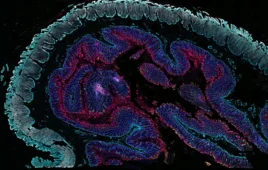
Spatial biology is revolutionizing our understanding of how cells interact with their natural environments. Although that may sound like an overstatement, it isn’t. Spatial biology involves the use of advanced imaging and molecular techniques to visualize and map the location of cells, transcripts, proteins and their interactions within tissues. Traditional biological studies have long focused…
The FDA Fast-Tracked GNSC-001 gene therapy targets osteoarthritis at its root
One of the largest unmet needs in modern medicine is the effective treatment of osteoarthritis (OA)—a degenerative joint disease afflicting more than 30 million Americans and costing the healthcare system $459.5 billion in all-cause medical costs, according to a 2020 study in the Archives of Physical Medicine and Rehabilitation. “We see this as one of…
Landmark Bio’s mission to prevent cell therapy ‘do-overs’

In the classic Bill Murray comedy Groundhog Day, the main character is stuck reliving the same day—again and again. Biotech startups often face a similar fate when they sprint to first-in-human trials without planning for the realities of large-scale manufacturing. “Many times, researchers rush to get their product tested in humans with processes that are…
From Graz to global — Innophore’s journey with NVIDIA’s BioNeMo

When a 30-person Austrian startup gets showcased by Jensen Huang, CEO of the trillion-dollar tech giant NVIDIA, schedules tend to fill up fast. That’s precisely the case for Innophore, a biotech company tapping NVIDIA’s computational clout with its Catalophore platform to accelerate AI-driven drug safety screening and binding-site analysis. This year, the company was highlighted…
FDA drug approvals holding steady at 44 YTD in 2024

YTD 2024 FDA approvals: By the numbers 44 Novel Drug Approvals As of December 5, 2024, the FDA had approved a total of 44 novel drugs, spanning a diverse array of therapeutic areas and patient populations. These new treatments address both widespread public health concerns, such as cardiovascular disease and COPD, and more narrowly defined…
Biotech in 2025: Precision medicine, smarter investments, and more emphasis on RWD in clinical trials

In 2025, genetic validation is poised to emerge as a high-stakes litmus test in cardiovascular R&D, investors will continue to get better at funneling cash into proven science, and patients will continue their evolution to become more-active partners shaping their healthcare. To hear more about each of these trends, we considered feedback from three industry…
St. Jude pioneers gene editing and structural biology to advance pediatric research

After establishing her lab at Cornell in 2019 and achieving notable success with publications in top journals, Liz Kellogg, Ph.D., associate member in the department of Structural Biology at St. Jude Children’s Research Hospital received a unique opportunity. St. Jude Children’s Research Hospital had embarked on a major expansion of its structural biology and genome…
The latest on Isomorphic Labs’ plans to use AI models to revamp drug discovery

“Nearly all diseases stem from a molecular mechanism going wrong,” writes Sergei Yakneen, chief technology officer of Alphabet’s Isomorphic Labs in a recent blog post. “Whether it’s an infectious agent disrupting our cellular machinery or a breakdown in processes like DNA repair, identifying the right protein and finding molecules to interact with it is…