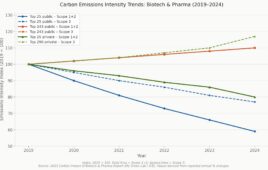
The health care industry contributes an estimated 4.4% of total global emissions annually. Approximately 71% of this comes from the health care supply chain, which includes the pharmaceutical and biotechnology sectors. Medicines contribute approximately 20% to 55% of health care’s total carbon footprint. This comes from corporate emissions, API production and manufacturing. Pharmaceutical manufacturing is…
FDA commissioner Marty Makary resigns amid pressure from administration

Marty Makary resigned on Tuesday as commissioner of the Food and Drug Administration following rumors that President Donald Trump was planning to fire him. His departure may have been due to a conflict over fruit-flavored vapes. Trump reportedly pressured Makary to authorize the flavored products from Glas Inc., which he opposed because of their appeal…
Fake testimonials, no pharmacy and an FDA warning: how Medvi built a $1.8 billion telehealth company in the gaps between regulators

The New York Times published a profile of the company Medvi earlier this month, celebrating it as an example of what AI could help a single person do: build a telehealth company its founder projects will be worth $1.8 billion this year despite a closing loophole for telehealth companies selling compounded versions of popular metabolic…
Beyond the silver bullet: Why precision medicine is the next frontier for the $1 trillion obesity market

“I remember when we decided the internet was going to cure everything, and it didn’t…it came with a certain set of problems,” said Mark Bagnall, CEO of Phenomix Sciences. GLP-1s are having a similar moment, he says. GLP-1s have been transformative for many; by 2025, more than 30 million Americans were taking them for weight…
Engineered exosomes from pig semen: a high-yield platform for non-invasive ocular drug delivery

Researchers in China have used pig semen to develop eye drops that can deliver cancer drugs to the back of the eye. In a mouse model of retinoblastoma, the drops killed cancer cells and slowed tumor growth, the scientists reported in Science Advances. Most therapies that need to reach the retina use injections that can…
Moving beyond the binary: how the convergence of small and large molecules is reshaping pharmaceutical R&D

Pharmaceutical R&D is at an inflection point. Consider that small molecules accounted for 65% of FDA novel drug approvals in 2025. That is a jump from 56% in both 2023 and 2024. The note that even as biologic sales are growing three times faster than their chemical counterparts and are projected to overtake them by…
Lilly’s triple agonist achieves 16.8% weight loss in phase 3 trial
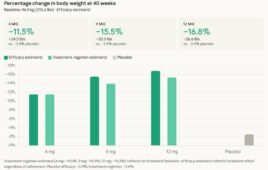
Eli Lilly’s triple agonist, retatrutide, demonstrated an average weight loss of 16.8% in a Phase 3 trial for the treatment of type 2 diabetes, the company announced today. Retatrutide is an investigational first-in-class GIP, GLP-1 and glucagon triple hormone receptor agonist. The drug met the primary and key secondary endpoints, delivering superior A1C reduction and…
Can live cell dynamics fix drug discovery’s efficacy problem?

In traditional drug discovery, typical timelines for successful drugs stretch from 10 to 15 years, or sometimes even longer, to bring a drug from discovery to approval. In addition to that, the cost of bringing a drug to market can range from hundreds of millions to multiple billions of dollars. In fact, the inflation-adjusted cost…
Closing the information gap: ETH Zürich team integrates function and binding in one drug screening assay

A team from ETH Zurich and Karolinska Institutet has developed a cross-linking MALDI mass spectrometry workflow that captures both functional response and target binding in a single assay. Drug screening has traditionally been split between functional assays and binding assays. However, neither tells the full story. Functional assays indicate whether a drug works, but not…
Novo Nordisk’s triple agonist delivers up to 19.7% average weight loss in Phase 2 trial

Novo Nordisk’s triple agonist UBT251 delivered a mean weight loss of 19.7% after 24 weeks in a Phase 2 trial in China, the company announced on Tuesday. UBT251 is a triple agonist of the receptors for GLP-1, GIP and glucagon (triple G) and is being jointly developed with United Biotechnology. The trial was conducted by…
Novo Nordisk’s new weight loss treatment inferior to Lilly’s tirzepatide

Novo Nordisk’s latest weight loss treatment, CagriSema, did not meet the primary endpoint of showing non-inferiority compared to tirzepatide, the company announced on Monday. CagriSema, a combination of cagrilintide and semaglutide, achieved 23% weight loss after 84 weeks of treatment, compared to 25.5% with tirzepatide. The treatment was safe and well tolerated, with mostly mild…
OrsoBio’s LXR inverse agonist shows promise for hard-to-treat triglyceride disorders

OrsoBio, a small biotech company focused on developing therapies for obesity and obesity-related disorders, is looking beyond the GLP-1 trend in weight-loss solutions. In its pipeline, the company is developing mitochondrial protonophores that increase energy expenditure and could be used to treat obesity, diabetes and fatty liver disease. LXR inverse agonist for hypertriglyceridemia A drug…
FDA reverses course, agrees to review Moderna’s mRNA flu vaccine

The FDA has reversed course on Moderna’s mRNA influenza vaccine, agreeing to review a submission it previously refused, the company announced on Wednesday. Moderna said it has received a Prescription Drug User Fee Act (PDUFA) goal date of Aug. 5, 2026. After receiving a Refusal-to-File (RTF) letter from the FDA, Moderna scheduled a Type A…
Novo Nordisk sues Hims for GLP-1 patent infringement
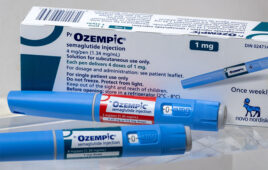
Imitation is the sincerest form of flattery, some say. Novo Nordisk would probably disagree. Copycats of the company’s popular weight loss treatment, Wegovy, have been popping up for years. One copycat comes from the company Hims & Hers, an online provider of obesity medications as well as erectile dysfunction and hair regrowth treatments. Hims &…
FDA refuses to review Moderna’s mRNA flu vaccine

Moderna received a refusal-to-file (RTF) letter from the FDA’s Center for Biologics Evaluation and Research (CBER) for its investigational mRNA vaccine for influenza, the company said Tuesday. The letter is inconsistent with the feedback received at pre-Phase 3 and pre-submission consultations, Moderna said. The company has requested a meeting with the FDA. The vaccine, mRNA-1010,…
How digital tools and AI are accelerating drug discovery

In traditional drug discovery, typical timelines for successful drugs stretch from 10 to 14 years, or sometimes even longer to bring a drug from discovery to approval. In addition to that, the cost of bringing a drug to market can range from hundreds of millions to multiple billions of dollars. In fact, the inflation-adjusted cost…
The ‘forever drug’ assumption about GLP-1s may be wrong, according to nference analysis
Last month, a University of Oxford meta-analysis published in The BMJ examining 37 studies with over 9,000 participants found that patients who stopped taking GLP-1s were likely to gain approximately 1 pound per month, returning to their previous weight within two years. However, data shared with Reuters ahead of peer review shows this may not…
STEERLife’s FragMelt platform manufactures drugs with heat sensitive active ingredient
Bionpharma announced Wednesday the FDA approval of its etravirine tablets, an HIV therapy developed in partnership with STEERLife. The therapy was developed using STEERLife’s proprietary FragMelt continuous processing platform, which enables a sustainable, solvent-free manufacturing process. Precise control: how FragMelt works with heat-sensitive drugs Etravirine is extremely sensitive to heat and shear forces, meaning traditional…
Study finds GLP-1 benefits fade two years after stopping medication
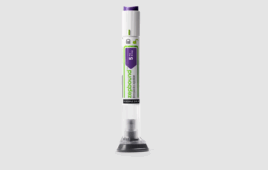
A large analysis of previous studies has found that patients who stop taking weight loss medications will see the beneficial effects disappear within two years, causing weight and health issues to reappear. Researchers reviewed data on 9,341 obese or overweight patients treated across 37 studies with 18 different weight-loss medications, finding that they gained approximately…
American Society of Gene & Cell Therapy and Orphan Therapeutics Accelerator partner for medicines for rare diseases

The American Society of Gene & Cell Therapy (ASGCT) and Orphan Therapeutics Accelerator (OTXL), a biotech non-profit, have launched the CGTxchange, a jointly owned clearinghouse and marketplace designed to identify, evaluate and advance clinically validated cell and gene therapies (CGTs) for ultra-rare diseases that have been shelved due to commercial constraints. This will serve as…
New gonorrhea antibiotic could treat resistant infections

Neisseria gonorrhoeae, the bacterium that causes the sexually transmitted disease (STD) gonorrhea, has developed resistance to many of the antibiotics that are used to treat it. Most patients with gonorrhea take a drug called ceftriaxone, a third-generation cephalosporin antibiotic, but resistance to that is growing. Recently, doctors have found two potential antibiotics that could treat…
Platelet-inspired nanoparticle delivers drugs directly where they are needed
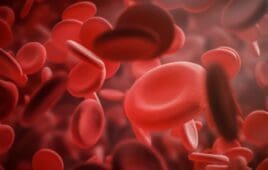
Researchers at Case Western Reserve University and Haima Therapeutics used a “platelet-inspired nanoparticle” to deliver an anti-inflammatory drug. The drug was designed to improve the performance of electrodes in brain-computer interface (BCI) technology, which allows people to control devices with their thoughts. The nanoparticle allowed the scientists to deliver the drug directly to where the…
Lilly’s triple agonist delivers up to 71.2 lbs of weight loss in Phase 3 trial
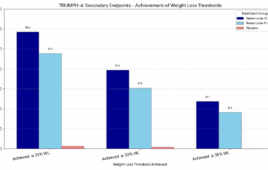
Lilly announced results from its Phase 3 TRIUMPH-4 trial of retatrutide, a first-in-class GIP, GLP-1 and glucagon triple hormone receptor agonist, on Thursday. In the efficacy-estimand analysis, participants taking the highest dose (12 mg) lost an average of 28.7% of their body weight at 68 weeks, about 71.2 pounds from a baseline of 248.5 pounds.…
HPV vaccine shrinks cervical tumors in mice
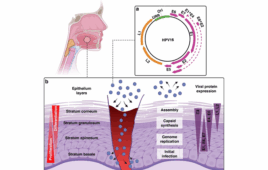
A nasal HPV vaccine has been shown to shrink cervical cancer tumors in mice, researchers reported in Science Translational Medicine last month. The vaccine targets HPV16 E7, a protein made by the human papillomavirus (HPV) that targets a tumor suppressor and causes uncontrolled cell growth. Unlike most vaccines, which are preventative, this medicine could be…
How bioprospecting revealed a scorpion venom that kills breast cancer cells

Researchers at the University of São Paulo’s Ribeirão Preto School of Pharmaceutical Sciences (FCFRP-USP) in Brazil have found a molecule in the venom of Brotheas amazonicus, a species of scorpion native to the Amazon, which appears to attack breast cancer cells in a way similar to a widely used chemotherapy medication. Their findings were presented…